
Reviewed · MACARON & PASTRY CLASSES
Paris: Croissant Baking Class with a Chef
Paris croissant making is already a great idea. What makes this experience especially interesting is the way you work right in the bakery kitchen, with a chef guiding your hands step by step. I like food lessons where the goal is real skill, not just watching. Here, hands-on coaching is the point, and the chef works with you in the moment.
Two things I really like: you get small-group attention (limited to 8), and you also learn the why behind the technique. You’ll get the science and history angle too, including the role of butter quality and proofing. The only real drawback is physical, croissant dough takes arm strength for rolling and handling, and it is not suitable for kids under 15.
Key Highlights You Should Care About
- Chef Léo leads the class, with close guidance for getting the dough right.
- Small group size (max 8) means you get individualized tips, not generic instructions.
- You learn technique plus theory, including folding and the science behind proofing.
- You eat what you make, with warm sampling during the class.
- Bi-color croissant option is available on selected days for extra visual fun.
Arriving at Studio Pâtisserie, and Why the Setup Matters
This class meets at Studio Pâtisserie, in a building with a gray storefront. It is easy to reach by public transport, with the nearest metro stations listed as Metro Line 2 (Rome) and Metro Line 3 (Villiers). For me, that location is a plus because it keeps your day from feeling like a complicated trek.
Once you’re in, the most helpful part is that the kitchen environment is built for making pastry, not for holding a show. Croissants are fussy. They depend on butter temperature, dough consistency, and timing. When the workspace is set up like a real bakery kitchen, you learn faster because you are doing the steps the way they actually happen.
Also, because the class is limited to 8 people, the chef can keep an eye on your rolling, your folds, and how you handle the dough between steps. That matters more than you might expect at first.
More macaron and pastry classes:
- Paris Croissant Small-Group Baking Class with a Chef
★ 5.0 · 910 reviews - Paris: Macaron Class at Galeries Lafayette
★ 4.3 · 905 reviews - Paris: French Croissant Baking Class with a Chef
★ 4.9 · 712 reviews
Meeting Chef Léo, and What You Get From a Real Pastry Pro
You will learn directly from Chef Léo throughout the class. The teaching style described across student experiences is consistent: the chef is hands-on, patient, and focused on getting the process right, not just getting pastries on a plate.
You might also notice that different chefs lead different sessions. Some participants mention Chef Maria as a fun, organized instructor who kept things light while still correcting technique. Either way, you should expect a class that mixes warmth with precision.
Here’s the practical takeaway for your skill growth: when you’re making croissants, mistakes snowball. If the dough is rolled unevenly, the layers do not develop cleanly. If the folding is sloppy, you get poor lamination. If proofing is rushed, you lose that classic texture. With personalized tips, the chef can catch those issues early, while there is still time to fix them.
The Dough Step: Knead, Roll, Fold, Repeat
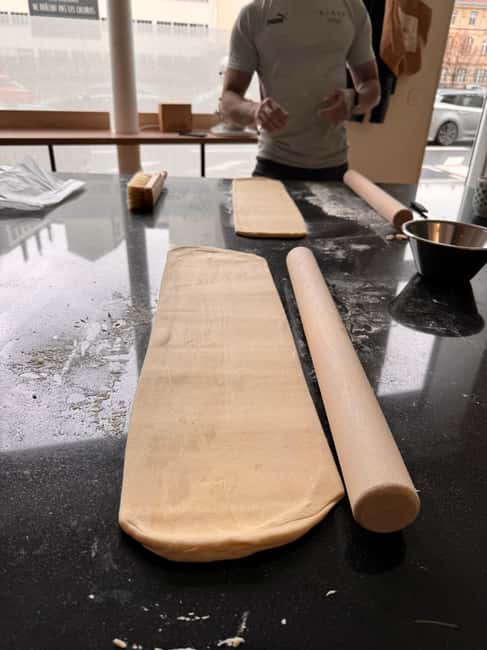
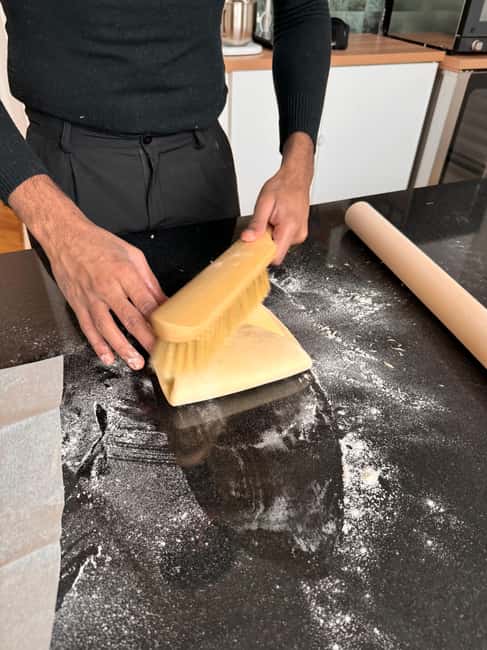
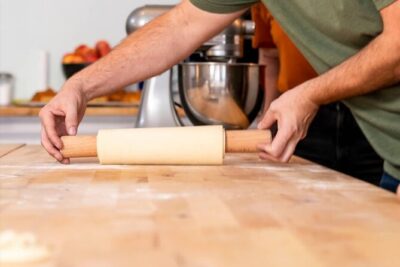
Croissant making has a workout component. The physical part is not optional. Dough needs to be rolled, shaped, and handled carefully so the butter stays where it should, and the dough develops structure without turning greasy.
During the session, the chef guides you from dough prep into the folding process that creates the famous flaky layers. This is the core of croissant technique, and it is where you learn the most.
What you should pay attention to as you work:
- Consistency over speed: you’re aiming for dough that rolls smoothly, not dough that fights you.
- Your folding rhythm: the chef helps you keep the layers neat.
- Butter management: you’ll be taught how butter quality and handling influence the final lamination.
This is also why the class is best for people who want to learn, not just eat. You’ll spend time working with your hands. If you show up ready to get a little flour on your sleeves, you’ll get way more out of the experience.
Learning the Science While the Dough Rests
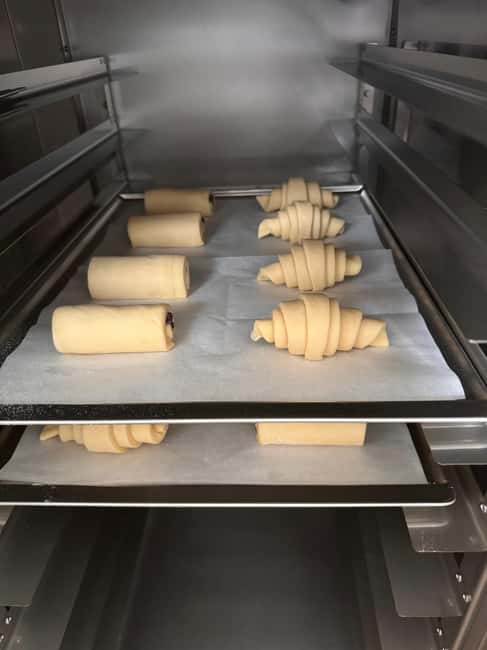
One of the best parts is that the class does not treat resting and proofing like dead time. As the dough rests and rises, you get insights into the science that drives good results.
Key concepts you can expect to hear about:
- Butter quality and why it matters for flavor and texture.
- Proofing nuances, meaning how the dough’s rise affects the final crumb and flakiness.
- The basic logic of timing, so you understand what is happening while you wait.
I love lessons like this because they give you something you can use later at home. If you only get a recipe, you can copy the steps but not diagnose problems. Here, you learn what to look for, so you can tell the difference between under-proofed and properly proofed dough, and you know why.
And yes, you can ask questions freely. That is how you get practical answers, not just a pile of notes you will never use.
More hands-on workshops in Paris:
- Fragonard Paris: Mini Perfume Workshop
★ 4.5 · 1,924 reviews - Paris Cooking Class and Lunch with Wine plus Market Visit Option
★ 5.0 · 1,024 reviews - Paris: 2-Hour Perfume Creation Workshop
★ 4.8 · 731 reviews - Paris Cooking Class: Learn How to Make Macarons
★ 5.0 · 634 reviews
Shaping Croissants: Turning Dough Into Crescents
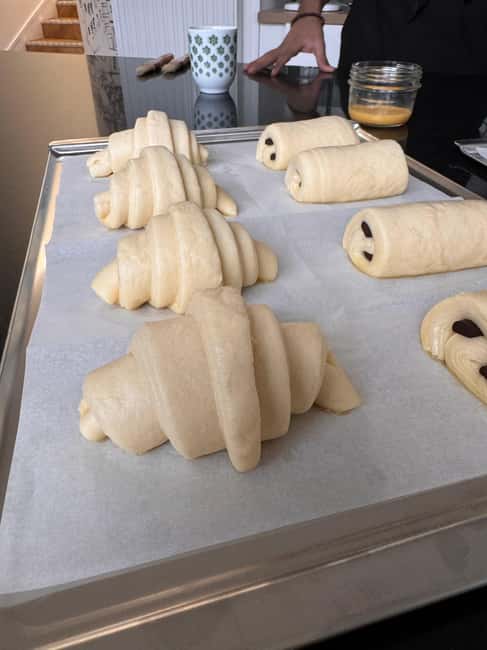
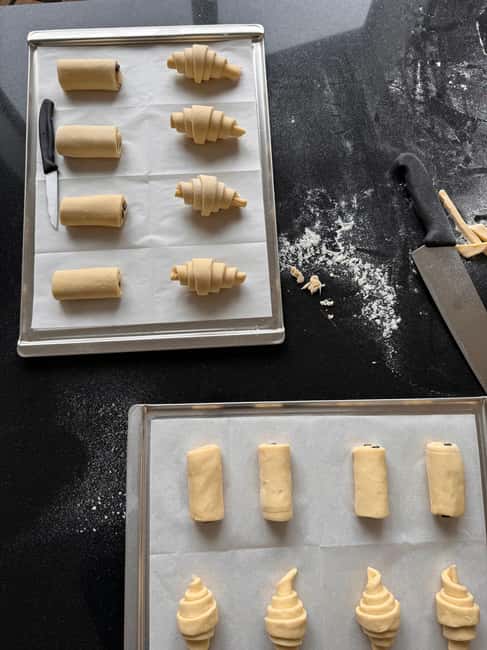
Once the dough is ready, you move into shaping. This is where the class feels most satisfying, because you go from a smooth block of dough to crescents that look like they belong in a Paris patisserie display.
With the chef watching, you learn how to:
- cut the dough into appropriate shapes,
- roll and shape into classic croissant form.
This part is not just about looks. Shaping affects how the layers separate while baking. Get the angles and tension right, and you help the croissant expand into those delicate flakes.
You’ll also understand why small differences in your handling can change the outcome. For a beginner, that is huge. For a more experienced baker, it is still valuable because the chef can help you tighten your technique.
Baking and Tasting Right Away, With a Small-Group Advantage
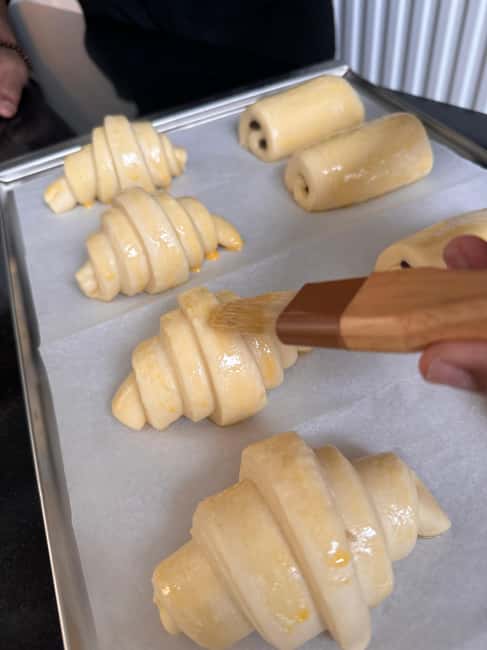
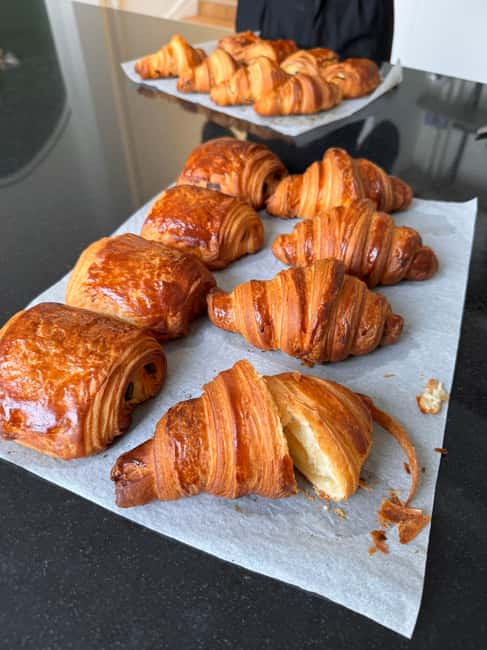
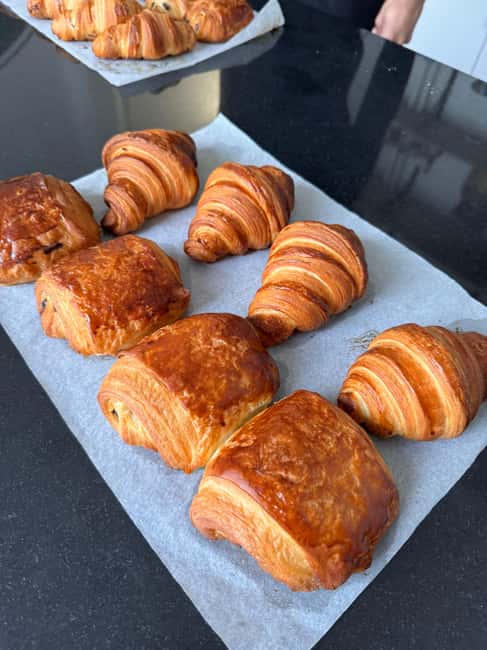
At some point during the 3 hours, your croissants go to the oven and you get the reward part. The class includes ample sampling of freshly baked croissants during the class, including croissants you made.
That warm taste matters. Croissants are one of those foods where the difference between good and great is obvious, especially right out of the oven. Even if you end up with something slightly imperfect, the warm result gives you a baseline to understand what success should feel like.
Many participants note that there is enough food to take some home, and multiple experiences describe each person ending up with a set of pastries that can be packed up. That is not guaranteed in every moment, but the overall vibe is consistent: you are not sent home empty handed after 3 hours.
If you’re the type who learns through tasting, this format is ideal. You get feedback through flavor and texture while your memory of the process is still fresh.
Bi-Color Croissants on Selected Days: Fun, Technical, and Optional
If you choose the Bi-color Croissant Baking Class option on selected days, you’ll learn how to incorporate color into the dough. The idea is simple: add color while keeping the dough technique intact.
This option is a good fit if:
- you already like food presentation,
- you want an extra skill beyond basic croissant shape and lamination,
- you like playful, “I can actually do this” challenges.
The class includes the bi-color ingredients and the bi-color version of the session if selected. So you are not guessing about how to do it or scrambling for colored ingredients after the fact. It is taught as part of the process.
What You Take Home, and Why the Recipe Is More Than Paper
The class includes a recipe to take home, which is helpful if you want to try this again later. But you also take home something less tangible: confidence about what happens during resting and proofing.
That is the real value. Croissant baking fails in predictable ways, and most of those failures relate to timing, dough consistency, and layer behavior. Because you learn the “why,” your next attempts can be smarter.
You also get all necessary ingredients for crafting your own croissants, plus access to professional-grade kitchen equipment and tools. In plain terms, you get to use proper gear and proper ingredients instead of trying to recreate the class at home with random supplies.
Price in Perspective: Is $140 Worth It?
At $140 per person for a 3-hour, Chef-led small-group class, the value comes from what is included and how much attention you get.
Here’s what you’re paying for, in practical terms:
- Chef-led instruction from Chef Léo
- Hands-on dough work with corrections as you go
- Ingredients and professional tools
- Sampling during the class
- Recipe to take home
- History and science insights
- Personalized tips and tricks
If you compare it to buying ingredients and equipment on your own, the class is often a better deal, especially because croissant making is equipment and timing heavy. If you try to DIY without the folding and proofing coaching, you can burn through supplies fast and still end up frustrated.
Is it “cheap”? No. Is it a solid use of a Paris morning for people who like learning food technique? I think so. The best sign is the small group limit. With max 8 participants, the chef can actually correct your process instead of just explaining it.
Who Should Book This Class (and Who Might Not)
This is a great choice if you:
- want a classic Paris food experience that teaches real technique,
- like hands-on cooking with clear direction,
- enjoy learning why steps matter, not just memorizing a recipe,
- want an activity that feels both fun and genuinely practical.
It may not be the best fit if you:
- are expecting a mostly passive experience. You will work with dough.
- have limited tolerance for physical rolling and handling, since croissant dough requires arm strength.
- are traveling with kids under 15. The class is not suitable for children under 15.
- have a child under 17. Children under 17 must be accompanied by a paying adult.
If you’re a solo traveler, it is also friendly because the group stays small and you get time with the chef. Couples and friends often like it too because you can compare results and swap technique questions during breaks.
Quick Practical Tips Before You Go
A few things can help you get the most from the 3-hour session:
- Wear comfortable clothes you do not mind getting flour on.
- Plan to have a safe way to carry your pastries home, since the class includes sampling and you likely will have baked goods to take with you.
- Come with questions. The chef is set up to answer them during the science and technique parts.
And emotionally, go in with the right expectation. Croissants are partly patience and partly precision. Even if yours are not perfect on the first try, you will learn what to fix next time.
Should You Book This Croissant Class?
Yes, book it if you want a hands-on Paris food lesson with real technique, small-group attention, and immediate payoff from warm pastries. Chef Léo’s guidance, the focus on folding and proofing, and the included recipe make it a class you can actually build on later.
Skip or reconsider if you are not comfortable with the physical work of handling and rolling dough, or if you have children under 15. For everyone else, it is one of those activities where 3 hours turns into a lasting skill, not just a nice memory.
FAQ
How long is the croissant baking class?
The class lasts 3 hours.
Where do we meet?
Meet at Studio Pâtisserie, in the building with a gray storefront. The nearest metro stations are Metro Line 2 (Rome) and Metro Line 3 (Villiers).
Is the class taught in English?
Yes, the instructor speaks English.
How big is the group?
The group is small, limited to 8 participants.
What are the age requirements?
The activity needs physical strength to roll out the dough. Children under 17 must be accompanied by a paying adult, and it is not suitable for children under 15.
What is included in the class?
You get expert guidance from Chef Léo, all necessary ingredients, access to professional-grade equipment, sampling of freshly baked croissants, a recipe to take home, and history and science insights plus personalized tips.
Is the bi-color croissant option available every day?
No. The bi-color croissant option is available on selected days.
Can I cancel for a refund?
Free cancellation is available up to 24 hours in advance for a full refund.
Do they offer reserve now and pay later?
Yes, you can reserve now and pay later to keep your plans flexible.
Recently added around Paris
- Paris: Louvre Masterpieces Private Tour with Reserved Entry★ 4.3 · 144 reviews
- Paris: Living Cheese Museum Guided Tour with Cheese Tasting★ 4.8 · 182 reviews
- Paris Louvre Exclusive Semi Private Guided Tour Max 6 People★ 4.6 · 28 reviews
- Paris: Louvre Guided Tour with Skip-the-Line Entry Tickets★ 3.5 · 73 reviews
- Paris Le Marais Walking Tour: Small Group Experience★ 5.0 · 7 reviews
- Paris: Lemon Tart Baking Class with a Pastry Chef★ 5.0 · 4 reviews
- Paris: Live Guided Cruise with Crepe and Soft Drink★ 3.9 · 14 reviews
- Paris Le Marais Food Tour: Full Traditional French Feast★ 4.8 · 119 reviews
Macaron & Pastry Classes, compared.
Paris Croissant Small-Group Baking Class with a Chef
Read our review →

Paris Cooking Class: Learn How to Make Macarons
Read our review →
45-minute Chocolate Making Workshop at Choco-Story
Read our review →
Chocolate & Patisserie Walking Tour with Tastings
Read our review →
Paris Chocolate, Macaron & Pastry Food Tour: 10 Gourmet Tastings
Read our review →Browse the lists this tour appears in