
Reviewed · NORMANDY & D-DAY TOURS
Group excursion to the landing beaches Utah and Omaha Beach
This D-Day beach day from Bayeux is interesting because it stitches together the American landings with the airborne story, right where it happened, not in a lecture hall. I like the small group size (up to 8 people), because the guide can pace the day and still answer your questions. I also like that a Normandy-born guide brings in family and local civilian details, not just dates and unit names.
The best part for me is the stop-by-stop focus on the moments people remember, plus the human scale details that explain why the day unfolded the way it did. You’ll see Pointe du Hoc and walk past the bomb craters, and you’ll also hear about the church at Angoville-Au-Plain, where two paratrooper doctors treated American and German soldiers and French civilians.
One thing to consider: this tour needs at least 4 participants to run, so it could be rescheduled if the minimum is not met. And it’s a 7-hour day, so plan on being on your feet at multiple sites with some walking on uneven ground.
Key points at a glance
- Small group of up to 8 for a more personal conversation with the guide
- Utah Beach to Omaha Beach plus Pointe du Hoc, so you get the full American landing arc
- Sainte-Mere-Eglise paratrooper sector with the 101st and 82nd Airborne in focus
- Angoville-Au-Plain church story about parachutist doctors treating both sides
- Walkable WWII terrain at Pointe du Hoc, including bomb craters still visible
- Cemetery reflection at Colleville-sur-Mer, with 9,388 American graves
Bayeux meeting point, small group pacing, and why this route makes sense
You start in Bayeux at Place du Québec (Pl. du Québec, 14400 Bayeux). That’s a smart base because Bayeux is full of historic texture of its own, and you can concentrate on the Normandy story without fighting logistics all morning.
The group stays small, with a maximum of 8 people. That matters more than you might think on a day like this. Big tours can rush. Small tours tend to slow down at the exact places where you want time, like when the guide points out German defenses or explains what changed after the landings. It also makes it easier to ask practical questions mid-day, instead of waiting until the end.
The day is built around a classic chain of sites, Utah Beach, Sainte-Mere-Eglise, Angoville-Au-Plain, Pointe du Hoc, Omaha Beach, and the American cemetery at Colleville-sur-Mer. The order helps you build a mental map: you move from the first shock of landing, to the airborne operations, to the cliff battle at Pointe du Hoc, then across to Omaha Beach, and finally to the cemetery where the human cost becomes impossible to ignore.
You’ll have a mobile ticket, and you should get confirmation when you book. Also, the meeting point is near public transportation, which is handy if you are staying in Bayeux without a car.
More Normandy and D-Day trips:
- Normandy American D-Day Beaches Full Day Tour from Bayeux
★ 5.0 · 2,103 reviews - Normandy American D-Day Experience – Group tour from Bayeux
★ 5.0 · 1,566 reviews - Normandy Beaches Half-Day Afternoon Trip from Bayeux (A2)
★ 4.5 · 1,116 reviews
Utah Beach: Atlantic Wall context, Roosevelt’s landing, and first real “site feeling”
Utah Beach is where the day starts getting real fast. You’re there to understand the German preparation along the Atlantic Wall, which sets the tone for why these landings were so difficult and so dangerous. It’s not just a beach stop, it’s the beginning of the story of planning, fortifications, and the chaos of June 6.
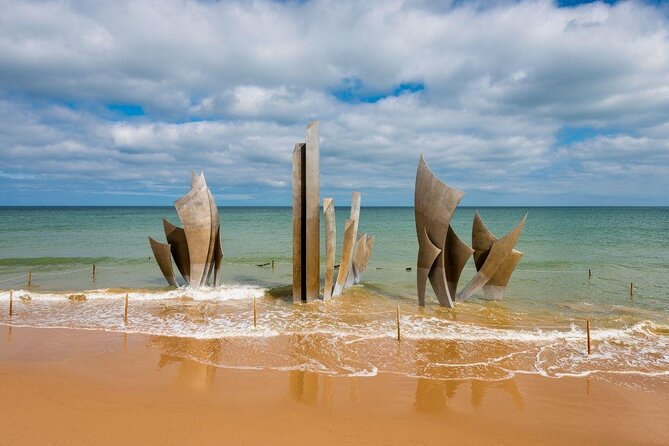
The guide brings in the German forces present, then anchors the moment with the landing of General Theodore Roosevelt Jr. Even if you know the name, hearing it placed in context on the ground helps it click. You also spend time exploring the beach itself and the monuments built after the war, including one related to the first special engineering brigade.
What I like about starting here is that you get the “why” before the “where.” By the time you reach Pointe du Hoc and Omaha later, you’ll already understand what defenders built to resist an assault and how the landscape shaped tactics.
A possible drawback: Utah feels like a place you could easily wander too long on your own. So pay attention to the guide’s directions, because the value is in the connections they make between what you see and what the troops were trying to do.
Sainte-Mere-Eglise and the paratrooper sector: 101st and 82nd in plain language
After Utah, the day pivots to the airborne side of D-Day at Sainte-Mere-Eglise. This is where the Band of Brothers name people recognize becomes more than TV. You focus on the paratrooper sector around the town and on the 101st and 82nd Airborne Divisions, which the guide connects back to what you saw at the beaches.
This stop is longer, about 2 hours and 30 minutes, which is your clue that Sainte-Mere-Eglise is more than a quick photo stop. It’s a chance to understand how airborne units fit into the bigger plan: disruption of defenses, key positions, and the struggle to make airborne operations work amid confusion.
I especially like when guides handle this topic with local detail. The Normandy-born guides associated with this tour, including people like Raphaëlle, Flavie, and Thomas (names mentioned in guide-led experiences), tend to mix unit facts with stories that sound like how families actually talk. You get anecdotes about Norman civilians and American veterans, and that makes the airborne story feel less abstract.
One consideration: if you only want beach combat scenes, this stop can feel more “story and terrain” than “action.” But if you want the full picture of June 6, it’s one of the most important pieces.
Angoville-Au-Plain church: the short stop that changes how you see the whole war
Angoville-Au-Plain is brief, around 20 minutes, but it’s the kind of stop that sticks with you. You visit a small village and a church tied to an unusually specific wartime detail: two paratrooper doctors treated American and German soldiers and French civilians.
That single fact does a lot of work. It pulls you out of a simple good-versus-bad narrative and puts you back in the messy reality of war, where care could be delivered even as lines and uniforms kept shifting. It also connects the airborne theme from Sainte-Mere-Eglise to the human consequences across the battlefield and the home front.
The value here is in how a good guide frames the moment. Instead of turning the story into a trivia item, you’ll want to listen for what it suggests about the stress on medical teams and the impossibility of “clean” categories during combat.
Given the short time, don’t expect a long wandering break. This is a stop designed to give you a focused moment, then move you along.
More day trips out of Paris:
- Omaha and Band Of Brothers Full Day Tour
★ 5.0 · 1,104 reviews - Omaha Beach D-Day Experience – Afternoon group tour from Bayeux
★ 5.0 · 1,088 reviews - Omaha and Utah beaches
★ 5.0 · 1,085 reviews - Normandy Battlefields Tour – American Sites (A3)
★ 5.0 · 876 reviews
Pointe du Hoc: cliff-top battery, mission of the rangers, and walking the bomb craters
Pointe du Hoc is the kind of place that makes your brain do something physical. This is where American rangers had the mission of taking and destroying a German battery positioned at the top of a cliff. The site forces you to understand why this was such a hard objective: the geography isn’t passive. It’s part of the weapon system.
You spend about an hour here, and the highlight is walking through bomb craters that are still clearly visible in the landscape. You’re also shown how the Germans lived in bunkers. That last detail is important. It turns an “objective” into a lived environment, where you can picture the routine, fear, and preparation inside hardened defenses.
I like that the guide doesn’t treat this as just a memorial viewpoint. You get the mission history, then the on-site interpretation, and then a sense of what the terrain would have felt like during the assault. Even if you’ve seen documentaries, seeing the craters and understanding the elevation makes a difference.
Possible drawback: parts of the area can involve uneven ground near the cliffs. Wear shoes you’re comfortable walking in for real, not just standing for photos.
Omaha Beach, Bloody Omaha, and the connection to Saving Private Ryan
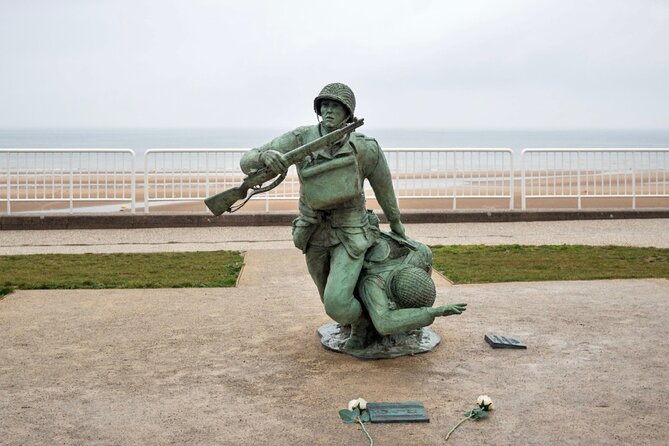
Omaha Beach is next, and it earns its reputation. You learn about the landing at Omaha and the scale of loss, where thousands of American soldiers lost their lives. It’s often called Bloody Omaha, and if you’ve seen Saving Private Ryan, you’ll recognize how the film captured the chaos. This visit helps you separate cinematic intensity from on-the-ground reality.
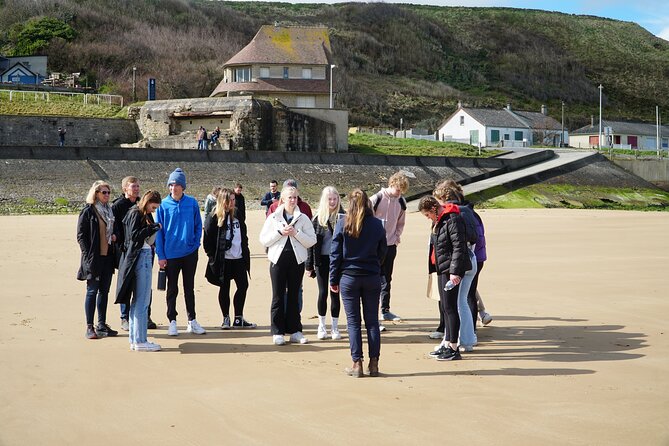
You also get time to explore the beach itself, about an hour. That doesn’t sound long, but on a coastline like this, it’s enough to see the sweep of the shoreline and understand why controlling it was so difficult. The guide ties battlefield outcomes back to what you already learned about fortifications and the airborne disruptions earlier in the day.
What I love here is how the guide’s earlier context changes how you read the scene. Utah Beach gives the preparation and the landing start. Pointe du Hoc explains a crucial assault problem. Omaha then becomes less like a single tragic headline and more like the final hinge that tested everything.
A consideration: Omaha can feel emotionally heavy. You might want a little silence built into your walking time. If you’re with family, this is a good moment for an age-aware pace, because kids often handle it differently than adults.
The American cemetery at Colleville-sur-Mer: 9,388 names and the moment that slows you down
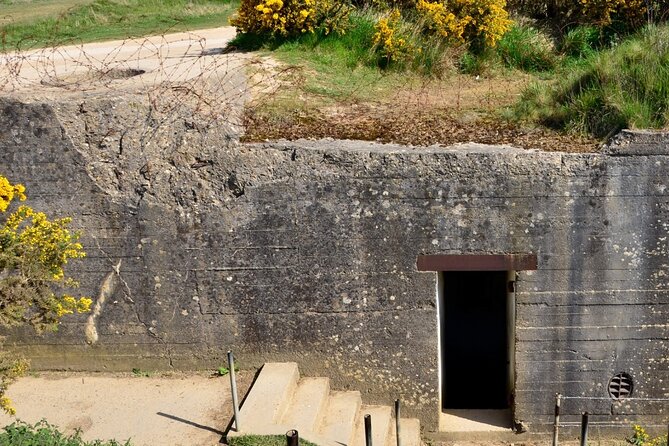
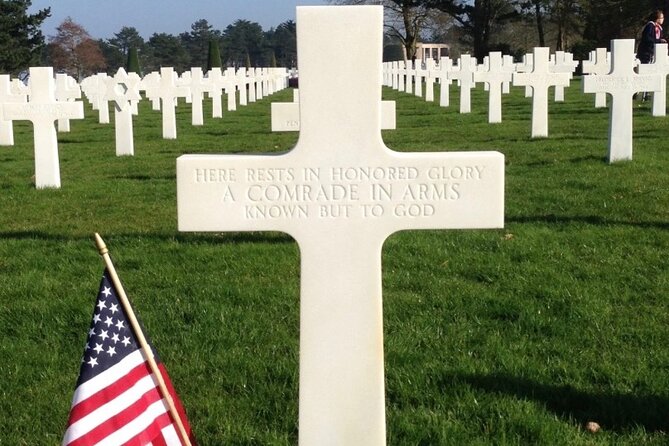
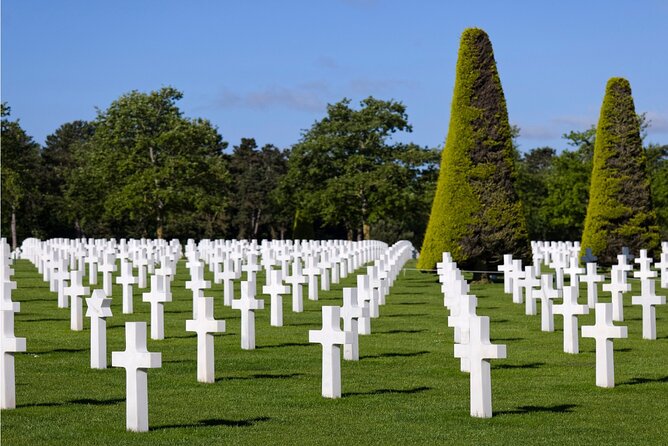
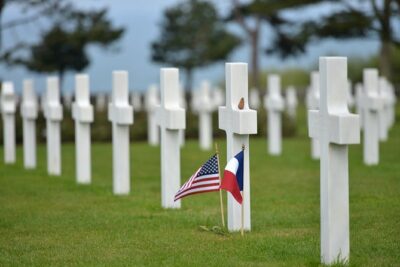
The day ends at the Cimetiere Americain de Colleville-sur-Mer. This cemetery is immense, and the scale hits you quickly: 9,388 American soldiers killed during the Battle of Normandy are currently buried here.
This is not a stop where you rush through plaques. The value is in reflection, and the guide’s job is to help you understand what you’re looking at, not to turn it into a fast history lesson. You learn stories about the soldiers, and the atmosphere encourages you to slow down and take in what “freedom for eternity” means when it’s written in names and dates rather than slogans.
If you’ve been absorbing combat details all day, the cemetery changes the tempo in a good way. You go from “How did they do it?” to “Who paid for it?” That emotional pivot is part of what makes this whole route work.
Practical note: since you’ve already been outside on multiple stops, this is where you’ll appreciate comfortable walking shoes again. Also bring what you need for weather, because cemeteries are exposed.
Price and value: what $0.00 (and free site access) signals about the day
The price shown here is $0.00, and that is extraordinary value if it’s accurate for your booking. Even when tours are not free in practice, the important point is that the stops listed include free admission ticket notes for each site. That means your money goes into the guide, the route, and the interpretation, not into separate entry fees.
For a day that spans roughly 7 hours and includes several major WWII sites, a small group guided format can be a better use of time than trying to stitch everything together on your own. You’d still need a way to connect the sites, and you’d likely miss the on-site explanations that turn each location into a piece of a larger June 6 puzzle.
In real-world terms, you’re paying for someone local to guide your attention. That’s hard to replicate. A map helps, but a good guide tells you what to notice, and why.
If the minimum group requirement is met, you also benefit from that structure. When a tour runs only for full groups, the route tends to flow smoothly because the provider has built the day around the sites’ timing and walking.
Who this tour is best for (and who might want a different plan)
This tour fits best if you want a focused, guided day that covers the big American sites without feeling like a checklist. It’s ideal for people who like their WWII history grounded in real place details and short, specific stories. It also works well for families, because the route includes small “story stops” like Angoville-Au-Plain, not only long beach stretches.
It’s also a good choice if you want to connect film memories to actual terrain. Knowing the names is one thing, seeing the cliff-top battery terrain at Pointe du Hoc and then standing at Omaha gives the mental links your brain already makes when you watch Saving Private Ryan.
You might choose a different tour if you want maximum free time at just one site, or if you prefer a totally self-paced route. This one is structured, and that structure is part of its strength.
Should you book this Utah and Omaha landing beaches tour?
Yes, I think you should book it if you want a compact, well-paced D-Day route built around the American landing sequence. The biggest reason is the guide-led interpretation at every stop, including the emotionally grounded visit to the American cemetery. The second reason is the small group size, which keeps the day from turning into noise and rushed photos.
Book it especially if you care about how airborne operations connect to beach fighting, because Sainte-Mere-Eglise and Angoville-Au-Plain give that connective tissue. And if you’re the type who likes details, you’ll appreciate the named landing at Utah Beach with General Theodore Roosevelt Jr and the ranger mission at Pointe du Hoc.
Just keep in mind the two practical realities: it needs at least 4 participants to run, and it is a full-day commitment at about 7 hours. If that works for your schedule and you can handle an emotionally serious ending, this tour is a strong pick.
FAQ
How long is the tour?
The tour is approximately 7 hours.
Where does the tour start?
The meeting point is Place du Québec (Pl. du Québec, 14400 Bayeux, France).
What is the group size?
The group maximum is 8 travelers, and the tour requires a minimum of 4 participants to be confirmed.
Which main sites are included in the route?
You’ll visit Utah Beach, Sainte-Mere-Eglise, Angoville-Au-Plain, Pointe du Hoc, Omaha Beach, and the American cemetery at Colleville-sur-Mer.
Is there an admission fee for the stops?
The tour information lists admission ticket free for the stops.
What kind of ticket do I receive?
You’ll have a mobile ticket.
Is public transportation convenient near the meeting point?
The meeting point is near public transportation.
Can I cancel for a full refund?
Yes. The tour offers free cancellation, with a full refund if you cancel up to 24 hours in advance.
Is the tour suitable for most people?
Most travelers can participate.
Recently added around Bayeux
- WW2 Jeep or Dodge truck tour of the Omaha Beach site★ 5.0 · 51 reviews
- 2- to 6-hour sidecar excursion on the D-Day Landing Beaches★ 5.0 · 131 reviews
- Normandy U.S Beaches & D-DAY Sites Private Tour From Bayeux★ 3.5 · 5 reviews
- Private vintage sidecar tour of the D-Day Landing Beaches★ 5.0 · 130 reviews
- Normandy Battlefields D-Day Private Trip with VIP Services from Paris★ 5.0 · 240 reviews
- Private guided Allied D-Day Tour from Bayeux★ 5.0 · 45 reviews
- Private guided British D-Day Tour from Bayeux★ 5.0 · 14 reviews
- Mont Saint Michel Experience – Shuttle Service from Bayeux★ 5.0 · 194 reviews
Normandy & D-Day Tours, compared.

Normandy D-Day Sites & Cemetery Day Trip from Paris with Lunch
Read our review →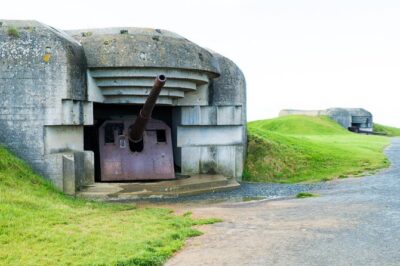
Normandy D-Day Small-Group Day Trip with Omaha Beach, Cemetery & Cider Tasting
Read our review →
Normandy D-Day Beaches and American Cemetery Day Trip from Paris
Read our review →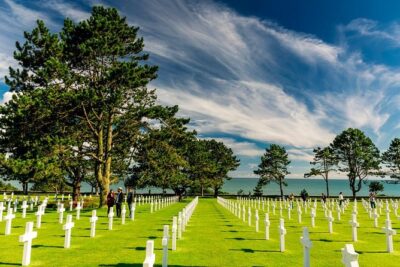
Normandy American D-Day Beaches Full Day Tour from Bayeux
Read our review →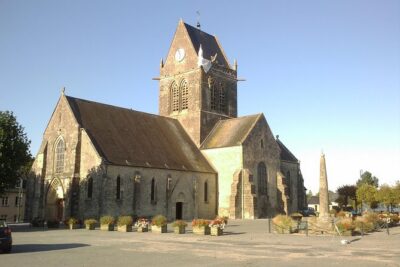
Normandy American D-Day Experience – Group tour from Bayeux
Read our review →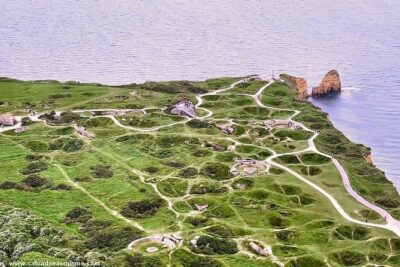
Normandy Beaches Half-Day Afternoon Trip from Bayeux (A2)
Read our review →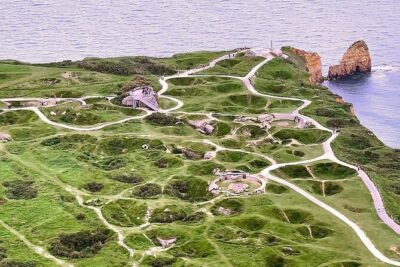
Omaha Beach D-Day Experience – Afternoon group tour from Bayeux
Read our review →Browse the lists this tour appears in