
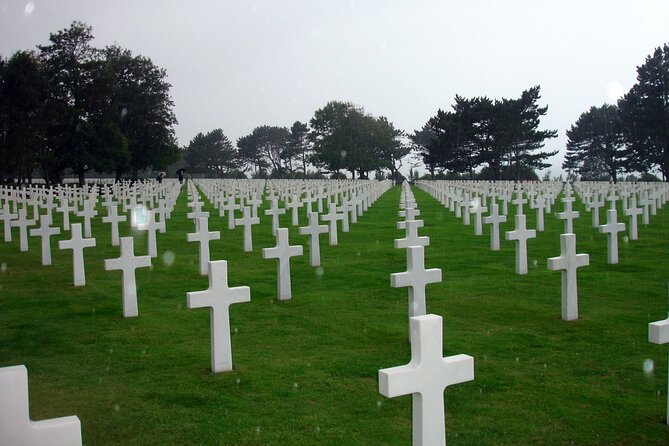
Reviewed · NORMANDY & D-DAY TOURS
Omaha and Utah beaches
Omaha and Utah Beaches are the kind of place where the geography matters. This tour ties the terrain to the strategy, so you are not just looking at photos, you are following the logic of the invasion as it unfolded.
I especially like the way this day keeps moving without feeling rushed, with a guide who brings the story to life and uses maps and photos to keep everything clear. I also like the small group size and the hassle-free round trip ride out of central Bayeux.
The only real drawback to plan for is that it is a long day. It runs about 9 hours, and food and drinks are not included, so you’ll want to think ahead for warmth and energy, especially on chilly morning beach air.
Key highlights to expect on this Omaha and Utah day
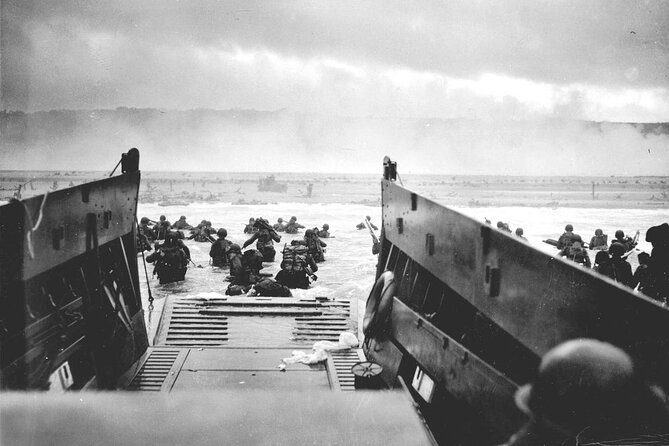
- Omaha Beach and Utah Beach in one route, so you get the full arc of the landings instead of one side of the story
- WWII landing sites tied to American V Corps and VII Corps, helping you track who was where and why
- A strong guide experience built around story, place names, and practical pacing (lots of praise for the guide making the tour)
- Stops that go beyond the main beach photos, including memorials, medical sites, and headquarters areas
- Small group limit of 16, which makes it easier to hear and ask questions
Getting started in Bayeux at 8:20 am
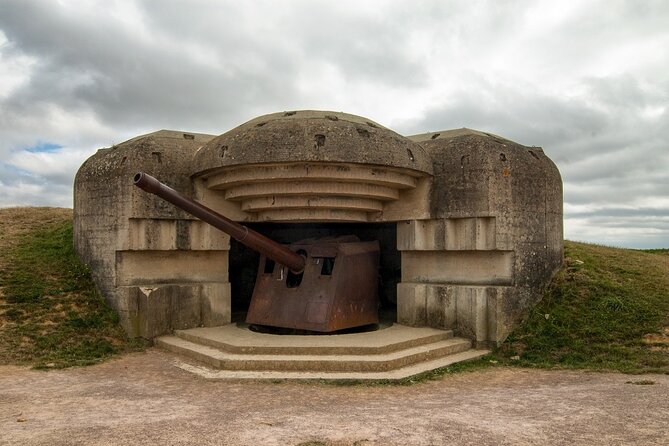
This tour begins at 8:20 am in central Bayeux at Place du Québec (14400 Bayeux, France). You meet there and the day ends back at the same meeting point, which is a huge quality-of-life win when you are trying to see serious WWII sites without playing logistics roulette.
The ride is done by private vehicle with a driver and guide combination. Most people do not love doing beach hopping with transfers and timed entry tickets. Here, you get a direct plan and a guide to translate what you are seeing while you move.
One thing to note from the experience vibe: timing can feel extra tight during anniversary-level crowds. Expect some slowdowns if roads get busy, and lean into patience rather than trying to rush your own thoughts.
More Normandy and D-Day trips:
- Normandy American D-Day Beaches Full Day Tour from Bayeux
★ 5.0 · 2,103 reviews - Normandy American D-Day Experience – Group tour from Bayeux
★ 5.0 · 1,566 reviews - Normandy Beaches Half-Day Afternoon Trip from Bayeux (A2)
★ 4.5 · 1,116 reviews
Long day, smart pacing, and why it matters
The route is built for a 9-hour day, and the pacing is a big deal on sites like these. If you spend too long staring at one overlook and then sprint the rest, you lose the emotional rhythm and the story thread.
This is where the guide quality shows. Multiple guide names come up in praise, including Theo, William, Gillaume, Adam, Ben, Antoine, and Valentine. What they have in common in the feedback is a balance of detail and timing, plus a talent for making the place names feel connected. Guides also seem to use maps and photos to help you orient quickly, which is exactly what you want when you arrive at a battlefield site and your brain is trying to make sense of distance and terrain.
If you like tours that feel like a guided walk with explanations rather than a bus lecture, this one usually hits that sweet spot.
Longues-sur-Mer Battery: the preface to Omaha
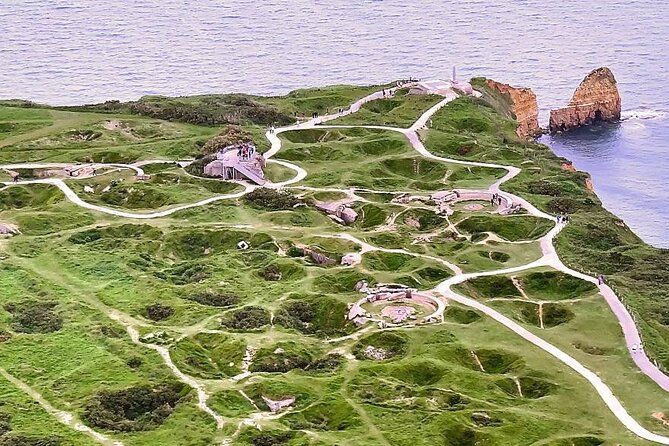
Your day begins with the Longues-sur-Mer Battery stop, then moves toward the American landing areas. Batteries are not just random ruins. They tell you where defenders could see, where they could hit, and why the beaches looked the way they did from the water.
Even if you are not a military-history person, the value here is simple: you get a framework before you step onto the beaches. That means when you reach later stops, you will understand what you are looking at instead of relying on memory or guesswork.
This early start can feel like a lot, but it is also helpful. You’ll get more done in daylight hours and before the heat (or crowds) shift the mood.
Omaha Beach and the American Cemetery of Colleville

This is the emotional core of the tour for most people. Omaha Beach is not only a famous shoreline, it is a place where the scale hits you in person. You see the stretch of coast and understand how much effort had to collide with real conditions.
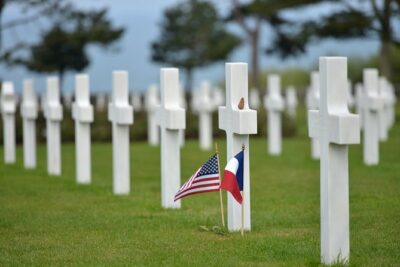
Then you head to the American Cemetery of Colleville. The cemetery is one of the most powerful parts of the whole route because it turns the story into a human ledger. You are standing in a designed space that forces you to slow down. Many visitors describe it as overwhelming in a quiet way, especially when you really look down rows of names and reflect on what a “day” in history actually cost.
A practical tip: bring a moment plan for this area. Do not treat it like one more stop. Give yourself time to walk, read a few names, and reset your head. Your guide can point out what to focus on, but your own pause is part of the value here.
More day trips out of Paris:
- Omaha and Band Of Brothers Full Day Tour
★ 5.0 · 1,104 reviews - Omaha Beach D-Day Experience – Afternoon group tour from Bayeux
★ 5.0 · 1,088 reviews - Normandy Battlefields Tour – American Sites (A3)
★ 5.0 · 876 reviews - Private D-Day Experience from Bayeux
★ 5.0 · 573 reviews
Pointe du Hoc and Sainte Mère Eglise: the story gets sharper
After Omaha and the cemetery, the itinerary includes Pointe du Hoc. The big value of this stop is perspective. High ground and cliff lines change everything. When you stand in the location, you can start to see why certain actions were so high stakes.
Next comes Sainte Mère Eglise, a town with deep D-Day connections. Even when you are not tracking every unit detail, the key benefit is context. You move from beach action to the surrounding human geography, where the invasion plan met villages, churches, and roads.
Some tours do not have room for this kind of “place-to-story” shift, but this one does. It gives you a stronger sense of the invasion as a campaign rather than a single dramatic moment.
La Fière and DeGlopper Action: the route widens beyond the beach
The itinerary then continues with stops including La Fière and DeGlopper Action. These areas matter because they show the wider operational picture, not just the waterline.
This is also where the guide’s job is toughest, because you have more terrain variety and more place names packed into the day. When the guide is strong, the extra value is not only facts. It is clarity: who moved, what the terrain demanded, and how later moments connect back to the beach day.
If you have ever been frustrated by tours that only cover the headlines, this is the section that usually fixes that. You are seeing more of the campaign footprint.
Utah Beach and Sainte Marie du Mont: the other landing in full view
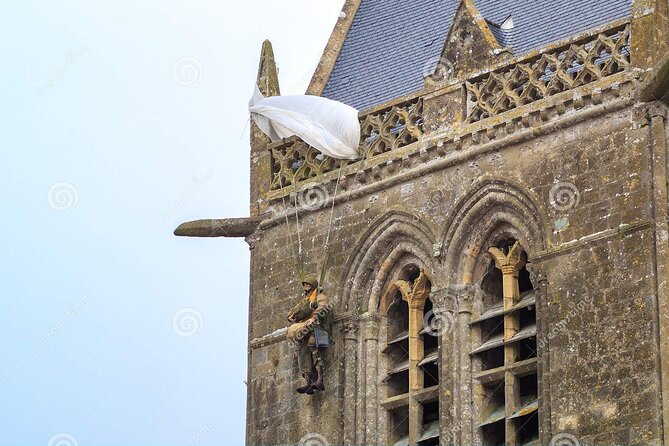
Then you get to Utah Beach, the other major American landing. By the time you reach this part, you have already built mental maps on Omaha and the cemetery, so Utah often feels like a second camera angle on the same story.
You also visit Sainte Marie du Mont. Stops like this help you understand that the landings did not happen in a vacuum. They played out through towns and routes, not just through coastlines.
Utah Beach is often described as powerful for its own reasons, but the big advantage is how the tour sets it up. You are not bouncing randomly. You are following a day-by-day logic through linked sites.
Holdy Battery, La Colombière Hospital, and Hiesville: the human side of combat
Later, the tour includes Holdy Battery and 1st Aid Station, plus La Colombière Hospital, and then Hiesville and memorial or headquarters-related stops.
These locations shift the emphasis from fighting to impact. You get a sense of what happened right after the first wave, where people needed medical care, and how the invasion connected to logistics and response.
This is also where strong guides tend to shine. In reviews, people often mention how guides added individual details and explained why a particular place mattered beyond the headline. If you care about the human cost, these medical and support sites are not optional. They give the story a backbone.
General Taylor’s Headquarter, General Pratt Memorial, and Angoville au Plain
The final stretches include General Taylor’s Headquarter, General Pratt Memorial, and Angoville au Plain, finishing back at the start point.
Headquarters and memorials might sound like “political history” if you do not know the names, but in this context they are practical map points. They help you connect the broader campaign decisions to the ground you have been visiting all day.
What you gain here is a feeling for the chain of command and planning, not just the chaos of the beaches. Many people find this helps the day make more sense as a complete story rather than a collection of impressive stops.
What to bring for a cold beach morning and a 9-hour route
This is one of those tours where comfort is not a luxury, it affects your ability to listen. People recommend warm clothing because beaches can be cold on autumn mornings, and even in milder seasons the wind off the water can surprise you.
Here’s what you should plan:
- Wear comfortable shoes for walking across cemetery paths and uneven ground at shore and memorial sites
- Bring a warm layer, plus something windproof if you run cold
- Bring water, and plan for your own lunch or snacks since food and drinks are not included
- Have your phone charged, because orientation can be easier with maps and photos provided or referenced by your guide
If the roads slow down due to crowds, you’ll also want patience and simple expectations: this is a moving day with multiple stops and real-world driving time.
Price and value: what you’re paying for at $183.81
At $183.81 per person for roughly 9 hours, you are paying for more than transportation. You are buying time, routing, and interpretation.
Here’s the value math as a traveler:
- You get private vehicle transport with a driver and guide, which saves you from renting a car or juggling multiple transfers across the Normandy invasion zone
- You get a professional guide plus a local guide, which matters because the stops are dense and the terminology can be confusing without help
- The itinerary is packed with major sites plus supporting locations, so your day is not wasted on long drives between unrelated places
- The tour notes admission as free in the itinerary, so you are not stacking extra site entry fees on top of the base cost
Is it cheap? No. But if you want to leave with understanding, not just memories of shoreline photos, the guide component is the real reason this tour earns a strong rating. Many people in the feedback stress that the guide makes the tour, and that is exactly what you should look for with WWII sites.
Also, the group size cap of 16 helps keep things from turning into a sprint. You can actually hear what matters and ask questions without waiting for the tour to catch up.
Who should book this Omaha and Utah Beaches tour
This is a strong choice if you want:
- The biggest WWII American landing highlights in one day, with Omaha and Utah both included
- A guided explanation that connects terrain, place names, and the overall invasion plan
- A day built for reflection, especially around the cemetery and memorial stops
It may be less ideal if you:
- Hate long days with lots of stops and walking
- Prefer self-paced tours where you can linger for hours in one place without moving on
If you are visiting Bayeux and want a top-tier WWII day without extra car stress, this tour fits the bill.
Should you book it?
Yes, I think it is a smart booking for most people who come to Normandy specifically to understand D-Day. The reason is simple: you get the big beach hits plus the supporting sites that make the story coherent, and you get a guide-driven experience that many people describe as the heart of the day.
If you want to get the most out of it, plan for a long morning, bring warm layers, and bring your own food or a lunch plan. Then show up ready to listen and slow down when you reach the cemetery.
FAQ
How long is the Omaha and Utah beaches tour?
The tour duration is listed as approximately 9 hours.
What time does the tour start, and where is the meeting point?
The start time is 8:20 am, and the meeting point is Place du Québec, 14400 Bayeux, France. The tour ends back at the meeting point.
What does the price include?
The included items are driver/guide, local guide, professional guide, and transport by private vehicle.
Are food and drinks included?
No. Food and drinks are not included, and lunch is also not included.
Is there an admission ticket cost?
The itinerary notes admission ticket free.
Can I cancel for a full refund?
Yes. You can cancel up to 24 hours in advance for a full refund. If you cancel less than 24 hours before the start time, the amount paid is not refunded.
Recently added around Bayeux
- From Bayeux: Omaha Beach, Cemetery, and Pointe du Hoc Tour★ 4.9 · 33 reviews
- Normandy World War II Private 2 Hours Sidecar Tour Bayeux★ 5.0 · 35 reviews
- Bayeux: Normandy WWII Private Half-day Sidecar Tour★ 5.0 · 11 reviews
- Normandy DDay Beaches Tours all year round★ 4.8 · 11 reviews
- From Bayeux: Half-Day Normandy WWII Sidecar Tour★ 5.0 · 49 reviews
- Normandy D-Day Beaches Private Tour US sector from Bayeux3 reviews
- Normandy D-Day Beaches Private Canadian Sector from Caen★ 5.0 · 3 reviews
- From Bayeux: Mont-Saint Michel Guided Tour★ 4.9 · 22 reviews
Normandy & D-Day Tours, compared.

Normandy D-Day Sites & Cemetery Day Trip from Paris with Lunch
Read our review →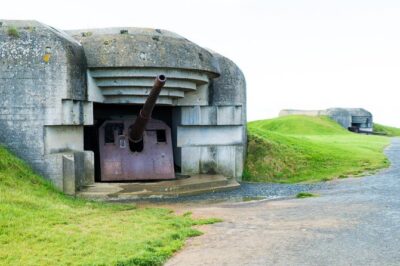
Normandy D-Day Small-Group Day Trip with Omaha Beach, Cemetery & Cider Tasting
Read our review →
Normandy D-Day Beaches and American Cemetery Day Trip from Paris
Read our review →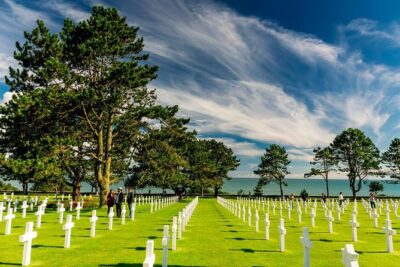
Normandy American D-Day Beaches Full Day Tour from Bayeux
Read our review →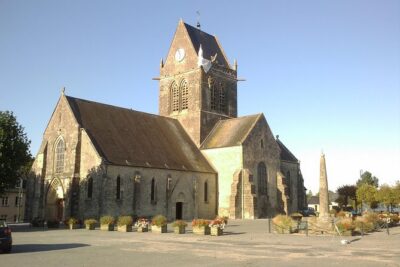
Normandy American D-Day Experience – Group tour from Bayeux
Read our review →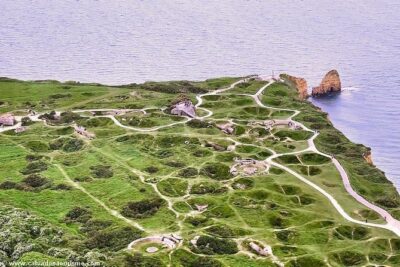
Normandy Beaches Half-Day Afternoon Trip from Bayeux (A2)
Read our review →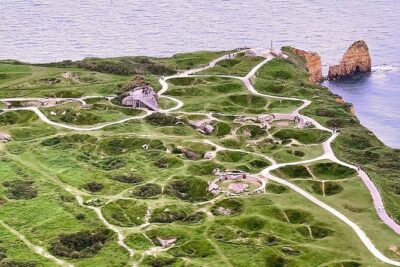
Omaha Beach D-Day Experience – Afternoon group tour from Bayeux
Read our review →Browse the lists this tour appears in