
Reviewed · HISTORICAL TOURS
Historic Paris Walking Tour in English
Central Paris turns into a timeline on this walk. You hit major landmarks, but the real fun is how the stories connect art, power, and everyday pride in the city. Expect a guide who treats Paris like a live show, with characters and turning points you can point to as you go.
I love that the tour links big monuments to clear human drama, from the Louvre’s palace-to-museum arc to the revolution-sized changes in the streets. I also like that the guide often leans on memorable figures, like Quasimodo and Napoleon, to make what you see at Notre-Dame Cathedral click fast.
One consideration: this is a 150-minute walk with a fixed start, no hotel pickup. You will want to arrive on time at Hotel de Ville and be ready for a steady pace.
Key highlights to look for
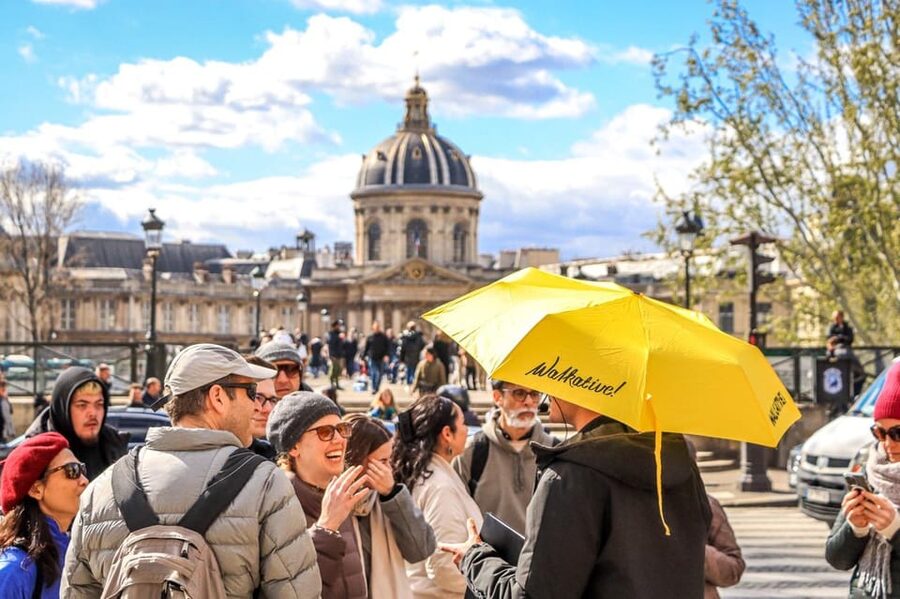
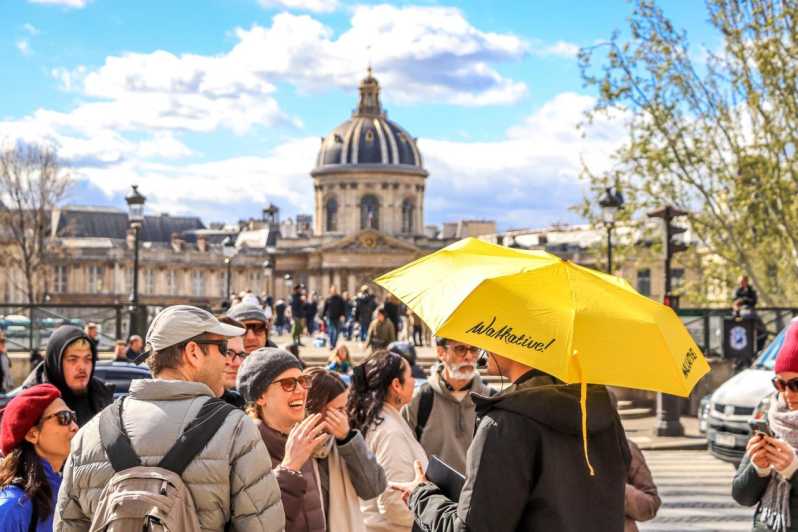
- Hotel de Ville start with a yellow umbrella, easy to find and central for a first walk
- Louvre palace-to-museum context, plus a story thread tied to the Mona Lisa
- Notre-Dame and Quasimodo context, so the medieval building feels readable
- Pont des Arts bridge views, a calmer pause between major sights on the Seine
- Tuileries Gardens time, where the 19th-century makeover of Paris feels tangible
- Entertaining, narrative-led guiding, with English guides such as Tom or Yazid highlighted in past groups
Where the story begins at Hotel de Ville
If you want the fastest route into Paris, this kind of walk is a smart choice. You start at Hotel de Ville, right in the thick of old and new Paris, and you meet outside the metro at exit 5. You are looking for a yellow umbrella, so you do not waste time hunting when you should be listening.
From the beginning, you get the city’s origin story in plain terms. Paris grows from early settlement on marshy ground by the Seine, then shifts hands through empires and kingdoms, later becoming a major political, economic, religious, and cultural center. The tour also frames the role of education, including the early importance of the Sorbonne, which helps explain why ideas spread so powerfully here.
I like that this tour treats Paris as more than postcards. The guide brings in the city’s pattern of upheaval, including the revolution era and the violence that shaped the political landscape. Then the walk connects that to the visible physical changes, like the wider boulevards and the modernization push in the 19th century meant to reduce the ease of street barricades.
Practical note: hotel pickup is not included. So plan your own route to the meeting point, and arrive about 10 minutes early so you do not end up stressed when the group is ready to move.
More walking tours in Paris:
- Paris Top Sights Half Day Walking Tour with a Fun Guide
★ 5.0 · 2,893 reviews - Montmartre Hidden Gems and Scenic Highlights Walking Tour
★ 5.0 · 2,684 reviews - Montmartre Hill French Gourmet Food and Wine Tasting Walking Tour
★ 5.0 · 2,588 reviews
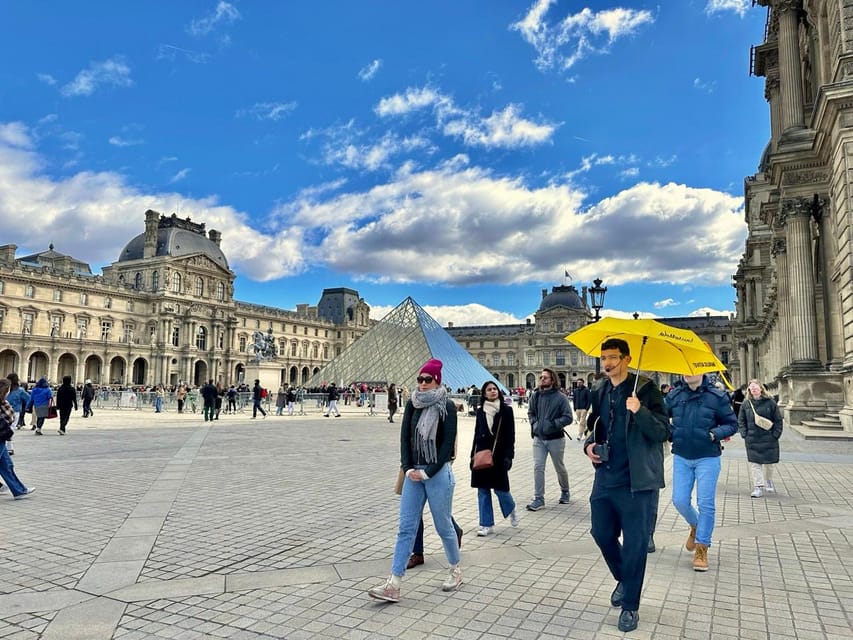
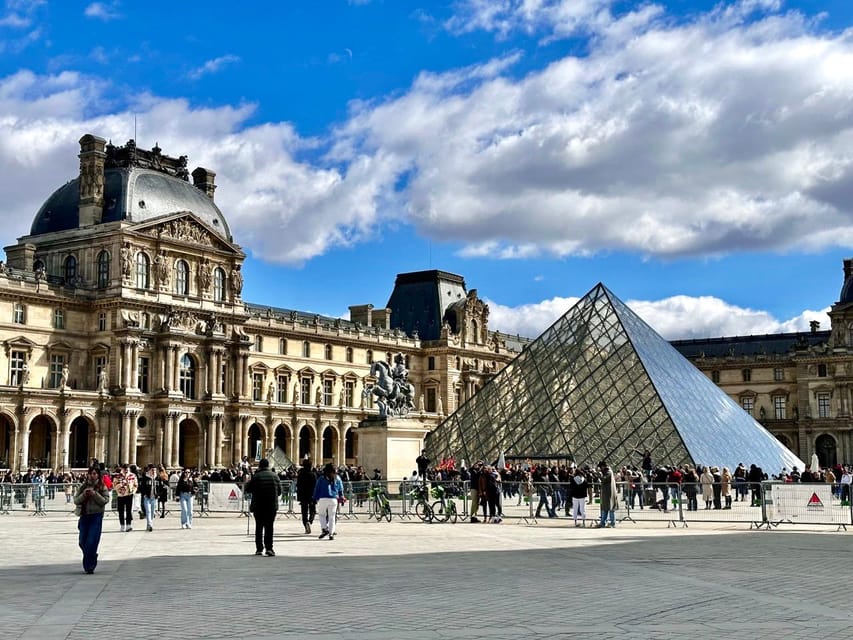
The Louvre as palace, museum, and art-thief legend
Most people see the Louvre as a giant art museum. The best part of this tour is getting the building’s full role in your head first, before you look at any one object. You hear how the Louvre began as a palace and evolved into a world-famous museum, so it feels like a transformation rather than just a location.
You also get a story angle that turns art history into suspense. The guide connects the Louvre to one of the most daring art theft tales in history, including the Mona Lisa. You get the sense that art here is not only admired, it has been guarded, coveted, and used as a symbol.
This is valuable for first-timers because it changes how you look. After hearing the palace-to-museum context and the theft legend, the Louvre stops being just “a place with famous paintings.” It becomes a stage where French identity, power, and taste played out over time.
Even if you are not an art superfan, you’ll likely enjoy the way the guide keeps the focus moving. The Louvre discussion is tied back to the rest of Paris, so it does not feel like a separate lecture detached from the city streets outside.
What to watch for: the Louvre sits in the middle of a larger urban story. If you keep your attention on that, you will get more out of the walking time, not less.
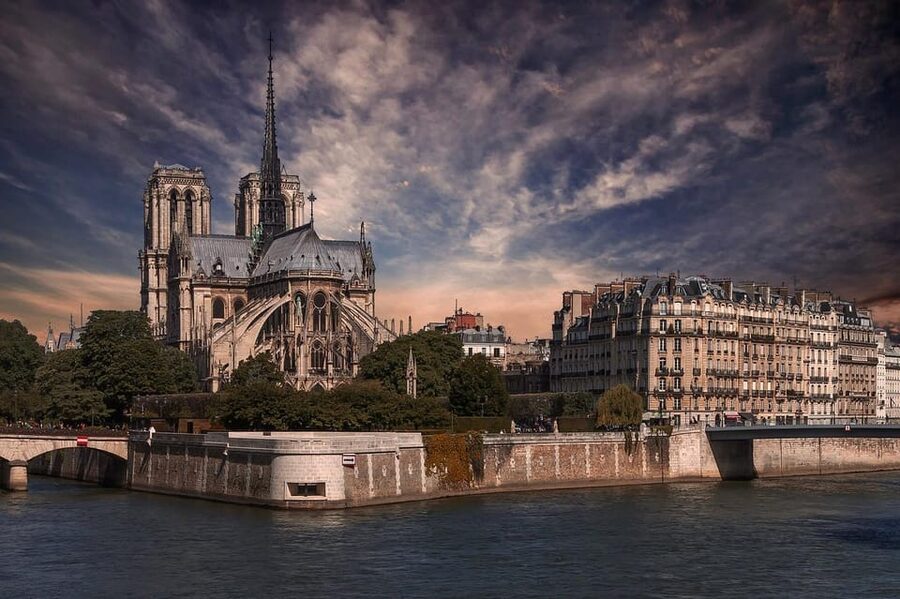
Notre-Dame and Quasimodo, reading a medieval cathedral
Notre-Dame Cathedral is one of those places where your first glance gives you the scale, but not always the meaning. On this walk, you get help “reading” it. The guide frames Notre-Dame in the medieval world that shaped the city’s identity, then connects it to the character that everyone associates with it, Quasimodo.
That Quasimodo element matters because it gives you a human hook. You stop treating the cathedral as an isolated masterpiece and start seeing how stories, fear, devotion, and politics can all live inside the same stone. The tour’s narrative style makes that bridge between legend and landmark feel natural.
I also like how the guide tends to answer questions as you go. In past groups, guides have been praised for being energetic, clear, and good at keeping conversations moving, which is exactly what you want at a stop like Notre-Dame where people want to understand what they are looking at.
Possible drawback: Notre-Dame is a major attraction. Even with a guide, you may still feel the general “high interest” energy around you, so keep your expectations flexible for photo timing and crowd flow. The payoff is the context, not the guarantee of quiet.
Pont des Arts, a bridge that links romance to real history
Pont des Arts is one of those spots where the city slows down for a second. The tour highlights it as a key Seine crossing, and that is a smart move. You get a viewpoint break between heavy architectural moments, plus a chance to connect Paris’s geography with its stories.
I like the way bridges work on this kind of tour. They force you to understand how Paris is laid out, not just what it owns. The Seine becomes part of the explanation for why power, culture, and travel shaped the city in the first place.
Pont des Arts also fits Paris’s emotional brand. The tour’s Paris themes include love and desire, and you get that “city of romance” feeling in a place that is genuinely scenic. At the same time, the guide keeps it grounded by tying the bridge to the broader historical evolution of central Paris.
If you’re the sort of traveler who enjoys atmosphere as much as facts, this stop usually delivers. You get views, you get context, and you get to reset before the next big chapter.
More history tours in Paris:
- Paris: Dark History and Ghostly Guided Walking Tour
★ 4.7 · 1,000 reviews - Le Marais/Paris – The Historic, Trendy, Jewish, LGBT district
★ 5.0 · 341 reviews - Paris: Le Marais & Montmartre Jewish History Walking Tour
★ 4.8 · 170 reviews - Paris Jewish History 2-Hour Private Guided Walking Tour
★ 4.6 · 32 reviews
Tuileries Gardens and the 19th-century Paris makeover
Tuileries Gardens is where the tour shifts from stone and power into the city’s social rhythm. The guide points out how these gardens fit into the larger 19th-century modernization story of Paris.
There is a reason this era gets so much attention in the narrative. Paris responded to repeated unrest by redesigning the city, building wider boulevards, improving infrastructure, and adding parks. It was modernization with a purpose, and you can feel the intention in how the city opens up.
The gardens are also a practical gift to you. They give you a more relaxed setting to digest what you just learned about revolution, empire, and modernization. If you time it right, you can even think about a picnic-style pause later in the day. It fits the tour’s overall vibe: art and history in the morning, then real Paris life in the afternoon.
One thing to keep in mind: the gardens and the route around them are part of the city’s public space. That means you may encounter regular foot traffic. Your goal should be to enjoy the walk and absorb the story, not to expect a private garden moment.
Napoleon, 20th-century echoes, and why the city feels political
Paris is never only one era. This tour leans into that by threading major figures through the place you are standing. You hear connections tied to Napoleon and also stories connected to the 20th century, including Hitler. The point is not shock value. It is to show how Paris remained a political center even when the world changed underneath it.
You also get Quasimodo and the Louvre theft tale, which are different kinds of “character stories.” That variety matters because it stops history from feeling like a textbook. You hear about revolution and violence, then you see how the city rebuilt itself physically. Later, you get reminders that power always leaves marks, even when those marks are less visible at street level.
For me, the best value in a walking tour like this is the way it builds a mental map of cause and effect. Wide boulevards and infrastructure improvements are not random city planning decisions. They connect to fear of unrest and a push for control. The Eiffel Tower storyline connects public protest and eventual affection, which helps explain why Parisians can be both proud and stubborn about change.
You will likely walk away with a sharper sense of why Paris feels layered. It is not just old buildings. It is a city that keeps reacting to the world, then reorganizing itself to match.
How the 150 minutes really feel on your feet
A 150-minute duration is long enough to get real context, short enough to stay energetic. It is about 2.5 hours of moving, plus stops to look, listen, and ask questions. If you are comfortable walking at a steady pace, you should be fine.
This tour is also described as well organized and designed to keep groups engaged. In one group example, the size was kept to fewer than 20, which helps the guide maintain eye contact and make sure people are not lost in the middle of a big crowd.
So what should you do before you meet? Wear shoes you trust. Paris sidewalks can be uneven in spots, and you will want your footing while you look up at cathedral stone and museum architecture. Bring water if the weather is warm, and have your camera ready, but do not rely on stopping every time you see a postcard view. The best photos here come after a few story beats, when you know what you are photographing.
If you are traveling solo, this format tends to work well. It is a small-group style walk with an expert guide, and people are usually receptive because everyone has the same goal: understand Paris fast, then explore on your own.
English guiding, story-driven and question friendly
The tour is in English, and the guide role is front and center. You are not just receiving a list of facts. You are getting a narrative that keeps the city themes moving: art, power, religion, rebellion, and romance.
Past guides were praised for different strengths, which tells you something important about what to expect. Tom was described as fantastic and informative with crisp storytelling. Yazid was praised for passionate art and building context. Harry and Thomas were called out for story-telling and humor. Victoria stood out for being inclusive and letting conversations flow naturally.
Even if your guide is not one of these names, the pattern is clear: expect an engaging guide who can connect architecture to culture and answer questions without making the walk feel like a lecture.
Price and value for a first-time Paris reset
At $31 per person for 150 minutes, this is a cost-effective way to start your Paris trip. The value comes from what you get for that price: an expert local guide and a thoroughly constructed narrative that hits multiple headline sights.
One key detail you should understand before you book: you join a general pay as you wish style arrangement. The amount you pay covers a reservation fee and the guide’s payment. That means your purchase is not just “a ticket to a walk,” it is also how the guide is compensated in this model.
So how should you think about it as value? If you have limited time in Paris, this tour helps you build context across the biggest names, including Louvre and Notre-Dame, plus iconic bridges and gardens. It also helps you plan the rest of your day because you will recognize what you are seeing later.
If you have plenty of time and you love self-guided wandering, you could do the landmarks on your own. Still, this kind of guided narrative saves time and adds meaning, especially for history-heavy stops.
Who this walking tour suits best
This is a great fit if you want a first-day orientation that goes beyond surface facts. It suits:
- First-timers who want Louvre and Notre-Dame context fast
- People who like history, art, and politics tied directly to what they see
- Solo travelers who want an easy way to meet the city through a guide
- Travelers who appreciate storytelling, including character-driven links like Quasimodo
It may be less ideal if you dislike walking or want a stop-by-stop museum pace with long indoor time. This tour is built around moving through the city, so keep your expectations aligned with an outdoor narrative.
Should you book this Historic Paris Walking Tour?
I’d book it if you want a guided overview that connects major Paris landmarks to the city’s political and cultural storyline. The strong point is the narrative approach, including the way the guide links the Louvre to the Mona Lisa theft legend and makes Notre-Dame feel connected to Quasimodo.
I would pause before booking only if you are very sensitive to on-feet time or you need hotel pickup. Since it starts at Hotel de Ville with no pickup, you must get yourself there smoothly.
If you can meet on time and you enjoy stories as much as sights, this is a solid way to get your bearings and start thinking like a Paris watcher, not just a Paris photographer.
FAQ
Where is the meeting point?
The meeting point is Hotel de Ville, outside the metro at exit 5. Look for a yellow umbrella.
What is the tour duration?
The tour lasts 150 minutes.
Is the tour guide English speaking?
Yes, the live tour guide is in English.
Is hotel pickup or drop-off included?
No, hotel pickup and drop-off are not included.
How much does it cost?
The price is $31 per person.
What is the cancellation policy?
You can cancel up to 24 hours in advance for a full refund.
Recently added around Paris
- Paris: Louvre Museum Timed Entry Ticket & Pop Culture Tour★ 4.6 · 26 reviews
- Paris: Louvre Must-See Tour with Reserved Entry Ticket★ 4.9 · 164 reviews
- Paris: Louvre photoshoot or Seine bridges Eiffel Tower walk★ 5.0 · 49 reviews
- Louvre & Mona Lisa Morning Tour with Reserved Access★ 4.0 · 15 reviews
- Paris: Louvre Museum Skip-the-Line Tickets for Monalisa★ 3.0 · 42 reviews
- Paris: Louvre Museum Ticket with Optional Hosted★ 3.1 · 89 reviews
- Paris: Louvre Museum and Orsay Museum Guided Tour★ 5.0 · 6 reviews
- Paris: Louvre Museum Mona Lisa First Viewing Semi-Private★ 4.2 · 21 reviews
Historical Tours, compared.

Louvre Museum Entry with History of Mona Lisa
Read our review →
Le Marais/Paris – The Historic, Trendy, Jewish, LGBT district
Read our review →
Le Marais & Montmartre Jewish History Walking Tour
Read our review →
Mont Saint Michel: Village History and Legends Walking Tour
Read our review →
Champagne Cellar Experience: Explore our historic cellars
Read our review →
Paris Jewish History 2-Hour Private Guided Walking Tour
Read our review →
Arc de Triomphe Rooftop: Unveil History & Breathtaking Views
Read our review →Browse the lists this tour appears in