
Reviewed · MONTMARTRE TOURS
Paris: Le Marais & Montmartre Jewish History Walking Tour
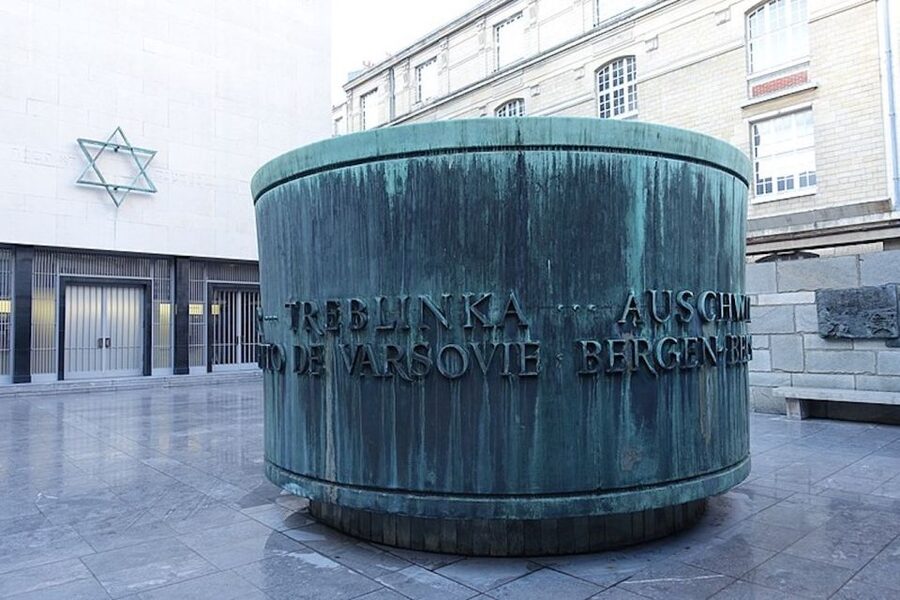
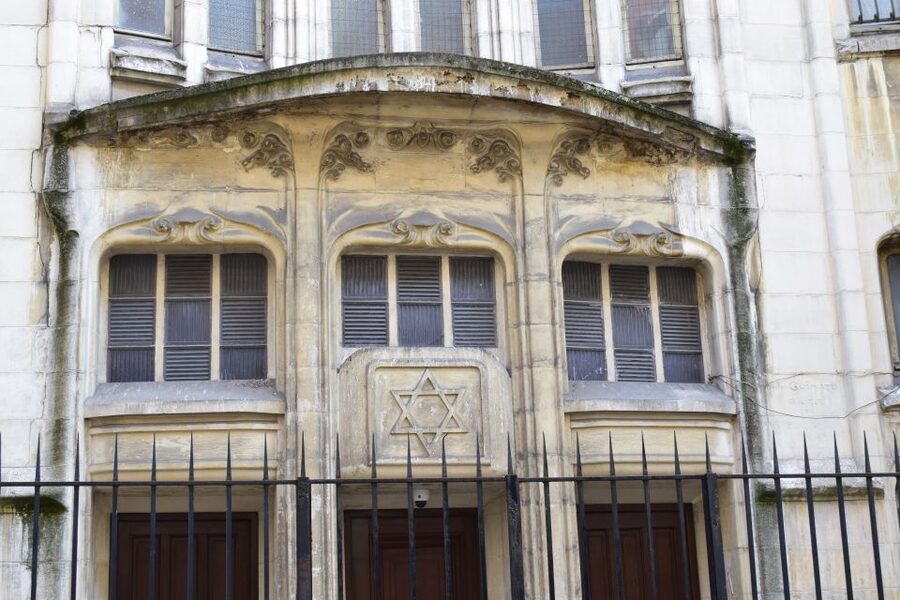
This Jewish history walk connects two worlds, Le Marais and Montmartre, where street corners and monuments tell the same long story. I love pairing the Art Nouveau Guimard synagogue exterior with the solemn Mémorial de la Shoah from outside. One consideration: it is mostly an outdoor walking experience, and you do not go inside the synagogues or other indoor monuments.
The small-group format, typically up to nine people, makes it easier to ask questions and keep a respectful tone around sensitive topics. You also get a public-transport hop to Montmartre, so you spend more time walking the right places and less time figuring out routes. Bring rain gear and sturdy shoes, because this runs on foot and Paris weather is Paris weather.
Key highlights to look for
- Hector Guimard’s synagogue exterior in Le Marais, Art Nouveau flourishes you can spot even from the sidewalk
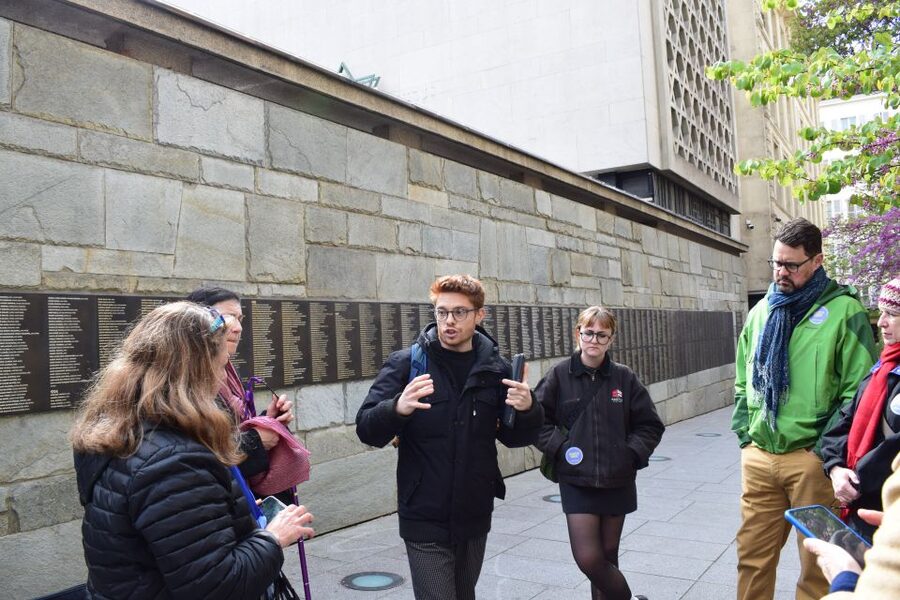
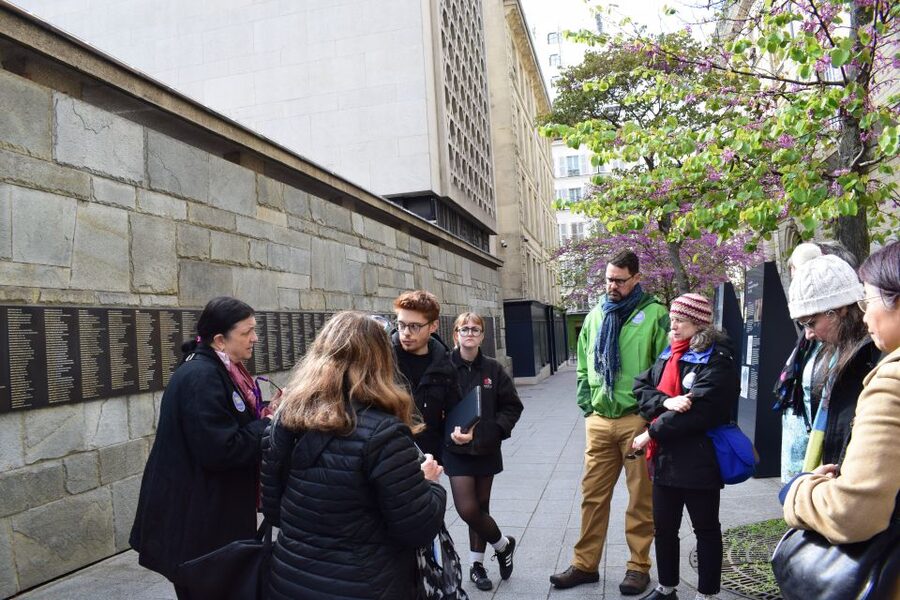
- Mémorial de la Shoah exterior moments for context about what happened, and why memory matters
- Montmartre’s artist-writer streets where Jewish voices helped shape modern Paris
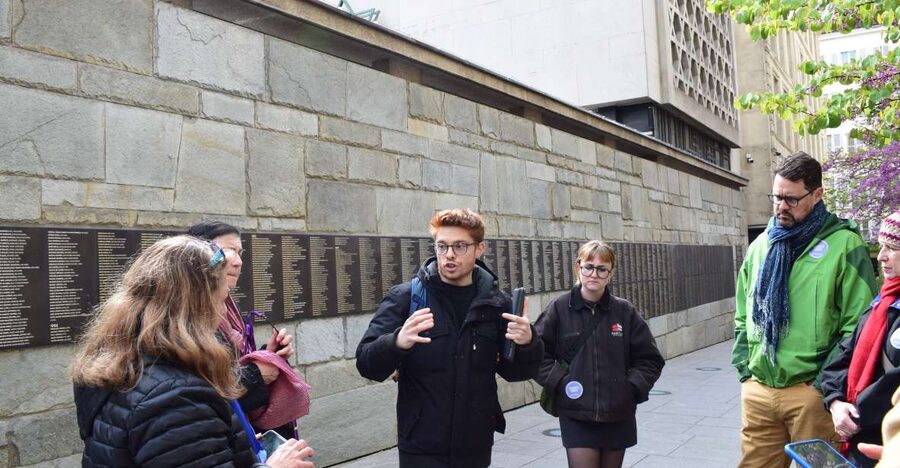
- Small-group Q and A time with English-speaking local guides, some like Benjamin and Benoit get special praise
- Sacré-Cœur panoramic finish plus a thoughtful reflection at Square Louise-Michel
Why Le Marais Meets Montmartre for Jewish Paris Stories
Paris often feels like one city stacked on another. This tour turns that idea into a clear route, from Le Marais where Jewish community life took shape in the center of Paris, to Montmartre where creativity and ambition put Jewish writers and artists into the cultural spotlight.
You are not just seeing landmarks. You are connecting places to turning points, including moments of exclusion and later resilience. The result is a walking timeline you can actually remember, because it is anchored to neighborhoods you can picture.
And yes, you get the famous Montmartre streets too. But you are looking at them through a specific lens, so the cafés and studios feel like part of a story rather than just a postcard stop.
More Montmartre walking tours:
- Montmartre Hidden Gems and Scenic Highlights Walking Tour
★ 5.0 · 2,684 reviews - Montmartre Hill French Gourmet Food and Wine Tasting Walking Tour
★ 5.0 · 2,588 reviews - Paris: Montmartre Cheese, Wine & Pastry Guided Walking Tour
★ 4.8 · 2,255 reviews
Price and logistics: what $80 buys you
At about $80 per person for roughly 210 minutes, the value is the guided sequencing. You are getting a local expert to stitch together Jewish Paris across centuries while you move between two neighborhoods that are not close enough to treat as one simple stroll.
The price also covers a practical part many DIY plans forget: public transport tickets. That matters on a day when Montmartre already feels like a vertical workout and you want to arrive with energy.
The trade-off is also clear. This is not an entry-fee tour where you spend lots of time indoors. You will be outside for key sites, including synagogues viewed from the exterior, so you should expect a story-led experience rather than a museum-day checklist.
Starting point options: BHV Marais or L’Elephant du Nil
Your meeting point can vary based on the start option you book. Two common choices are BHV Marais, L’Elephant du Nil and a second option tied to the Marais area.
Here is the practical advice: arrive about 15 minutes early and confirm you are at the exact spot for your chosen option. Paris big-store zones can feel like a maze, and BHV in particular has multiple entrances, so it is worth giving yourself a cushion.
If you are coming by metro, pick one route and stick to it. Last-minute rerouting near the meeting point is how good tours start with stress, and you want a smooth start for this one.
Le Marais first: streets that frame everyday Jewish Paris
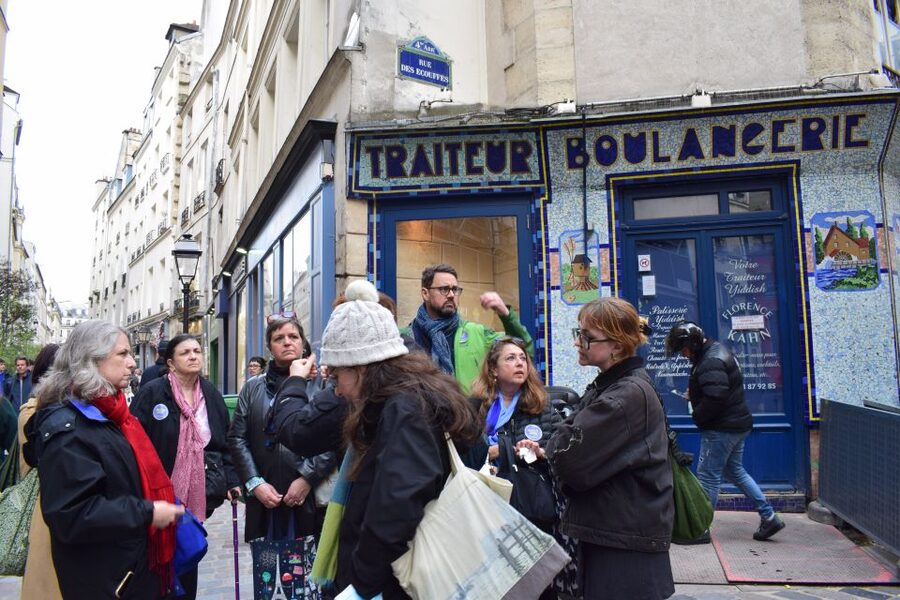
The tour begins in Le Marais, often treated as the city’s medieval and old-Paris showcase. What makes this part interesting is that the guide uses those preserved streets as evidence, not decoration.
You walk through the kind of streets where daily life and trade once mattered, and the guide connects that atmosphere to the Jewish presence in Paris from earlier periods to today. Instead of just naming places, the walk explains how a neighborhood gains community structures, institutions, and rhythm over time.
You also get a sequence of specific stops that act like anchors. Think of this as building a map in your head, block by block, so later Montmartre feels like a logical shift rather than a random add-on.
More tours of the Marais:
- Award-Winning Paris French Bakery Experience — Le Marais, 4th Arr
★ 4.5 · 1,186 reviews - Paris Le Marais Food Tour With 10+ Tastings, Cheese, Wine & More
★ 5.0 · 985 reviews - Paris Le Marais District Original Food and Wine Tasting Tour
★ 4.5 · 880 reviews - Paris Bike Tour Hidden Secrets in the Latin Quarter & Le Marais neighborhoods
★ 5.0 · 766 reviews
Village Saint-Paul: why this area matters
Near the Village Saint-Paul area, you get the feeling of old Marais lanes and courtyards that still shape how people move. This stop is less about a single dramatic monument and more about the setting.
In a tour like this, the setting matters because Jewish community life was tied to location, safety, commerce, and connection. You learn what to notice as you walk, like how street layouts and neighborhood geography influence where institutions appear.
Agoudas Hakehilos exterior and the Hector Guimard Art Nouveau moment
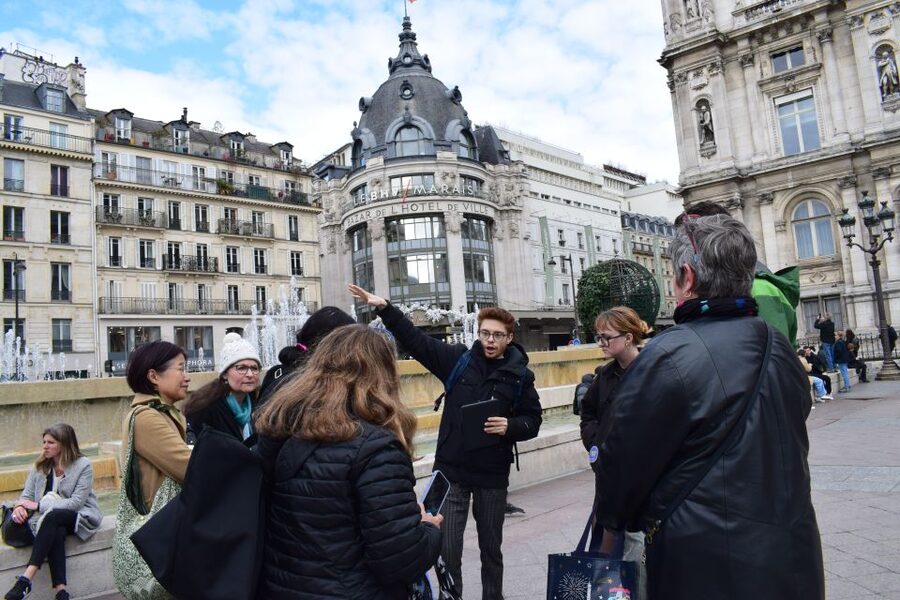
One of the standout “spot it on the sidewalk” stops is Agoudas Hakehilos, recognized for its Art Nouveau design by Hector Guimard. Even without stepping inside, the exterior gives you a visual reason to care.
Art Nouveau is all about style that refuses to be boring. Guimard’s work shows up here in details you can actually see while walking past, so you are not stuck waiting for a gallery moment.
The guide also uses that exterior to talk about how Jewish institutions and public-facing architecture developed in different eras. That is the value: you connect what you see to why it exists.
Practical tip: take out your phone camera before you get close enough to feel rushed. This is one of those exteriors where a quick zoom makes a difference when you want to remember the curves later.
The Holocaust Memorial exterior: solemn context, handled with care
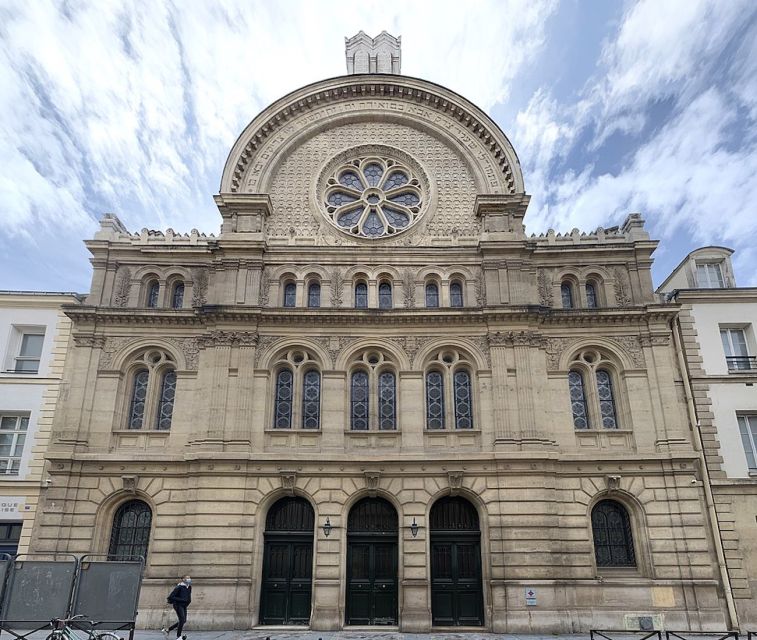
You pass the Mémorial de la Shoah from outside. That matters because the tour’s focus is interpretation, not only observation.
This stop can hit hard. The guides are praised for handling sensitive subjects with the right tone and giving the moment time to land. If you prefer a lighter sightseeing day, this is not the tour to choose.
But if you want your Paris walking time to include honest memory, this is one of the strongest parts of the route. You get historical significance without turning it into a stop you sprint through.
What I recommend: bring a little mental space for this segment. Put your phone away for a minute when you can. You will hear the story, then you will look again with different eyes.
Hôtel de Ville area wrap-up, then a smarter hop to Montmartre
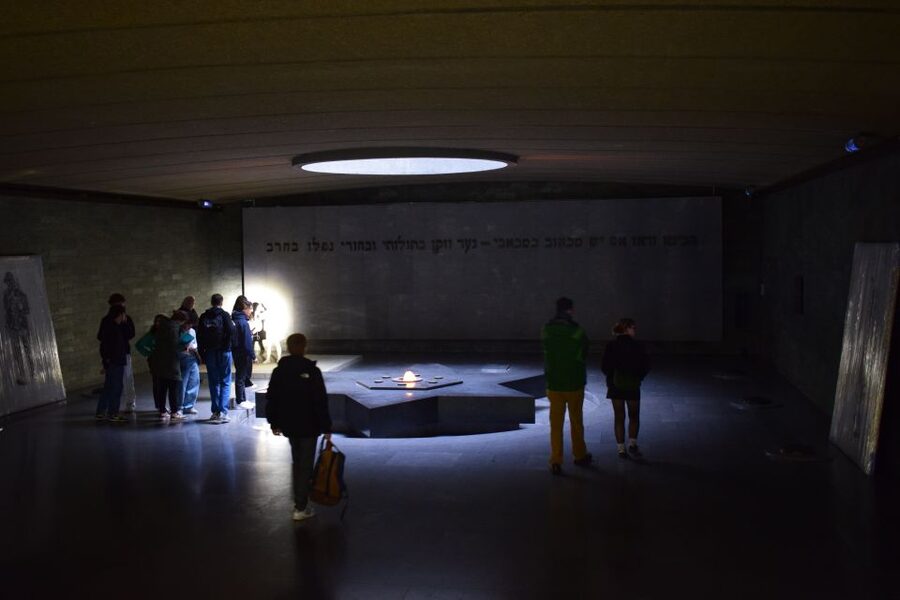
After the Marais stretch, the tour ends that portion near Hôtel de Ville and then switches neighborhoods via public transport. This is a smart move.
It saves time and energy, and it keeps your day from turning into a scavenger hunt for directions. Montmartre already demands stairs and slopes, so the less time you spend traveling, the better.
Also, the transition by transport gives your brain a reset. The story has emotional weight by this point, so you need that shift in surroundings before the more bohemian Montmartre segment.
Montmartre: artists, writers, and Jewish creative life
Montmartre is famous for being a creative neighborhood, and that is exactly the point here. The tour walks the streets where Jewish artists, writers, and thinkers helped shape the modern cultural energy of Paris.
This part is not about turning every bend into a trivia quiz. It is about showing how a neighborhood becomes a magnet for people chasing new work, new ideas, and new communities.
Expect a mix of charm and slope. You will walk through lanes that feel instantly Montmartre, then the guide explains how that physical space supported creative life. You see why cafés, studios, and social circles mattered as much as formal institutions.
Rue Ravignan and the art-world connections
You visit 7 Rue Ravignan, a street stop that helps ground the Montmartre story in place-specific detail. These residential addresses do the job that museums often try to do: they connect big cultural movements to ordinary doors and streets.
The guide ties creative ambition and resilience to the people who lived and worked here. That makes Montmartre feel less like a theme park and more like an actual past with real visitors.
In practical terms, this is where you slow down and really look. Notice how the street curves, where the light falls, and how you can imagine an artist stepping out to meet friends.
Le Bateau-Lavoir: why this place became a symbol
A major stop is Le Bateau-Lavoir. In Montmartre, some sites are important because of what happened inside or around them, even when you are viewing or passing by.
This is one of those names that carries weight in Paris art talk. On the tour, the guide links it to the wider story of modern creativity in Montmartre and how Jewish participants fit into that scene.
If you love art history, you will enjoy the way the guide connects cultural context to a specific spot. If you are not an art-historian type, you will still get the emotional logic: why certain neighborhoods become gathering points for risk-takers.
Musée de Montmartre pass-by: why you should not expect an indoor plan
You will pass by the Musée de Montmartre rather than touring it. That is normal for a walking tour that tries to keep your time focused on the streets and story stops.
This also means the guide uses what you can see around you. You do not get a museum-style lecture with artifacts on hand, so pay attention to the guide’s framing. You are building an understanding that will make future museum visits more meaningful.
If you are itching for more museum time later, you will know what to look for, because the tour gives you the questions.
16 Rue du Mont-Cenis: small stop, bigger meaning
You also visit 16 Rue du Mont-Cenis as part of the Montmartre sequence. Address stops might sound minor, but they work well in neighborhoods like Montmartre.
They keep you anchored to the actual geography of the community story. Instead of treating Montmartre like an aesthetic backdrop, you see it as a place where people lived, made work, and formed networks.
Sacré-Cœur and panoramic payoff at the finish
The tour ends at Sacré-Cœur Basilica for sightseeing and a wide, open sense of Paris. This is a classic Montmartre payoff, and on this tour it has extra meaning.
You connect the view to Jewish identity and artistic expression, so it does not feel like a random “look at the skyline” moment. It feels like you are standing above the city with the stories you learned still active in your head.
After Sacré-Cœur, you finish at Square Louise-Michel with a final reflection. That reflective ending matters because this itinerary has both artistry and painful history. You need a chance to absorb it, not just move on.
Practical tip: weather can shift fast up on the hill. If fog rolls in or wind picks up, Sacré-Cœur still works, but plan to dress for cooler conditions than you expect from lower Paris.
Who should book, and who should skip
This tour is a great fit if you want Jewish history in a walkable form and you like learning through neighborhoods, not only through museum walls.
It is especially good for people who enjoy small-group conversations and want a guide to connect art, memory, and community development. If you are interested in how Le Marais and Montmartre relate to each other, this route makes that relationship feel real.
Skip it if you cannot do a long walking route. It is not suitable for people with mobility impairments or wheelchair users, and there is public transport involved between neighborhoods.
Also, consider your comfort level with heavy historical content. The Shoah memorial segment is a solemn moment, and the tour treats it seriously.
What makes the guides matter on this tour
One theme that stands out across guide experiences is care in how tough history is discussed. Guides are praised for handling sensitive subjects with appropriate sensitivity and keeping the tone respectful.
You will notice this most at the memorial stop. A good guide does not just recite facts, they help you understand what to feel and what to remember.
You may also hear standout communication styles from different guides. Names that have come up include Benjamin, Benoit, and Pierre-Louis, plus others like Pierre Luis and Achilles, all praised for keeping the pace engaging while staying grounded in context.
So if you tend to learn best when the guide is clear and responsive, this tour is built for that.
Should you book this Jewish History Walking Tour of Paris?
Book it if you want a 3.5-hour plan that connects Le Marais Jewish landmarks to Montmartre’s creative story, with a local expert keeping the narrative coherent. At $80, the value is the guided stitching plus the public transport hop, and you get a strong combination of architecture, memory, and city views.
Consider skipping or swapping to a different style if you want mostly indoor sights or you expect to enter synagogues and monuments. This is a story-first, outdoor-first walk.
My final advice: come with comfortable shoes, a rain plan, and an open mind. If you do, you will leave with Paris feeling more personal and more layered than a basic highlights loop.
More History Tours in Paris
- Paris: Dark History and Ghostly Guided Walking Tour
★ 4.7 · 1,000 reviews - Le Marais/Paris – The Historic, Trendy, Jewish, LGBT district
★ 5.0 · 341 reviews - Historic Paris Walking Tour in English
★ 4.9 · 78 reviews - Paris Jewish History 2-Hour Private Guided Walking Tour
★ 4.6 · 32 reviews
More Walking Tours in Paris
- Paris Top Sights Half Day Walking Tour with a Fun Guide
★ 5.0 · 2,893 reviews - Paris Île de la Cité and Notre-Dame Walking Tour With Crypt
★ 5.0 · 2,272 reviews - Paris in a Day: Louvre or Orsay, Eiffel Tower, City Walk & Cruise
★ 5.0 · 1,956 reviews - Paris: Montmartre Highlights Walking Tour with a Local Guide
★ 4.9 · 1,668 reviews
Recently added around Paris
- Paris: Louvre Masterpieces Private Tour with Reserved Entry★ 4.3 · 144 reviews
- Paris: Living Cheese Museum Guided Tour with Cheese Tasting★ 4.8 · 182 reviews
- Paris Louvre Exclusive Semi Private Guided Tour Max 6 People★ 4.6 · 28 reviews
- Paris: Louvre Guided Tour with Skip-the-Line Entry Tickets★ 3.5 · 73 reviews
- Paris Le Marais Walking Tour: Small Group Experience★ 5.0 · 7 reviews
- Paris: Lemon Tart Baking Class with a Pastry Chef★ 5.0 · 4 reviews
- Paris: Live Guided Cruise with Crepe and Soft Drink★ 3.9 · 14 reviews
- Paris Le Marais Food Tour: Full Traditional French Feast★ 4.8 · 119 reviews
Montmartre Tours, compared.

Montmartre Hidden Gems and Scenic Highlights Walking Tour
Read our review →
Montmartre Hill French Gourmet Food and Wine Tasting Walking Tour
Read our review →
Montmartre Cheese, Wine & Pastry Guided Walking Tour
Read our review →
Montmartre Highlights Walking Tour with a Local Guide
Read our review →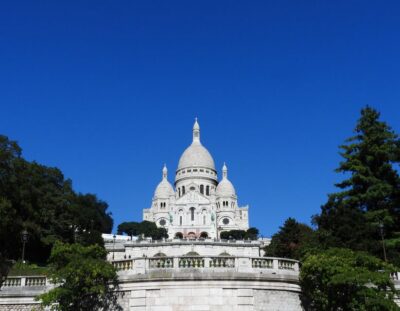
Sacré-Coeur and Montmartre Tour with Expert Guide
Read our review →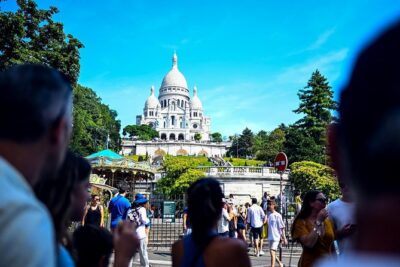
Private Montmartre Food Tour with Wine, Cheese & Pastries
Read our review →
Paris Montmartre Food Tour – A Full French Meal by Do Eat Better
Read our review →
Hidden Montmartre: Paris’ Secret Streets Walking Tour
Read our review →Browse the lists this tour appears in