

Reviewed · MONTMARTRE TOURS
Montmartre Hidden Gems and Scenic Highlights Walking Tour
Montmartre has a way of feeling different from the rest of Paris, and this walk is a smart way to get your bearings fast. I especially like how the guide turns everyday street corners into stories you can picture, and I also love the mix of famous sights outside with quieter details you’d miss on your own. One thing to consider is the terrain, you’ll face hills and narrow, sometimes crowded streets.
Guides like Laura and Sylvia set a relaxed pace, then pack in the kind of context that makes places click. When I hear David talk about the artists tied to these streets, I can tell the route is built for people who want meaning, not just photos. If you’re hard to motivate by art talk, the stops might feel more creative than you expect, but you will still get the key Montmartre atmosphere.
This is ideal if you want scenic highlights without committing to a full half-day. It also helps that the group stays small, so you can actually hear what’s going on even on lively streets.
Key points to know before you go
- Small-group format with a maximum of 25 people, usually means better focus and questions
- Montmartre on foot helps you feel the climb, the courtyards, and the street life up close
- Artist and music stopovers, from Bateau-Lavoir to a Dalida bronze bust
- The Sacré-Cœur area views are a highlight, even if entry inside is not included
- Guides matter, with standout mentions of Laura, Sylvia, David, Denise, Ben, and others
Montmartre on Foot: Why This 90-Minute Walk Works
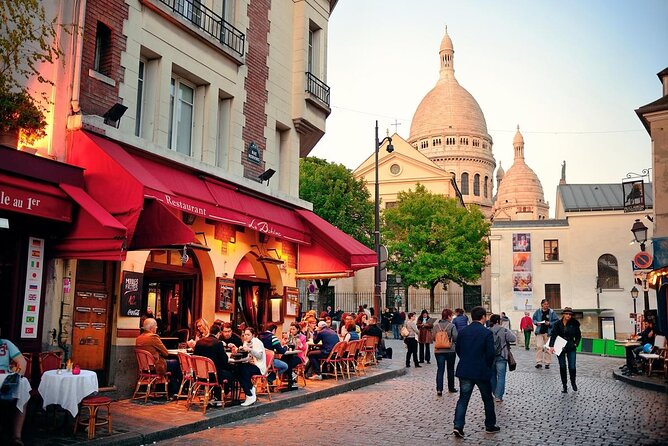
Montmartre is famous, but the real trick is figuring out what you’re looking at while you’re still catching your breath on the hills. This tour keeps it practical: you move through the neighborhood, stop at the key visual landmarks, then connect them to the stories that made Montmartre part arts district, part show district, part bohemian escape.
You’ll get a lot of mileage out of the timing. At about 90 minutes, you can fit this into a busy Paris schedule without losing your whole day to transit and lines. And because it’s guided in English, you won’t be stuck playing guess-the-history with your phone.
The biggest value here is interpretation. One corner becomes a poetic installation. A plain street becomes a map of the neighborhood’s bohemian past. A windmill becomes a chapter in the dance hall era and the way painters framed this area.
More Montmartre walking tours:
- Montmartre Hill French Gourmet Food and Wine Tasting Walking Tour
★ 5.0 · 2,588 reviews - Paris: Montmartre Cheese, Wine & Pastry Guided Walking Tour
★ 4.8 · 2,255 reviews - Paris: Montmartre Highlights Walking Tour with a Local Guide
★ 4.9 · 1,668 reviews
Start Location at 19 Rue des Abbesses, End at La Bonne Franquette

The tour starts at 19 Rue des Abbesses, 75018 Paris. It ends at La Bonne Franquette, located at 18 Rue Saint-Rustique, 75018 Paris.
That start point matters because it puts you right where Montmartre begins to feel like its own world, with lots of small streets funneling uphill. It also helps you avoid wasting time crossing the neighborhood in the wrong direction before you even begin.
Plan to arrive about 15 minutes early for check-in. Even if you think you’re early, do it. Tours start on time, and you may not be able to catch up if you’re late.
Stop by Stop: The I Love You Wall, Poetically Step One
The walk kicks off at a small square featuring the I Love You Wall. It’s a poetic art installation with the phrase I Love You written in over 300 languages.
This stop is a good warm-up because it sets a tone. Montmartre isn’t only about big-ticket monuments. It’s also about wordplay, street art style, and the kind of creative impulse that turns a plain wall into something people want to photograph and linger with.
What I like about starting here is that you’re not yet climbing. You’re stepping into the neighborhood mood first, then the walk naturally builds momentum toward the famous landmarks.
The Old Street Moment: Cafés, Boutiques, and Bohemian Echoes
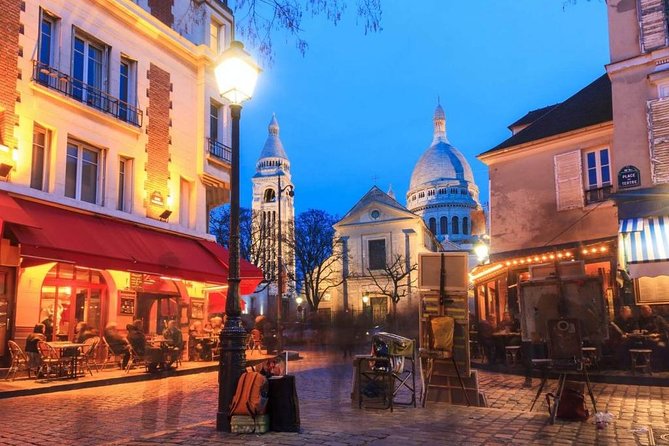
Next comes one of the neighborhood’s oldest streets. It’s described as a bustling street with cafés, boutiques, and historic architecture, and your guide brings out what made it feel bohemian long before it became a must-see.
This part is where you learn how to read Montmartre. Instead of treating it like a theme park, you start noticing why certain streets feel like they belong to artists and writers. You’ll get a sense of how the neighborhood’s reputation changed over time, and why it attracted people looking for freedom, not just scenery.
Practical tip: if your group is large, this is often when it’s easiest for voices to blur together. Stand where you can hear your guide clearly, usually a little to the side and not directly behind taller people.
More walking tours in Paris:
- Paris Top Sights Half Day Walking Tour with a Fun Guide
★ 5.0 · 2,893 reviews - Paris Île de la Cité and Notre-Dame Walking Tour With Crypt
★ 5.0 · 2,272 reviews - Paris in a Day: Louvre or Orsay, Eiffel Tower, City Walk & Cruise
★ 5.0 · 1,956 reviews - Paris City Center Free Walking Tour (Tip-Based)
★ 5.0 · 1,340 reviews
Bateau-Lavoir: Where Modern Art Got Its Spark
Then you reach the Bateau-Lavoir, once an artists’ residence. This was home to figures tied to the revolution of modern art, including Picasso, Modigliani, and Braque.
What makes this stop special is how it turns names into place. You’re not just learning that these artists existed. You’re connecting them to a real Montmartre structure and imagining the community that formed around it.
If you like art, you’ll probably start spotting the Montmartre pattern: artists drawn here, stories spreading from here, then centuries later, visitors trying to recreate the feeling. This stop helps you understand that Montmartre’s creative identity wasn’t invented by tourism. It grew from actual people living and working here.
Moulin de la Galette from the Outside, Still Worth It
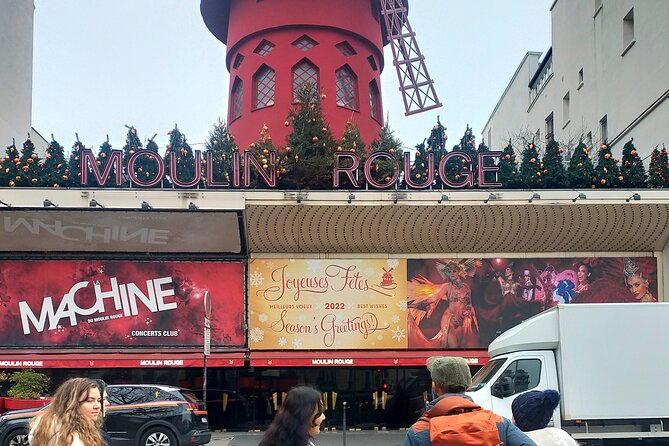
You’ll see the Moulin de la Galette and the Basilica du Sacré-Coeur from outside. The windmill is a historic feature associated with painters like Renoir and Van Gogh, and it also connects to its past as a popular dance hall.
Seeing it from outside matters because the tour keeps you moving. You get the classic Montmartre silhouette without trading your whole schedule for an entry ticket. And for a 90-minute experience, that’s a smart deal.
Here’s what you can look for: the windmill isn’t just a postcard object. It’s part of how artists framed the neighborhood. Once you’ve heard the dance hall angle, the windmill feels like a stage, not just a symbol.
The Surreal Walk-Through-Wall Sculpture
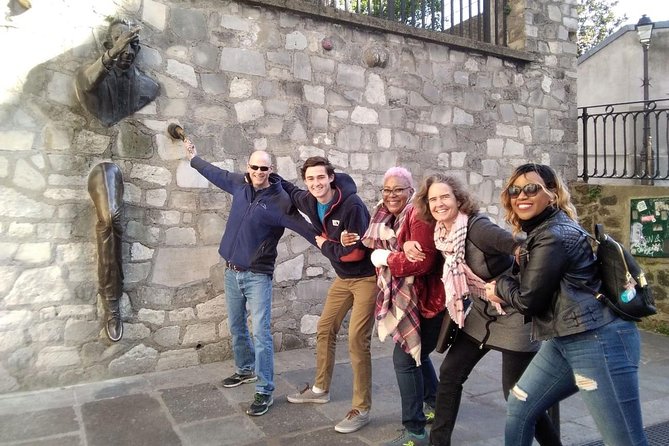
Another stop is a whimsical sculpture inspired by a short story by Marcel Aymé. It shows a man walking through a wall, placed near the author’s former home.
This is a quick but fun moment because it gives Montmartre one more ingredient: surreal humor. It’s the kind of sculpture that makes you grin, then makes you think, why would this be here? The answer is that Montmartre has always encouraged playful weirdness, not only grand beauty.
If you like photo stops, this one delivers, because it plays well with perspective.
Dalida Bronze Bust: Montmartre’s Music Legacy
You’ll also learn about Dalida, a singer who lived in Montmartre for a long time. She’s remembered through a bronze bust in a peaceful square, and it’s become a tribute spot for fans.
I like this stop because it broadens Montmartre beyond painters and writers. It reminds you that the neighborhood’s identity is cultural in multiple directions, not a single lane.
If you’ve ever listened to Dalida, you’ll probably feel an instant connection. If you haven’t, it still works as a human-scale reminder that famous people lived here, not just made art about it.
The Pink House Cafe and a Photo-Ready Rest Spot
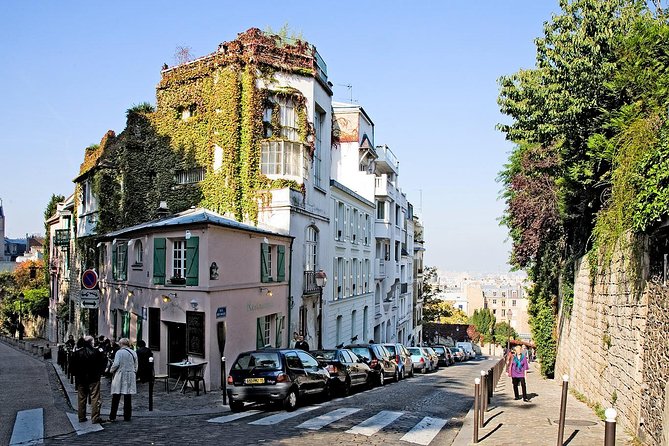
A favorite of artists and photographers, the tour includes a quaint pink house that has been part of Montmartre’s look for decades. It also now functions as a cafe serving French food, and it’s a strong photo moment on the route.
This is the kind of stop that makes the whole walk feel more real. It’s not frozen in time. It’s a working place, where you can imagine Montmartre regulars doing their daily thing between moments of art and invention.
After the tour ends at La Bonne Franquette, you’ll have the chance to extend your afternoon with food nearby. One review described the tour ending with a very nice lunch find, and this kind of neighborhood setup makes that easy.
The Montmartre Vineyard, Established in 1933
Hidden in the heart of Montmartre is a small vineyard producing wine tied to local heritage. It was established in 1933 to preserve Montmartre’s winemaking roots.
This stop adds a surprise. Paris visitors often expect Montmartre to be all stone, stairs, and art studios. A working vineyard changes the feel of the neighborhood in a matter of minutes.
The practical takeaway is that Montmartre isn’t only a museum district. Parts of it still follow older rhythms, and that’s exactly what makes the neighborhood feel like it has a living memory.
Sacré-Cœur Area Views: Outside Highlights and a Calm Pause
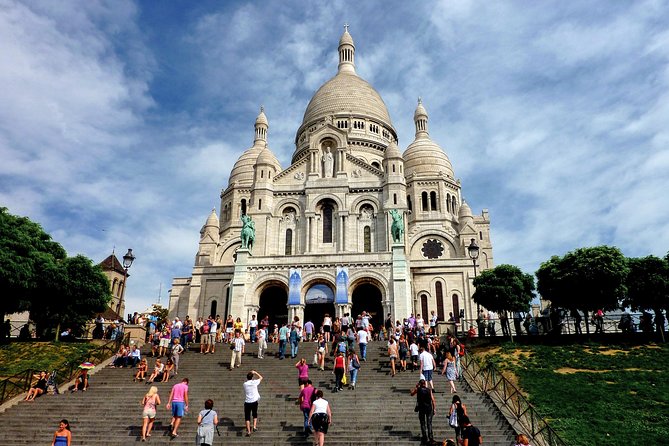
At the highest point in Paris, you’ll reach the Sacré-Cœur Basilica. The tour focuses on the exterior, which means you’ll see the famous white domes and mosaics from the outside, plus you’ll get impressive city views.
This part is often a mood shift. Even though the area can get crowded, the combination of height and architecture gives you a breath moment. Your guide will also share tips on what to see inside if you choose to visit later on your own.
A smart move: bring your eyes for details, not only the skyline. Look at the façade patterns and domes, then switch back to the view so your brain gets both layers.
The Artistic Square Energy at Tour’s Close
The walk finishes in a lively square described as the heart of Montmartre’s artistic spirit. You may see painters, caricaturists, and street performers, with cozy cafés and restaurants around the area.
This is a good ending because it closes the storytelling loop. You’ve heard about artists, dance halls, and creative legends. Now you’re in a place where street performance and art culture are still part of the day.
If you started early, you’ll likely enjoy this part more. The neighborhood can get busy quickly, and an earlier time can make your view stops and conversation easier.
Terrain Reality Check: Hills, Cobblestones, and No Stairs
The tour doesn’t include stairs, but it does involve hills and narrow, sometimes busy streets. You’ll want moderate physical fitness and comfortable walking shoes.
Montmartre is cobblestoned and steep in places, which can turn a short walk into a leg workout. One reason reviews rate the experience so high is that the route feels manageable for many people who pace themselves. Another reason I mention it is simple: plan for the climb, not for flat walking.
If you’re traveling with mobility concerns, do a reality check before booking. Steep grades and cobbles can be tough, even when a route avoids formal staircases.
Guides and the Storytelling Style That People Remember
What repeatedly makes this tour worth your time is how guides teach without making it feel like a lecture. Names that come up often include Laura, Sylvia, David, Denise, Sonia, Linda, Ben, Anastasia, and Sophie.
Common praise themes are pretty clear. Guides keep a casual pace, answer questions, and point out details you would otherwise walk past. Some guides also share practical suggestions for what to do next, including where to eat nearby.
One more useful note: if you’re in a larger group, hearing can get harder on certain stretches. The fix is easy, move closer when the guide is talking, and don’t drift to the back expecting to catch every sentence.
Value for $38.70: What You Get in 90 Minutes
At $38.70 per person for about 90 minutes, you’re paying for three things you would struggle to assemble on your own in the right order.
First, you’re paying for a route that hits Montmartre’s core visual landmarks, like the windmill and Sacré-Cœur exterior, without long detours. Second, you’re paying for a guide who explains why each spot mattered, whether it’s the artists at Bateau-Lavoir or Dalida’s legacy. Third, you’re paying for time efficiency. The tour ends inside the neighborhood, so you can keep exploring immediately instead of planning the next transport step.
What’s not included is also part of the value equation. There’s no entry inside Sacré-Cœur, so you can decide later if you want that add-on based on your energy and the lines you see.
If you want one guided layer, then free time, this format usually fits well.
Should You Book This Montmartre Walking Tour?
Book it if you want a short, guided way to understand Montmartre. This is especially good for first-timers who want scenic highlights and cultural context, and for art and music lovers who like learning how real people shaped the neighborhood.
Skip it or reconsider if you strongly prefer big indoor attractions, because this experience centers on Montmartre on foot and focuses on exteriors rather than Sacré-Cœur entry. Also, if you dislike tours with artistic storytelling that can include street art themes, read your personal preferences carefully before you commit.
If you do book it, here’s my best practical advice. Go earlier in the day if you can, wear shoes that handle cobbles, and stay near the guide during quieter stretches. You’ll leave with more than photos, you’ll leave with a mental map of why Montmartre became the version of itself that people still come for.
FAQ
How long is the Montmartre Hidden Gems and Scenic Highlights walking tour?
It runs for about 1 hour 30 minutes.
Is the tour offered in English?
Yes, it is offered in English.
Does the tour include entry into Sacré-Cœur Basilica?
No, it does not include entry. You’ll see Sacré-Cœur from outside, and the guide shares tips if you choose to enter on your own later.
Where does the tour start and end?
The tour starts at 19 Rue des Abbesses, 75018 Paris, and ends at La Bonne Franquette, 18 Rue Saint-Rustique, 75018 Paris.
What kind of fitness level do I need?
The tour is recommended for travelers with moderate physical fitness. There are hills and narrow streets, but the route doesn’t include stairs.
Is there a mobile ticket?
Yes, the tour uses a mobile ticket.
How big is the group?
The tour has a maximum of 25 travelers.
Recently added around Paris
- Paris: Louvre Masterpieces Private Tour with Reserved Entry★ 4.3 · 144 reviews
- Paris: Living Cheese Museum Guided Tour with Cheese Tasting★ 4.8 · 182 reviews
- Paris Louvre Exclusive Semi Private Guided Tour Max 6 People★ 4.6 · 28 reviews
- Paris: Louvre Guided Tour with Skip-the-Line Entry Tickets★ 3.5 · 73 reviews
- Paris Le Marais Walking Tour: Small Group Experience★ 5.0 · 7 reviews
- Paris: Lemon Tart Baking Class with a Pastry Chef★ 5.0 · 4 reviews
- Paris: Live Guided Cruise with Crepe and Soft Drink★ 3.9 · 14 reviews
- Paris Le Marais Food Tour: Full Traditional French Feast★ 4.8 · 119 reviews
Montmartre Tours, compared.
Montmartre Hill French Gourmet Food and Wine Tasting Walking Tour
Read our review →
Montmartre Cheese, Wine & Pastry Guided Walking Tour
Read our review →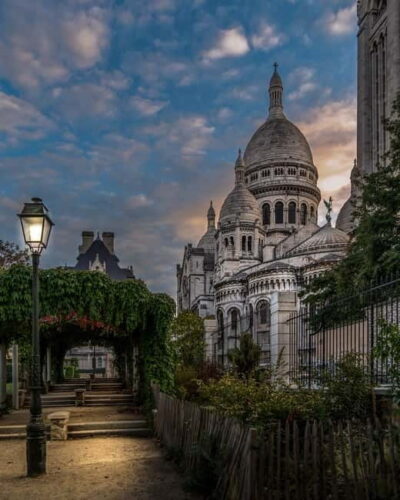
Montmartre Highlights Walking Tour with a Local Guide
Read our review →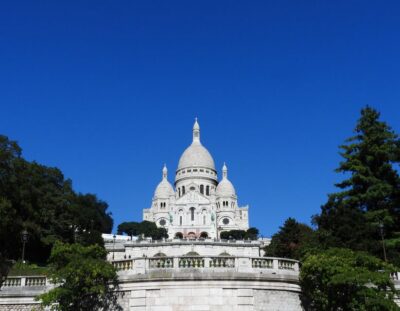
Sacré-Coeur and Montmartre Tour with Expert Guide
Read our review →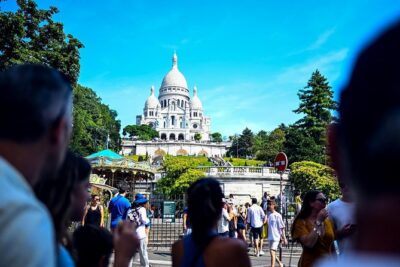
Private Montmartre Food Tour with Wine, Cheese & Pastries
Read our review →
Paris Montmartre Food Tour – A Full French Meal by Do Eat Better
Read our review →
Hidden Montmartre: Paris’ Secret Streets Walking Tour
Read our review →
Paris Montmartre Food & Wine Tour with Eating Europe
Read our review →Browse the lists this tour appears in