
Reviewed · NORMANDY & D-DAY TOURS
Normandy D-Day Beaches Private Canadian Sector from Caen
This private Canadian-sector day from Caen stands out because it connects the bigger D-Day picture to the exact ground the Canadians fought on, from the German strongpoints to Juno Beach itself. I like that it does not skim the surface, you get a chance to understand how the defenses worked and why the assault lines mattered, not just where you should stand for a photo.
Two other things I really like: you walk through places tied to Canadian history, including the cemetery for 2,049 soldiers and the Canada House memorial for the Queen’s Own Rifles and the Fort Garry Horse, and you hear human stories that make the facts stick. One drawback to consider is practical, the tour runs 8 hours and it is not suitable for children under 8, so plan for a long, serious day.
Key highlights at a glance
- Ardenne Abbey and the Baby Division story, including the execution of 27 Canadian soldiers memorialized there
- Hell’s Corner and the long grind of resistance, with the link to Carpiquet airfield and the Elm Line
- Juno Beach Centre context, from regimental landings to the civilian war effort back home
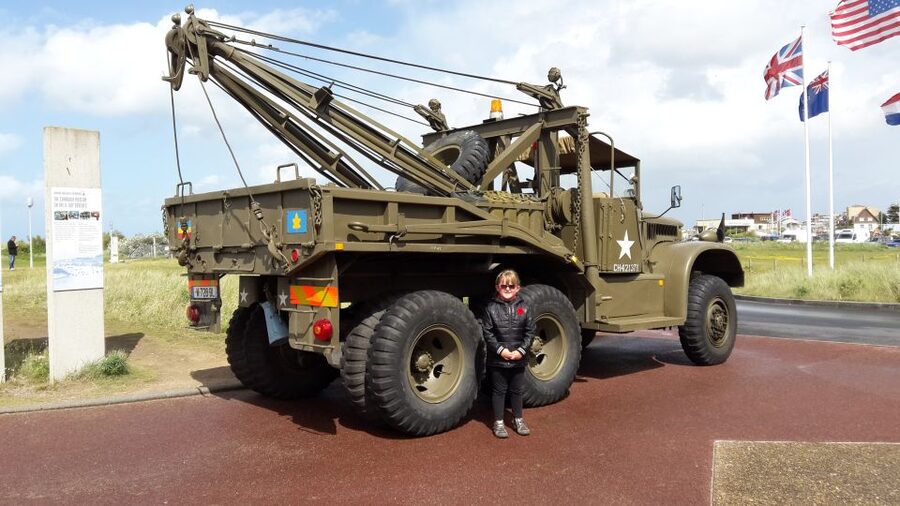
- Atlantic Wall remains you can actually see, including strongpoints, tobrouk, command-post traces, and a Churchill AVRE tank
- Personal, family-linked guidance, including French resistance connections shared by the local guide
- Private-group pacing with audio, plus hotel pickup and a separate entrance to skip lines at key sites
Normandy’s Canadian D-Day route feels personal, not generic
If you have ever done a quick stop-and-go D-Day loop, this tour has a different rhythm. It is built around the Canadian sector, especially the Juno landing zone, and it keeps steering you back to three themes: how the Germans fortified this part of Normandy, what the Canadians actually faced, and how French civilians and resistance groups lived under occupation.
You also get a strong narrative thread that starts before D-Day. Your morning covers topics that explain the whole operation: the ground and defenses, naval and airborne forces, the artificial ports, and the decoy plan called Fortitude. Then it pulls that context into the Canadian story, including the link to the Canadians from Dieppe via Operation Jubilee, before moving you toward Juno.
This is not a war-movie script. It is a guided walk through decisions, terrain, and consequences. And because it is a private group with a live guide in English and French, you can ask questions as you go, instead of waiting for a bus full of strangers.
More Normandy and D-Day trips:
- Normandy American D-Day Beaches Full Day Tour from Bayeux
★ 5.0 · 2,103 reviews - Normandy American D-Day Experience – Group tour from Bayeux
★ 5.0 · 1,566 reviews - Normandy Beaches Half-Day Afternoon Trip from Bayeux (A2)
★ 4.5 · 1,116 reviews
Ardenne Abbey, the Baby Division, and the memory of 27 Canadian soldiers
Most D-Day tours start at the beach. This one starts at Ardenne Abbey, a 12th-century site with a long, layered past that helps you understand how a place like Normandy could swing between normal life and brutal wartime use.
Here is what makes this stop hit hard in the best possible way:
- The abbey was occupied by monks until the French Revolution, then later controlled by a farmer named Jacques Vico in the 20th century.
- During the German occupation, it became a training camp for the French resistance.
- On June 7, 1944, the buildings were occupied by the Hitlerjugend Division, also known as the Baby Division (12 SS Division).
- Today, a memorial marks a tragic event tied to the execution of 27 Canadian soldiers.
So you are not just learning about June 6. You are seeing how the war reached into resistance networks and how the Germans retaliated. That matters because it shifts your focus from only landing day to the larger weeks of pressure, patrols, arrests, and reprisals that surrounded it.
Practical note for your comfort: bring warm clothing. Even if it is sunny, Normandy can feel chilly when you are standing still for explanations.
From Dieppe’s Operation Jubilee steps to Juno’s opening moves
After Ardenne Abbey, the day starts connecting the dots between different Canadian moments in the war. A key part of the story is the way your guide frames the Canadians not as one isolated day’s force, but as soldiers with prior experience and missions that shaped what came next.
You also get topic coverage that helps you decode what you see later, like how strongpoints and bunkers fit into the Atlantic Wall system, and why the decoy plan Fortitude mattered. Those explanations pay off later when you stand by remaining fortifications and equipment at Juno.
This is where the guide quality really matters. In past days on this route, guides like Mathias have been praised as a historian who uses clear, structured facts and can tailor answers to what you care about most. Another guide, Sarah, has been highlighted for using visual aids and maps, which is a smart way to make terrain and unit movements easier to picture.
If you like understanding the military logic behind what you are seeing, this structure is a win.
Memorial stops on the way to Juno: North Nova Scotia and Sherbrooke Fusiliers
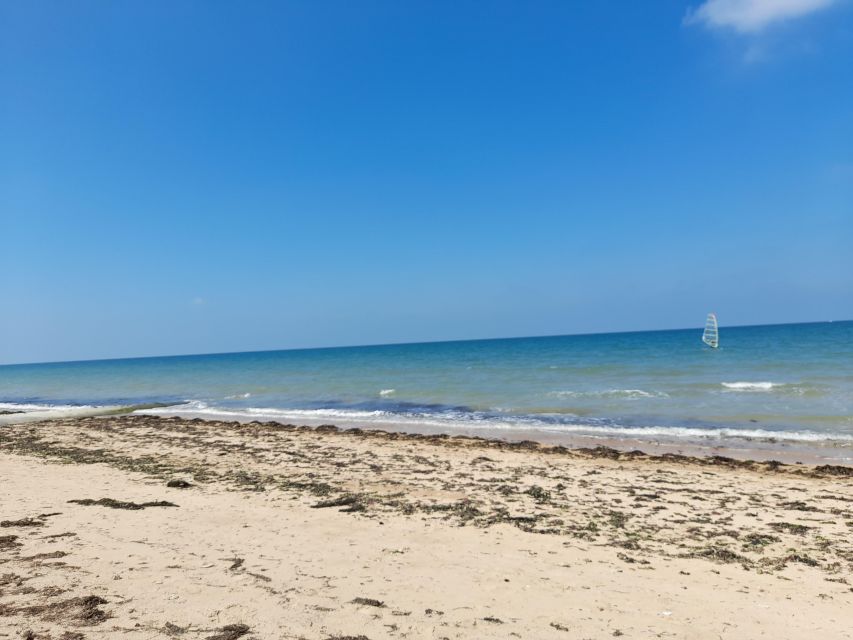
On the route toward the Juno sector, you pass memorials dedicated to specific regiments, including the North Nova Scotia Highlanders and the Sherbrooke Fusiliers Regiment. These stops are short, but they do two useful things.
First, they keep the day from turning into one huge, blurry story. When you see names tied to places, your brain starts to map units to events instead of treating the war as a single wall of dates.
Second, these memorials reinforce the idea that the Canadian story in Normandy is multi-regiment and layered, not just one famous beach moment.
More day trips out of Paris:
- Omaha and Band Of Brothers Full Day Tour
★ 5.0 · 1,104 reviews - Omaha Beach D-Day Experience – Afternoon group tour from Bayeux
★ 5.0 · 1,088 reviews - Omaha and Utah beaches
★ 5.0 · 1,085 reviews - Normandy Battlefields Tour – American Sites (A3)
★ 5.0 · 876 reviews
Hell’s Corner and the long fight before Carpiquet
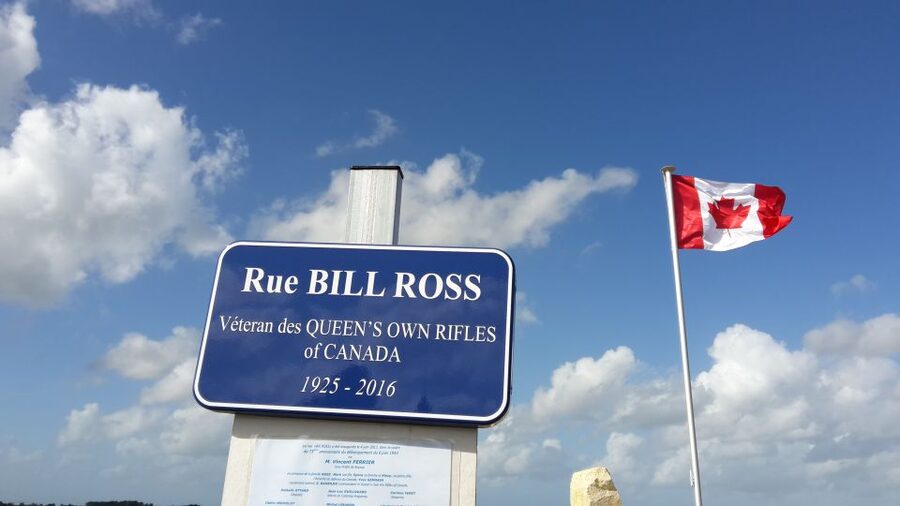
One of the most meaningful segments of the morning is Hell’s Corner. The tour explains it as a place where Canadians resisted repetitive attacks and bombardments for three weeks. That stubborn holding action continues until the victory at Carpiquet airfield on July 4.
You might wonder why a stop like Hell’s Corner belongs in a Canadian D-Day day that also includes June 6. The answer is timing. D-Day does not end on the 6th. The fighting around airfields, roads, and supply routes continues while the landing zone mission turns into a grinding push.
Stops like this help you understand the real cost. When someone says the Canadians fought hard, Hell’s Corner gives the reason why that statement is true.
Anguerny on the Elm Line, plus an inukshuk meaning brotherhood
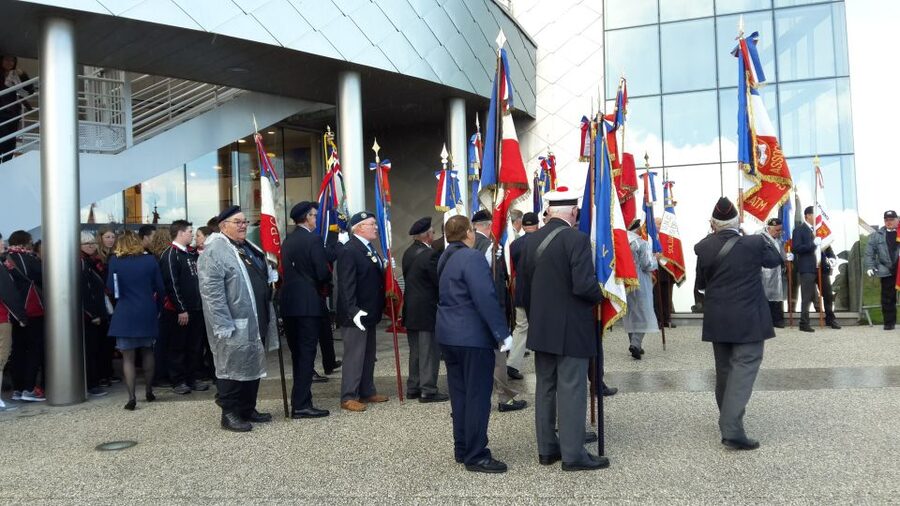
Another highlight is Anguerny, on the Elm Line. Here, three Canadian regiments set up their camp for the night: La Chaudière, the Queen’s Own Rifles, and the Fort Garry Horse.
This stop gives you a breather from battle descriptions and replaces them with something more grounded: the reality that soldiers needed time, rest, and position to keep moving. And on top of that, you see an inukshuk, a stack of human-shaped stones from the Inuit tradition. In this context, it symbolizes brotherhood, mutual respect, and friendship.
That symbolic element matters because it keeps reminding you that this is not only about tactics. It is about people. Even in a war setting, human bonds, respect, and shared values show up in the way communities commemorate.
Canada House, Hotel Graves, and the weight of 2,049 buried Canadians
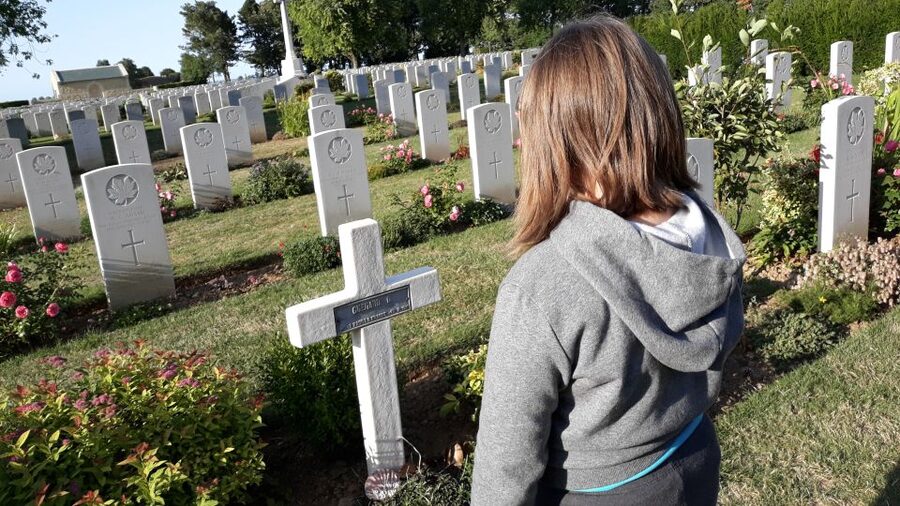
Before you head into Juno Beach territory, the tour pauses for tribute. You visit a cemetery containing 2,049 Canadian soldiers, then you gather at Canada House where a memorial honors the Queen’s Own Rifles Regiment and the Fort Garry Horse Armoured Division, both noted for paying a heavy price in the assault.
Not far away, you can see Hotel Graves, described as headquarters for Canadian and British war correspondents. That detail adds another angle: the war was being reported while it was unfolding, and those dispatches helped shape how people back home understood what was happening.
This is where I think the private guide approach really pays off. In a larger group, you might rush through these moments. In a private setting, the guide can slow down, match your pace, and keep the tone respectful, especially if you want time for quiet.
Juno Beach Centre: why the civilian war effort belongs in the story
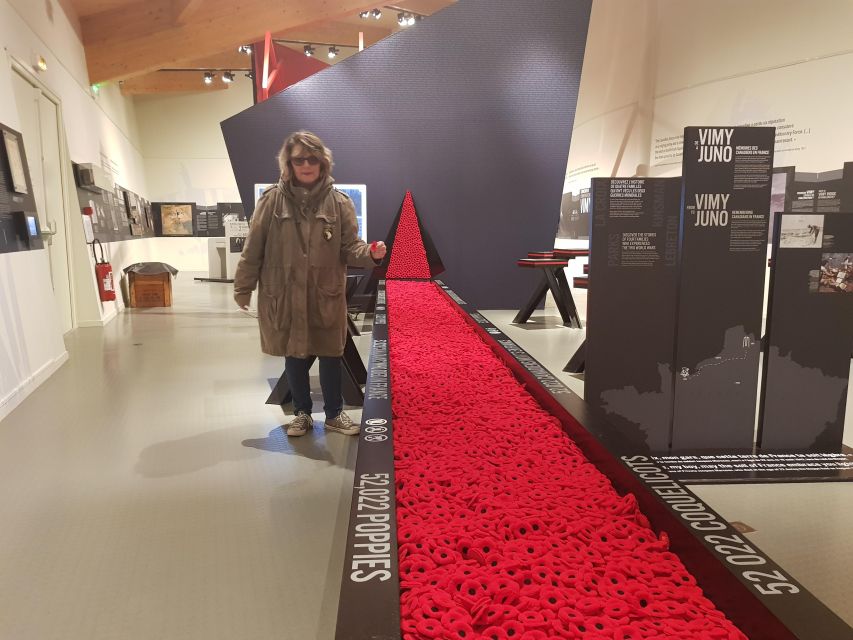
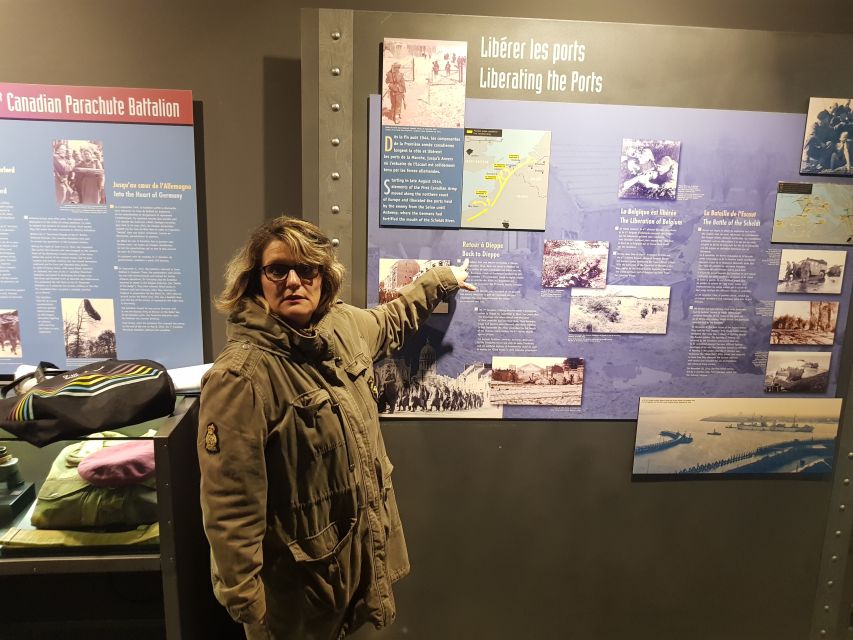
After lunch break, you shift to Juno Beach Centre. This museum center focuses on more than the landing itself, including the Regina and all Canadian Scottish regiments that landed in the Juno area.
What I appreciate most about this part is that it treats the Canadians as part of a wider national effort. The exhibits talk about the story of a new nation and the civilian war effort of the entire population, plus the country’s early involvement in helping England fight the Nazis.
That matters because most visitors come with beach-only mental images. Juno Beach Centre encourages you to remember that armies are supported by people, factories, families, and logistics far from the shore.
Your tour includes skipping lines through a separate entrance, which helps you use the time you have without getting stuck at ticket checks. Entrance fees for museums are not included, so it is worth budgeting for that separately if you plan to fully use the center.
Atlantic Wall remains: strongpoints, tobrouk, and the tools of defense
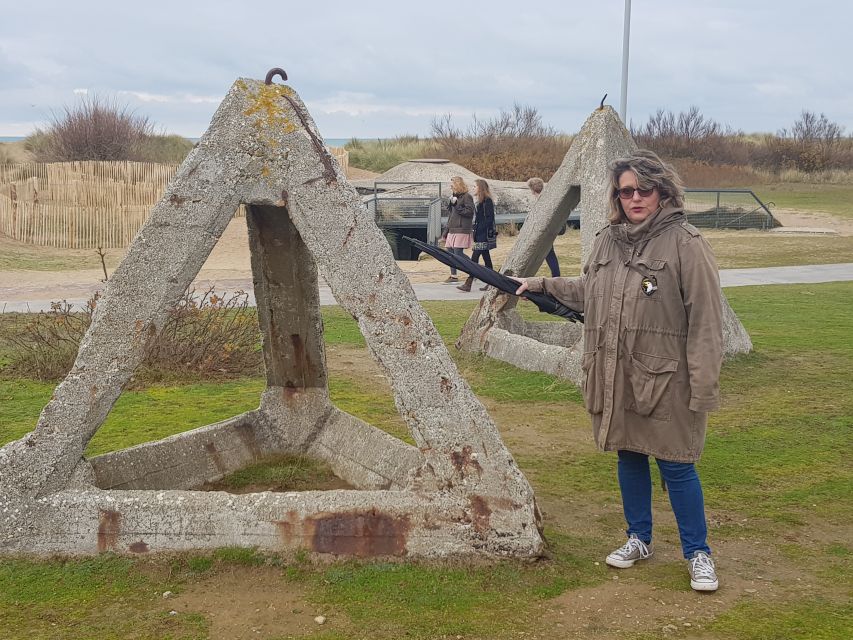
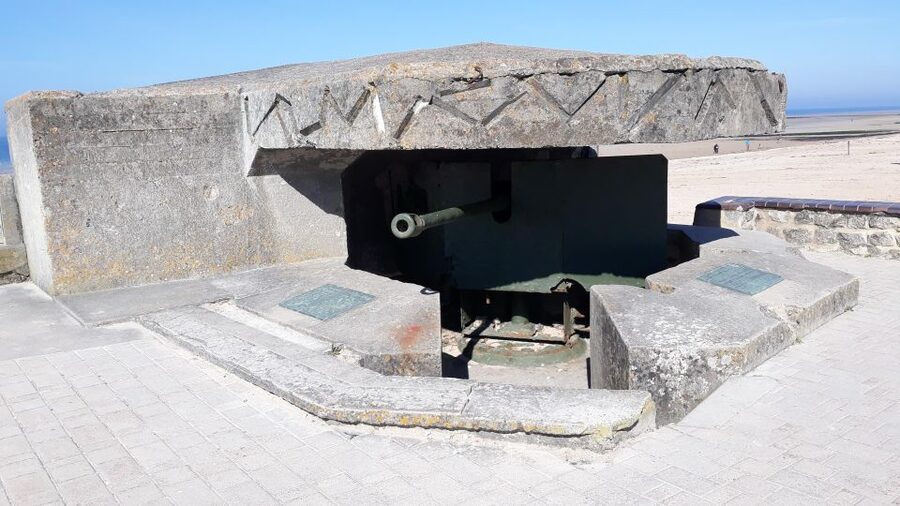
Then you move from museum storytelling into visible evidence. In the park, you can explore remains of the Atlantic Wall, including strongpoints, tobrouk, and traces of a command post.
These features are valuable because they teach you how defense worked in practice. When you see a strongpoint or a firing position, the explanation about German defenses stops being abstract. You can start imagining sightlines, fields of fire, and why the Canadians faced such intense resistance.
Two standout artifacts deepen the picture:
- A Churchill AVRE tank (Armoured Vehicle Royal Engineers) armed with a 290mm gun.
- Cosy’s Pillbox, noticeable for its tilted structure, identified as a site of fierce fighting on June 6, 1944.
If you like concrete details, this is where your guide’s explanation can make the day feel like a map in motion.
Churchill, de Gaulle, and the Lorraine cross in the Juno sector
The tour also frames the Juno sector as a stage for leadership visits. It notes that this area received Prime Minister Churchill, Charles de Gaulle’s first steps since his exile in England, and King of England.
Today, you see a huge silver Lorraine French resistance cross marking the return of Charles de Gaulle in France. This is not just a monument for show. It signals how the battle zone became a symbol of liberation and how the French resistance story ties into the Allied victory.
If you have ever felt unsure about how to connect resistance, liberation, and military operations, this final set of references helps tie the threads together.
The French Resistance thread: why a local family story makes the war real
One of the most powerful promises of this tour is the personal angle. You share time with your local guide and his personal family story connected to the French resistance.
That kind of sharing changes how you listen to the earlier parts of the day, like the coverage of French life under German occupation and the decoy plan called Fortitude. You start noticing how resistance was not only about sabotage and meetings. It was about survival, information, and choices made under threat.
This is also where you get a more human version of Normandy than the postcard version. It does not replace the military story. It complements it, which is exactly what makes the tour feel different from a purely technical battlefield drive.
Price and value: $931 per group up to 7, is it worth it?
The price is $931 per group for up to 7 people, lasting 8 hours. That can sound high at first glance, especially if you are thinking per person.
Here is how I would measure value instead: you are paying for a private, guided, Canadian-sector-focused route with hotel pickup and drop-off in Caen, plus a PA audio system so you can actually hear the guide as you move between stops. You also get water and coffee for the ride, and the tour includes the guide’s lunch.
On top of that, you are not just going to Juno and calling it done. You also cover German defenses, Atlantic Wall remains, the Ardenne Abbey tragedy memorial for 27 executed Canadian soldiers, and the cemetery tribute for 2,049 buried Canadians. You get a structured explanation of the operation, including airborne and naval forces, artificial ports, and Fortitude.
If your group includes 4 to 7 people, this private format often becomes a strong value because you avoid splitting attention across a big group and you can ask deeper questions. If you are traveling solo or as a couple, the price might feel like more than you want to spend for an 8-hour day, unless you strongly prefer a private guide pace.
Who should book this Canadian D-Day tour from Caen?
This experience fits best if you want:
- A Canadian-sector focus with real attention to regiments and specific sites
- A guide who can explain the logic behind defenses and the flow of battle
- A serious, respectful day that includes memorials and tributes, not just sightseeing
It is also child friendly in general, but it is not suitable for children under 8. So if you are traveling with younger kids, you will need a different option.
Wheelchair access is part of the offering, with a free wheelchair at your disposal and customized tour for disabled guests on request. If anyone in your group uses mobility aids, it is worth planning ahead so the route matches your needs.
Practical tips before you go
- Wear comfortable shoes. The day is a lot of walking and standing, and you will be moving between multiple sites.
- Bring warm clothing. Normandy weather can shift, and you will spend time outside.
- Plan to cover lunch of participants and museum entrance fees yourself, since those are not included.
- Expect a full day. Eight hours goes fast when your guide is building the story step by step.
Should you book it?
Book this tour if you want a Canadian-focused D-Day day that explains both the German defenses and the Canadian sacrifices, with memorial stops that slow the day down in the right way. The private format helps you hear clearly through the PA system, and the guided story around places like Ardenne Abbey and Juno Beach Centre feels more grounded than a quick bus loop.
Skip it or consider alternatives if your group includes children under 8, or if you are looking for a lighter, shorter beach-only experience. For many people, this is the kind of trip that deserves time, attention, and the right shoes.
FAQ
How long is the Normandy D-Day Beaches Private Canadian Sector tour?
The tour lasts 8 hours.
Where does the tour start, and is pickup included?
Your day starts at Ardenne Abbey, and hotel pickup and drop-off are included in Caen.
What languages are available for the live guide?
The live guide speaks English and French.
Is the tour private, and how many people can go?
It is a private group, priced per group up to 7 people.
What is included in the price?
Included items are hotel pickup and drop-off, a PA audio system in the van, water, coffee, lunch for the guide, and a free wheelchair at your disposal. Disabled guests can also request a customized tour.
What is not included?
Lunch of participants, food and drinks, and entrance fees for the museums are not included.
Is this tour suitable for children?
It is not suitable for children under 8.
What should I bring for the tour?
Bring comfortable shoes and warm clothing.
Recently added around Bayeux
- From Bayeux: Omaha Beach, Cemetery, and Pointe du Hoc Tour★ 4.9 · 33 reviews
- Normandy World War II Private 2 Hours Sidecar Tour Bayeux★ 5.0 · 35 reviews
- Bayeux: Normandy WWII Private Half-day Sidecar Tour★ 5.0 · 11 reviews
- Normandy DDay Beaches Tours all year round★ 4.8 · 11 reviews
- From Bayeux: Half-Day Normandy WWII Sidecar Tour★ 5.0 · 49 reviews
- Normandy D-Day Beaches Private Tour US sector from Bayeux3 reviews
- From Bayeux: Mont-Saint Michel Guided Tour★ 4.9 · 22 reviews
- From Bayeux: Full-Day Mont Saint-Michel Tour★ 4.8 · 155 reviews
Normandy & D-Day Tours, compared.
Normandy D-Day Sites & Cemetery Day Trip from Paris with Lunch
Read our review →
Normandy D-Day Small-Group Day Trip with Omaha Beach, Cemetery & Cider Tasting
Read our review →
Normandy D-Day Beaches and American Cemetery Day Trip from Paris
Read our review →
Normandy American D-Day Beaches Full Day Tour from Bayeux
Read our review →
Normandy American D-Day Experience – Group tour from Bayeux
Read our review →
Normandy Beaches Half-Day Afternoon Trip from Bayeux (A2)
Read our review →
Omaha Beach D-Day Experience – Afternoon group tour from Bayeux
Read our review →Browse the lists this tour appears in