
Reviewed · SKIP THE LINE
Paris: Orangerie Museum Skip-the-Line Entry and Guided Tour
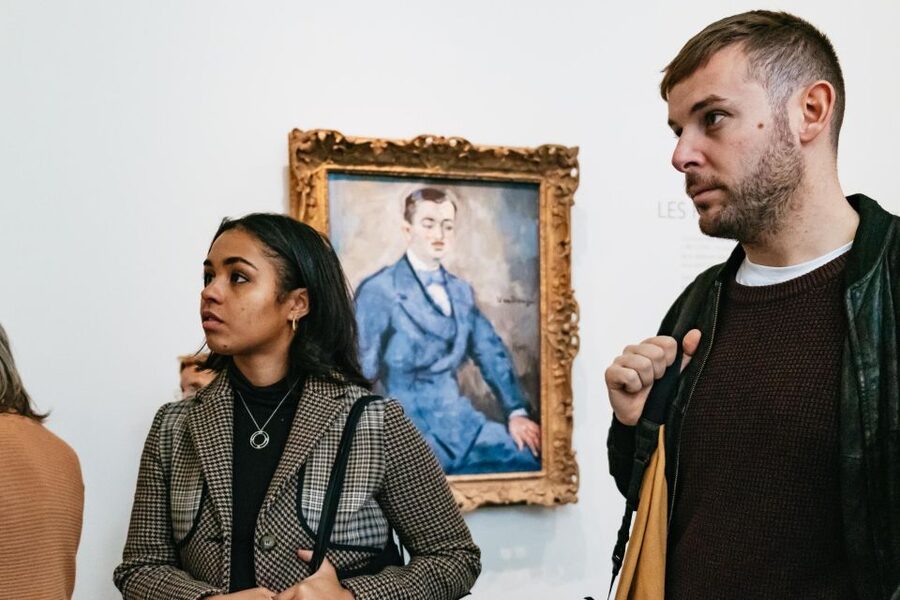
The Musée de l’Orangerie is one of those Paris stops where the building itself shapes what you feel. A guided visit lets you walk straight into the museum, skip the entry scramble, then connect the art to the bigger story of how French painting changed in the 1800s and early 1900s. The highlight is the famous oval room of Monet’s water lilies, surrounded by other major works that show the evolution of style.
I love the way the guide brings context, not just names. With an art historian at your side, you learn what was happening in artists’ lives and why techniques shifted, from Impressionism into early Modernism. I also like the small-group feel, capped at 8 guests per guide, which makes it easier to hear, ask questions, and actually process what you’re seeing, like the way guides such as Hugo and Z were praised for turning the art into a living story.
One possible drawback: there’s moderate walking, and the tour runs rain or shine, so plan for weather and wear comfortable shoes. This format also is not suitable for mobility impairments, and a few rooms have quiet or restricted speaking rules, so you will need to keep your voice low.
Key points to know before you go
- Skip-the-line entry means you get to the important part faster, the oval room, without losing time in the queue.
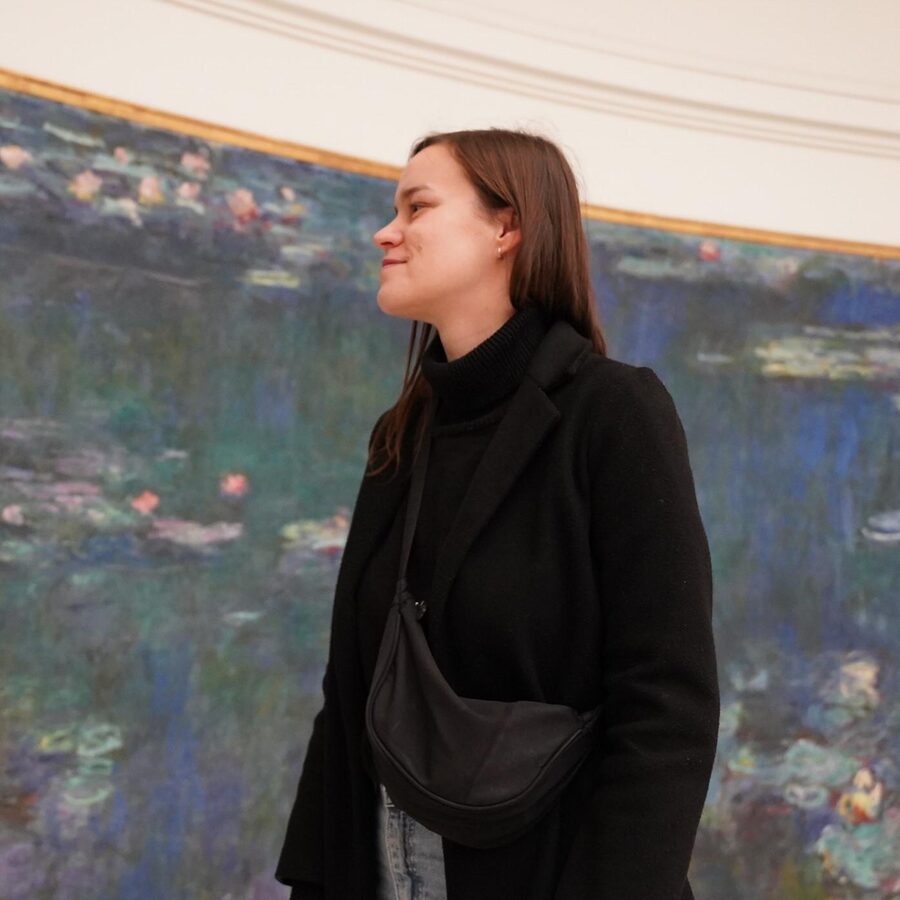
- Monet’s water lilies in the iconic oval room are the main event, and the guided pacing helps you actually take them in.
- Art history told in order, so you can see how Impressionist ideas spread and transformed across walls and rooms.
- Guides set the tone, including Hugo using Clair de lune while you watch Monet, and Barbara connecting with a 9-year-old through the paintings.
- Small group cap of 8 keeps the experience intimate and question-friendly.
- A Tuileries Gardens stroll gets you moving and warmed up before you reach the former Orangerie building.
Why the oval room is worth arriving first
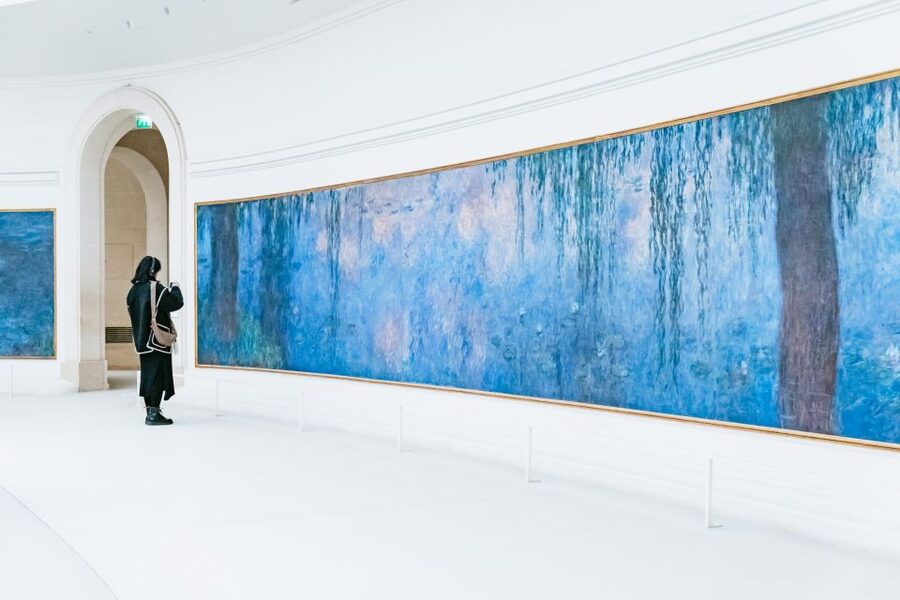
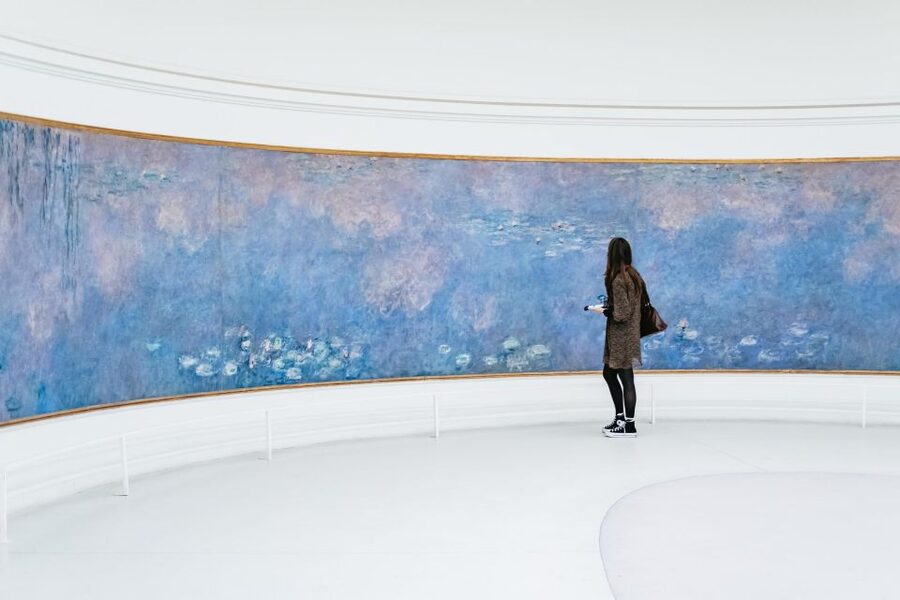
If you only know Musée de l’Orangerie for one thing, it’s Monet’s water lilies. The reason it feels special is that the museum builds the space around those paintings, especially in the oval room. Instead of treating the lilies like a single display, the room puts you in the setting, so you spend your time looking across surfaces, light, and reflection.
This skip-the-line approach matters because it reduces the main stress factor in Paris museums: time spent stuck outside. You trade waiting for seeing. And since the tour is 2 hours, starting smoothly lets you spend that time where it counts, in front of the paintings, not in line.
You’ll also notice something else: the oval room can feel quieter than the rest of the museum, and that changes how you experience it. Your guide will help you slow down. That’s important, because it’s easy to rush when you’re sightseeing fast.
More museum tickets in Paris:
- Paris: Louvre Museum Timed-Entrance Ticket
★ 4.6 · 71,977 reviews - Louvre Museum Masterpieces Guided Tour with Access
★ 4.5 · 12,023 reviews - Paris: Louvre Museum Entry Ticket With Host and River Cruise
★ 4.6 · 9,926 reviews
Getting to the museum via Tuileries Gardens (and managing the walk)
Before you even reach the Orangerie, you’ll head through the Tuileries Gardens. It’s a scenic route that also works as a reset. You’re outside for a bit, then you transition into a museum that is all about mood and light, which makes the shift feel natural.
Plan for a moderate amount of walking. The tour runs in all weather, so wear shoes that handle wet stone and bring a jacket if rain shows up. Also, the tour does not list hotel pickup, so you are responsible for getting to the meeting point on your own.
One practical tip: pack light. Luggage or large bags are not allowed, so you may want to keep your day bag small enough for museum rules. That helps you move comfortably and not get slowed down at security.
What you learn from an art historian guide, beyond the label text

This is not a “here’s the brochure, good luck” museum visit. The tour is led by an art historian guide, and the point is to explain how the art works in its historical moment. You’re not just memorizing names like Monet, Matisse, or Picasso. You’re learning what changed in French painting during the 19th and 20th centuries, and why.
The tour is structured around movements, not random sightseeing. You’ll see how the Impressionist movement evolves across the collection, then how artists respond with different techniques and ideas as you move forward in time. That makes the whole museum feel like one argument, not a pile of masterpieces.
And because guides have been praised for guiding the story clearly, pay attention to how they connect paintings to the world around them. That connection is what turns Monet from “pretty water” into a work tied to perspective, modern observation, and the shift away from older traditions.
Walking into the former Orangerie, a building with a purpose

The Musée de l’Orangerie used to be an Orangerie, a place where the royal family kept oranges in winter. That detail might sound like a trivia nugget, but it helps you understand why this building feels different from other museums. It wasn’t designed for tight, loud galleries. It has the feel of a dedicated space, made for a particular purpose.
You’ll appreciate that once you’re inside. Even if you don’t care about architecture, the museum’s layout influences your pacing. You move room to room, seeing how the art changes with the walls and the light. That matters for understanding early Modernism, since so much of that work is about experimenting with how images can be built.
A few more Paris options to weigh up
- Versailles: Skip-the-Line Tour of Palace with Gardens Access
★ 4.7 · 9,778 reviews - Versailles: Skip-the-Line Guided Palace Tour and Full Access
★ 4.6 · 5,214 reviews - Louvre Museum: Skip-the-Line Small Group Guided Tour
★ 4.6 · 3,960 reviews - From Paris: Versailles Skip-the-Line Tour & Gardens Access
★ 4.7 · 3,011 reviews
Monet’s water lilies: the oval room experience, guided to the right pace

Monet’s water lilies are the headline for good reason. In the oval room, you’re surrounded by the paintings, and your brain starts to treat the art like atmosphere. It’s not one picture framed on a wall. It’s more like being inside a visual environment.
A big reason this works better with a guide is that they help you look with purpose. In at least one guided visit, Hugo paired the experience with Clair de lune audio while you watched Monet. That kind of cue helps a museum moment become memory.
Also, keep in mind there are rules in some rooms about quiet or restricted speaking. That’s not a problem. It’s part of why the oval room lands. If you like to chat through museums, this is the one place where you may want to switch into listening mode.
Impressionism to early Modernism: how the walls tell the story
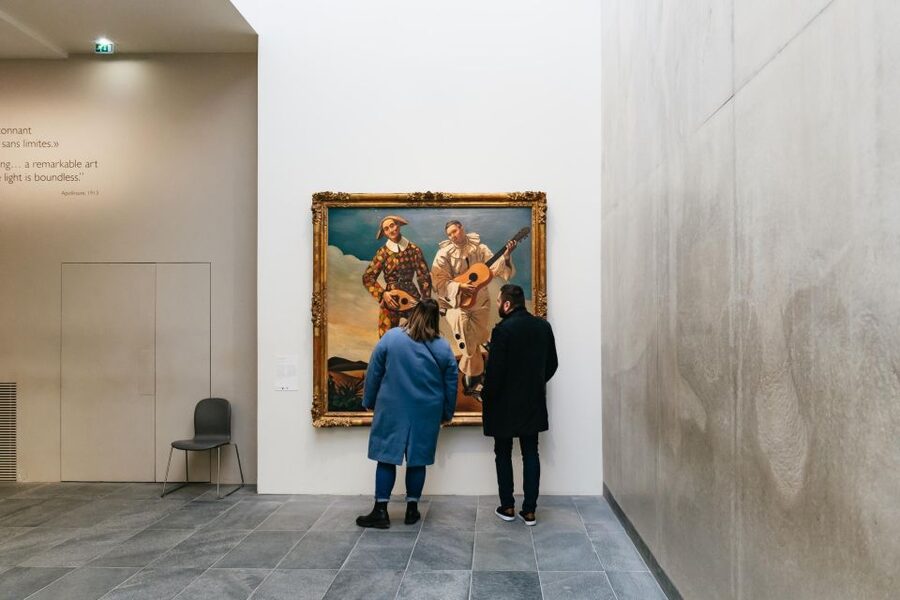
After Monet, the collection shows how French painting kept moving. You’ll see the evolution of Impressionism unfolding, then the next steps taken by artists who built on those ideas while pushing beyond them.
The best way to think about this part is as a chain reaction. Impressionists changed how light and color could behave in paint. Then their disciples and next-generation artists responded with new ways to represent people, still life, and even the body.
Your guide will point you toward what to notice, like brushwork and composition choices. That helps you go from “I recognize the style” to “I can explain the style.” And even if you’re not an art student, that shift makes the museum feel worth paying for.
Cézanne’s fruit and flowers, Matisse’s portraits, Picasso’s stages
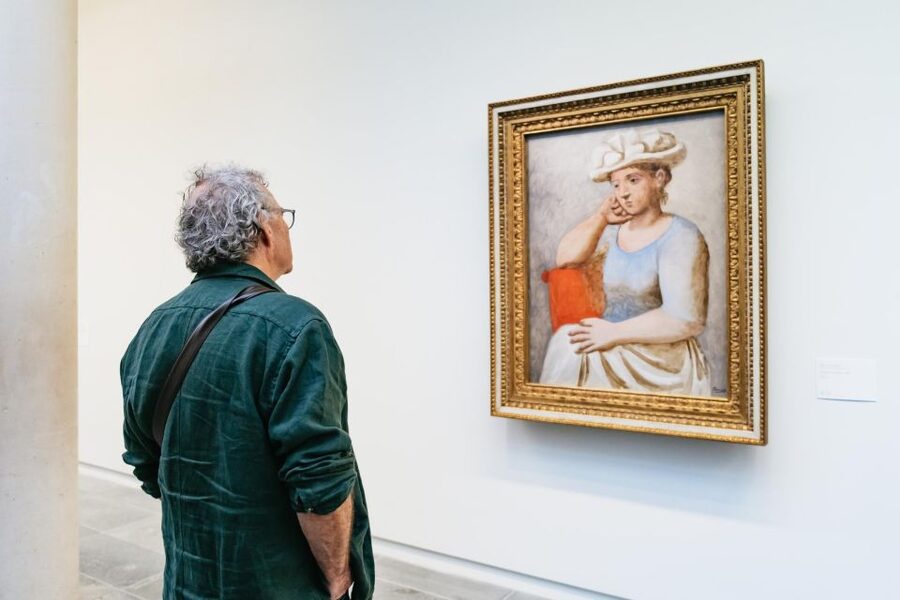
One of the strengths of this tour is that it does not treat the famous names as separate islands. You’ll move through works by artists like Cézanne, Matisse, and Picasso in a way that emphasizes what each one contributed.
Cézanne shows up through his fruit and flower paintings, which is useful because it trains your eye. When you slow down on still life, you start to see how structure and color create form. That matters for understanding why later painters took geometry and perspective in bolder directions.
Matisse is presented with his distinctive, expressive approach, including an exotic style linked to his seductive portraits. That theme helps you notice how he uses color and shape as emotional tools, not just decoration.
Picasso is especially interesting because the tour traces different stages of his work through interpretations of nude models. Even if you only have two hours, seeing those stages in context helps you understand that Picasso was not repeating himself. He was changing what an image could be, and doing it repeatedly.
You may also see additional artists such as Renoir, Modigliani, and Utrillo, which helps round out the picture of early 20th-century directions.
Group size, language options, and the vibe you should expect
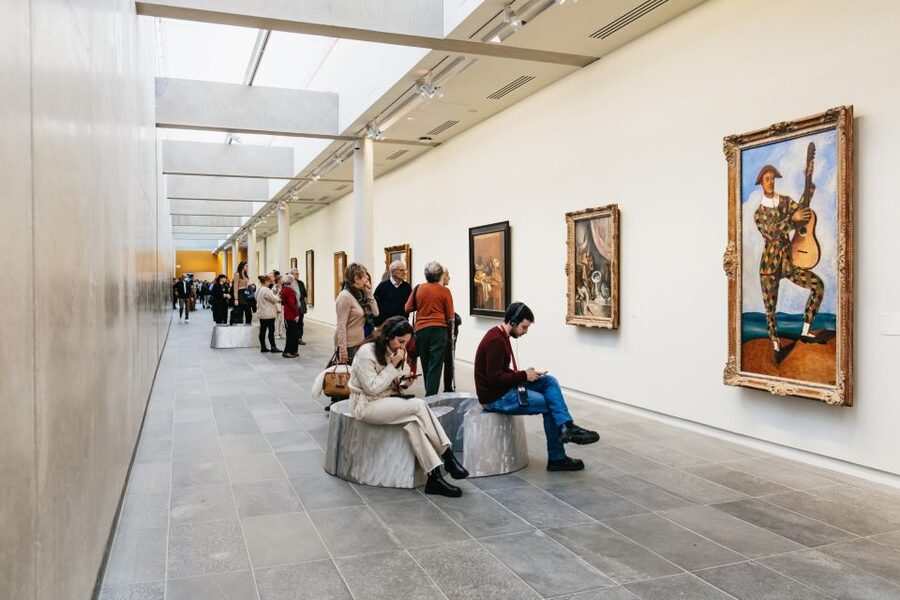
This is a small-group tour. With a maximum of 8 guests per guide, it avoids the worst parts of large museum groups, like hearing nothing and standing still while your eyes skip to the next room. The small size also supports a better guide-to-guest conversation.
Language options include French, English, Russian, Italian, Spanish, and German. If your language is one of those, pick it. The tour works best when you can understand the guide’s explanation instantly, especially when the art turns abstract or technique-heavy.
The guides on this tour have been praised for engagement, including Sunday and Malaika for charming and memorable storytelling. Barbara was also highlighted for connecting with a 9-year-old, which tells me the guide style is not rigid. If you’re bringing kids, ask about the guide’s approach when you book, but know that the format has worked well for at least one family with a young art fan.
Price and value: is $128 worth it for two hours?
At $128 per person, this is not a budget museum visit. But value here is not just the ticket cost. You’re paying for skip-the-line entry, an entrance fee, and the core benefit, a guided walkthrough led by an art historian.
Two hours sounds short, but in the Orangerie it’s enough to get oriented and actually see the key rooms with help. If you try to do it alone, you can still have a great time, but you risk spending too long deciding what to look at, especially once you’re inside and the collection expands.
So the value equation becomes clear:
- You get in faster, which protects your time.
- You get context, which protects your understanding.
- You get a small group, which protects the experience from feeling rushed.
If you’re a casual museum-goer who mainly wants to see Monet quickly and leave, you might decide to go unguided. But if you like art and want to understand what you’re seeing, the guided format is where the price starts to make sense.
Practical tips so the tour feels smooth (not chaotic)
A few practical details can make or break your day.
Bring your passport or ID card. Dress for the weather, since the tour runs rain or shine. Wear comfortable shoes for the moderate walking. And remember the museum does not allow luggage or large bags, so keep your load small.
Inside, some rooms have quiet or restricted speaking rules. That doesn’t mean the tour is awkward. It means you should be ready to listen closely when you reach those areas.
Occasional closures can happen without advance warning from museum management. If the museum opening time is delayed more than an hour from the tour start, you’ll be offered an alternative. The important thing to know is that refunds or discounts are not guaranteed in those cases, so treat this as a “plan to see it” experience, not a guaranteed replacement plan.
Also, museum collections can vary by time of year, and rules may affect how you move or speak in specific rooms. Your guide should handle the flow, but go in expecting a bit of museum unpredictability, like you would with any major institution.
Who should book this Orangerie skip-the-line guided tour?
I think this works best if you fit one of these profiles:
- You want Monet’s water lilies plus context, not just a photo stop.
- You like French art history and want a clean storyline for 19th and early-20th century works.
- You prefer a small group with time to ask questions.
- You’re bringing a child or teen who learns better through conversation and storytelling, not only labels.
It might be less ideal if:
- You need a fully accessible route due to mobility limitations, since this tour format is not suitable for people with mobility impairments.
- You want to wander freely at your own pace for long stretches, because the tour is only 2 hours and follows a guided path.
If you’re flexible and art-curious, you’ll likely feel like your time was used well.
Should you book this tour?
Book it if you care about understanding the art, and you want to minimize the hassle of lining up. The combination of skip-the-line entry, an art historian guide, and the small-group cap is a strong value mix for a museum that can feel overwhelming on your own.
Skip it if you’re mainly chasing convenience and don’t want guidance. In that case, you might spend less by organizing your own visit and only focusing on the oval room. But if you want the art to click, guides like Hugo and Z, plus others such as Malaika, Sunday, Barbara, Belen, and Lily, show a consistent pattern: the explanations stick, and the experience becomes more than just looking.
If you only have a couple hours in Paris and want to feel confident you saw the right things in the right order, this is a very solid choice.
Recently added around Paris
- Paris: Louvre Masterpieces Private Tour with Reserved Entry★ 4.3 · 144 reviews
- Paris Louvre Exclusive Semi Private Guided Tour Max 6 People★ 4.6 · 28 reviews
- Paris: Louvre Guided Tour with Skip-the-Line Entry Tickets★ 3.5 · 73 reviews
- Paris: Living Cheese Museum Guided Tour with Cheese Tasting★ 4.8 · 182 reviews
- Paris Le Marais Walking Tour: Small Group Experience★ 5.0 · 7 reviews
- Paris: Lemon Tart Baking Class with a Pastry Chef★ 5.0 · 4 reviews
- Paris: Live Guided Cruise with Crepe and Soft Drink★ 3.9 · 14 reviews
- Paris Le Marais Food Tour: Full Traditional French Feast★ 4.8 · 119 reviews
Skip the Line, compared.

Skip-the-Line Tour of Palace with Gardens Access
Read our review →
Skip-the-Line Guided Palace Tour and Full Access
Read our review →
Louvre Museum: Skip-the-Line Small Group Guided Tour
Read our review →
Versailles Skip-the-Line Tour & Gardens Access
Read our review →
Versailles Guided Tour with Skip-the-Line Entry
Read our review →
Palace of Versailles Skip-the-Line Guided Tour
Read our review →
Musée d’Orsay Skip-the-Line Tour with Expert Guide
Read our review →
Musée d’Orsay Skip-the-Line Tour with Expert Guide
Read our review →Browse the lists this tour appears in