

Reviewed · MUSéE D'ORSAY TOURS & TICKETS
Paris: Musée d’Orsay Walking Tour With Reserved Access
This experience is interesting because you get a head start on Paris storytelling before you ever step inside. The setting is a former railway station, and the Beaux-Arts architecture gives you context fast. I really like that you focus on both the building’s history and the art it houses, and you also get a helpful audio guide for when you’re on your own inside.
Two things I love about this setup: you start with the exterior transformation, so the museum feels like it has a “why,” not just a “what,” and the group stays small (up to 8 people). One drawback to consider is that the outside guide does not walk you through the galleries, so the experience depends on you actually using your time once you’re inside.
Key things to know before you go
- 30-minute exterior briefing sets the stage before your ticket time starts
- Reserved access is designed to help you skip the usual ticket-line chaos
- Small group of 8 keeps questions and pacing more manageable
- Audio guide included helps you keep moving without needing an in-gallery guide
- Outside guide in English gives context, then you explore on your own inside
- Gate and timed-entry details matter more than you might expect
Beaux-Arts Architecture First, So Orsay Makes Sense

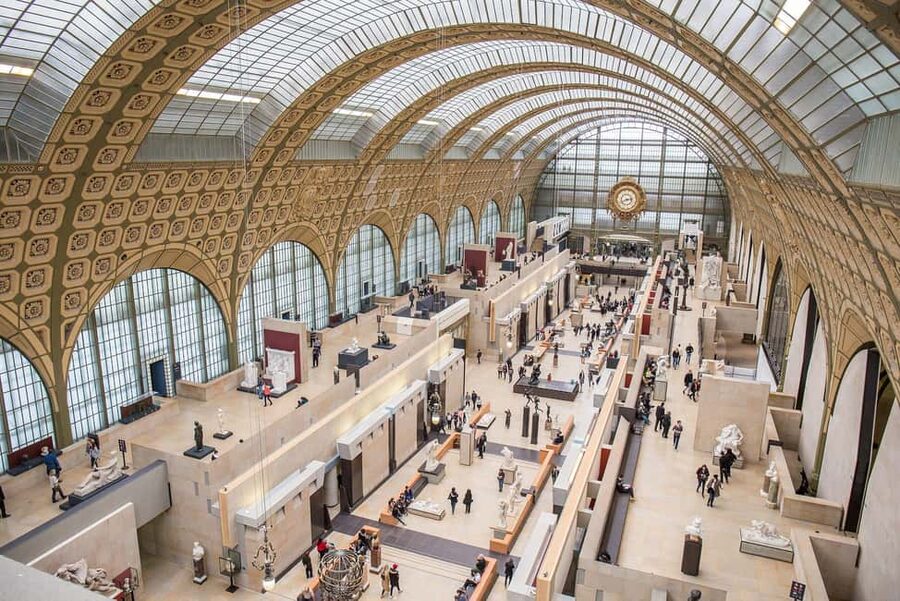
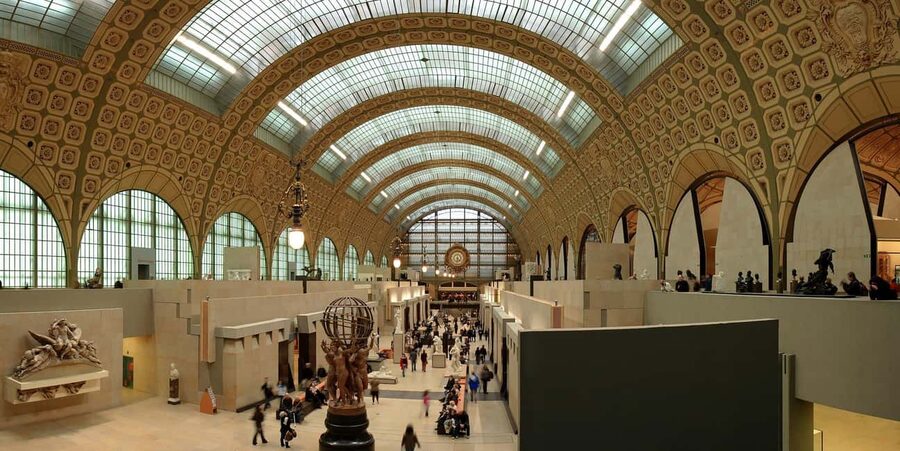
Musée d’Orsay is one of those Paris places where the building and the collection are inseparable. The tour starts you with that big-picture view. From the outside, you’ll get oriented to the station-to-museum transformation, and you’ll hear about the key architectural features and the kinds of construction challenges that shaped what you see today. That framing changes how you look around once you’re inside.
You’re not just walking up to a museum and hoping you know where to go. Instead, you get a story hook: Orsay as part of Paris’s changing cityscape, and the way the grand facade signals cultural ambition. It’s the kind of context that helps you understand why this building became such an iconic setting for art from the 19th century and early 20th century.
More Orsay Museum tours and tickets:
- Paris in a Day: Louvre or Orsay, Eiffel Tower, City Walk & Cruise
★ 5.0 · 1,956 reviews - Paris: Musée d’Orsay Skip-the-Line Tour with Expert Guide
★ 4.5 · 1,145 reviews - Musée d’Orsay Skip-the-Line Tour with Expert Guide
★ 4.8 · 1,088 reviews
Reserved Access and Timed Entry: The Part That Can Go Sideways
The big selling point here is reserved access and skipping the ticket line. At $49 per person for about 2 hours and up to 150 minutes, it can be a good value if your entry details line up smoothly. But you should treat the timed-entry portion like it’s as important as your passport.
Here’s the practical reality: the ticket you receive and the specific entry point (the gate/door indicated) can affect whether you are routed where you expect. If your booking is timed and your plan is to arrive “close enough,” you can still get stuck waiting or redirected. If you arrive without the right type of ticket for that time slot, it can turn into a disappointment fast.
My advice: before you go, double-check what time you’re assigned and how your entry type is described. When you get your tickets outside, confirm the entry instructions clearly. If there’s any ambiguity, ask then, not after you’re standing in line.
The Outdoor Briefing: 30 Minutes That Sets Your Museum Game Plan
After meeting up, you get a 30-minute briefing outside. This is not an “endless lecture” moment. It’s more like the quick, smart orientation you wish every museum tour included. Your guide covers the origins of the building and the transformation into a museum, then points out features you might otherwise ignore.
A key detail: the guide provides your entry tickets after that briefing, and then the guide does not go inside with you. That means this outdoor time is your main chance to ask, and it also means your museum experience is truly self-guided.
If you like museum visits where you move at your own speed, this structure can work well. If you want someone to shepherd you through the galleries step-by-step, this may feel too hands-off. So think of it as: outside guidance for the “big picture,” inside freedom for your own choices.
Walking Up to Orsay: What You Should Look For First
When you approach Orsay as a former station, you’re starting to see the logic behind the interior flow. The building’s architecture is Beaux-Arts, so symmetry, ornament, and the monumental scale are part of the experience. Even before you get to the art, it’s worth using the exterior time to spot the kind of grand, formal design language that shaped the museum’s identity.
During the briefing, listen for the construction and transformation stories. Those details help later when you realize how the spaces inside were adapted for display. You don’t need to memorize dates. You just need to connect what you see from outside with how the museum feels once you’re in.
More walking tours in Paris:
- Paris Top Sights Half Day Walking Tour with a Fun Guide
★ 5.0 · 2,893 reviews - Montmartre Hidden Gems and Scenic Highlights Walking Tour
★ 5.0 · 2,684 reviews - Montmartre Hill French Gourmet Food and Wine Tasting Walking Tour
★ 5.0 · 2,588 reviews - Paris Île de la Cité and Notre-Dame Walking Tour With Crypt
★ 5.0 · 2,272 reviews
Entering the Museum on Your Own, Using the Included Audio Guide
Once inside, you’ll explore independently. That’s where the audio guide becomes your best friend. It’s also where you get to personalize your experience. If you only have about 90 minutes to a couple hours in the galleries, audio helps you avoid the “random wander” trap.
Use this simple approach:
- Pick 2 or 3 must-see artists or styles.
- Choose one “breather room” where you slow down.
- Let the audio guide point you to what makes each work important, then decide if you want to linger.
Without an inside guide, the risk is spending too long scanning or drifting. The audio guide gives you structure, but you still control the pace. If you tend to get overwhelmed in large museums, this hybrid format can be a good match because it gives you direction without taking away your freedom.
What to See: Impressionist and Post-Impressionist Highlights
Orsay’s reputation is built on Impressionism, and this is the heart of what you should aim for first. During your self-guided time, focus on the movement that shaped late 19th-century art in France. You’ll find major works associated with Impressionist and Post-Impressionist painters, and those styles make Orsay feel like it’s doing something specific, not just holding a collection.
If you’re not an art-history expert, here’s how to get more out of it without pretending you know everything:
- Look for how light and color are handled, even when scenes are everyday.
- Notice brushwork and how it affects mood.
- Compare one painting where the palette is lighter with another where it feels moodier or more intense.
Alongside paintings, Orsay also has sculptures and decorative arts tied to the same period. That matters because it widens your view of what “art” meant at the time. Instead of only painting, you get a sense of how design, form, and sculpture fit into the larger cultural shift.
Temporary Collections: Worth Adding If You Manage Your Time
This experience includes access to both permanent and temporary collections. That can be a real plus if you’re the type who enjoys variety, not just the headline works. The trade-off is time. Orsay is big, and a temporary exhibition can easily eat your “best-of” time if you don’t plan.
My practical suggestion: treat the temporary collection as a bonus, not a mission. If you arrive and you’re feeling fresh, go in. If you’re already running behind, skip it and protect your time for the Impressionist core. It’s better to see fewer things well than to rush through everything.
Group Size and Timing: Why It Feels Different Than a Big Bus Tour
You’re limited to a small group (up to 8 participants), and that’s meaningful. Smaller groups tend to move more smoothly at key moments like check-in and exterior orientation. It also means your briefing can actually feel like a conversation instead of a monologue.
The overall duration is listed as 2 hours, up to about 150 minutes. In practice, that means the experience is built around a quick exterior start and then a solid chunk of independent museum time. If you want a long, unhurried, inside-only museum day, this is not that. But if you want a focused start and a guided path to your own visit, it can be a smart way to manage limited time in Paris.
Practical Tips That Can Save Your Visit
Here are the on-the-ground details that matter most for this kind of reserved-entry tour.
First, wear comfortable shoes. Orsay has walking, and you’ll likely move between areas rather than staying planted in one gallery.
Second, bring your passport or ID card. The entry process can be strict, and you don’t want a simple document issue to slow you down.
Third, keep your schedule buffer tight. Timed entry works best when you’re not cutting it close. If you arrive early, you’ll still want to follow staff directions. If you arrive late, you risk losing the smooth entry benefit you paid for.
Fourth, pay attention to the gate instructions you receive. There have been situations where people were directed to different door options than the one shown on their initial entry information. If that happens, stay calm and ask where you should go next. The good news is that these issues are resolvable in person, but it’s easier to avoid them by confirming entry directions during your exterior ticket handoff.
Lastly, note what’s not allowed: pets, alcohol, and drugs. If you’re carrying anything you’re unsure about, it’s safer to leave it behind.
Who This Tour Fits Best (And Who Might Feel Frustrated)
This experience tends to work best if you like a structured start but don’t need an inside guide. You’ll probably enjoy it if:
- You want context for why Orsay looks the way it does and how the building changed.
- You’re comfortable making choices inside a museum.
- You like Impressionist and Post-Impressionist art and want time to focus.
- You prefer a small group and faster pacing.
You may feel frustrated if:
- You want someone to guide you through galleries room-by-room.
- You expect the tour price to guarantee zero waiting even if your ticket details do not match the timed entry rules.
- You need step-free access, because this tour is not suitable for people with mobility impairments.
Price and Value: Is $49 Worth It?
At $49 per person, the value depends on how well reserved access works for you. If entry goes smoothly and you get the full benefit of the exterior briefing plus your museum time, you’re paying for three things: an orientation, reserved admission, and an audio guide.
Here’s the honest math in plain terms:
- If you were planning to stand in line anyway, reserved access is a real time saver.
- If you would have rushed through without context, the exterior briefing adds meaning.
- If you like to explore at your own pace, the audio guide supports that without adding a human guide cost inside.
But if reserved access doesn’t behave as expected because your timed entry details or door instructions don’t match, that’s when the value can feel unfair. For that reason, I’d only book this if you are comfortable with check-in instructions and you can follow the entry directions carefully when you arrive.
Should You Book Musée d’Orsay With Reserved Access and a Brief Exterior Guide?
If your priority is to see Orsay efficiently, especially the Impressionist and Post-Impressionist core, I think this is a solid way to do it. The building itself is a major part of the experience, and starting with a focused exterior briefing helps you see the museum as more than a collection of famous works.
Book it if you can handle the format: guide outside for about 30 minutes, tickets handed over, then you explore on your own using the included audio guide. Skip it if you strongly need an inside guide to manage pacing, or if you have mobility needs that make Orsay visits difficult.
My final take: when reserved entry runs as intended, this tour gives you a smart start and protects your time. When it doesn’t, it becomes a logistics problem. If you’re the type who double-checks entry instructions and shows up ready to follow directions, this is worth your attention.
Recently added around Paris
- A 3 Days Tour of Belgium and Netherlands from Paris★ 5.0 · 4 reviews
- 3 Days Trip to Normandy, Loire and Mont Saint Michel from Paris★ 4.5 · 86 reviews
- Premium private tour of Paris in an Electric TukTuk (4 hours)★ 5.0 · 45 reviews
- Eiffel Tower Second or Summit Floor Access by Elevator with Views★ 3.5 · 161 reviews
- Paris City Tour 3h00 Citroën DS Vintage with Open Roof★ 5.0 · 4 reviews
- Louvre Private Tour – The Essentials and More with Expert Guide★ 5.0 · 227 reviews
- 2H Discovery Tour of Paris in 2CV CITROEN★ 5.0 · 19 reviews
- 2CV tour by night★ 5.0 · 55 reviews
Musée d'Orsay Tours & Tickets, compared.

Paris in a Day: Louvre or Orsay, Eiffel Tower, City Walk & Cruise
Read our review →
Musée d’Orsay Entry Ticket and Seine River Cruise
Read our review →
Musée d’Orsay Skip-the-Line Tour with Expert Guide
Read our review →
Musée d’Orsay Skip-the-Line Tour with Expert Guide
Read our review →
The Musée d’Orsay Guided Tour Orsay Museum Semi-Private 6ppl Max
Read our review →
Louvre & Musée d’Orsay Guided Museum Tour Semi-Private 6ppl Max
Read our review →
Browse the lists this tour appears in