
Reviewed · LE MARAIS TOURS
Paris Marais Quarter 2-Hour Private Walking Tour
The Marais is one of those Paris neighborhoods where the past keeps showing up in plain sight. This private 2-hour walk takes you from old market ground to royal-era grandeur, then onward to the Pletzl and the modern look of Pompidou, with the guide stitching it all into one story.
I especially like two things. First, you get real context for why the Marais went from swamp to power center to Jewish quarter to rougher times, and then back toward its next renaissance. Second, the best part is the guide skill, with people like Alexander and Caroline praised for connecting the dots and pointing out places you’d likely miss on your own.
One possible drawback: this is only 2 hours, so the route packs a lot in at a walking pace. If you want lots of sit-down time for photos or slow browsing, you may want to do a longer second walk afterward.
Key highlights you will feel during the walk
- Les Halles area: see the bones of an area that was once the biggest open market in Paris
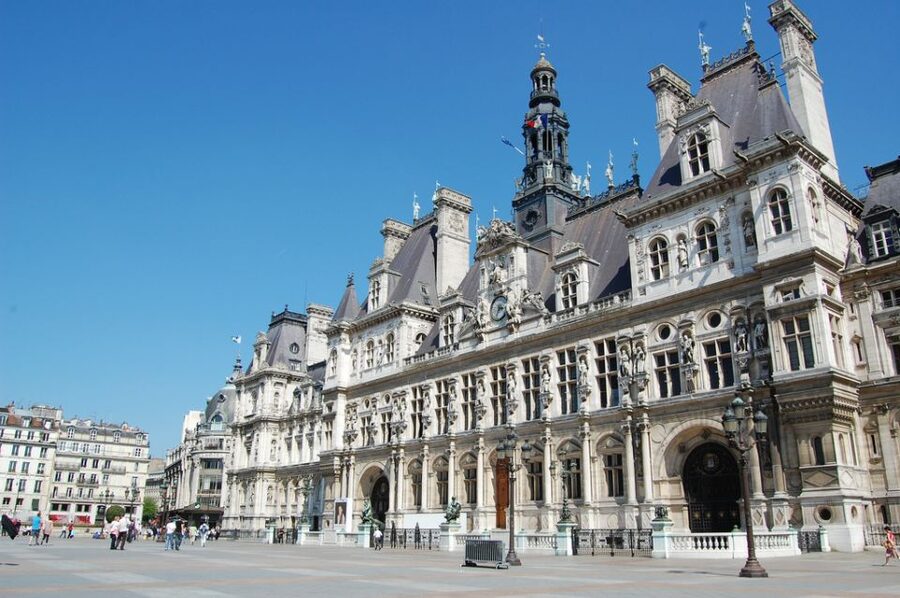
- Hôtel de Ville: spot the opulent Renaissance city hall and get the why behind its setting
- Pletzl and Rue Pavée: walk through the historic center of the Jewish community and visit the synagogue area
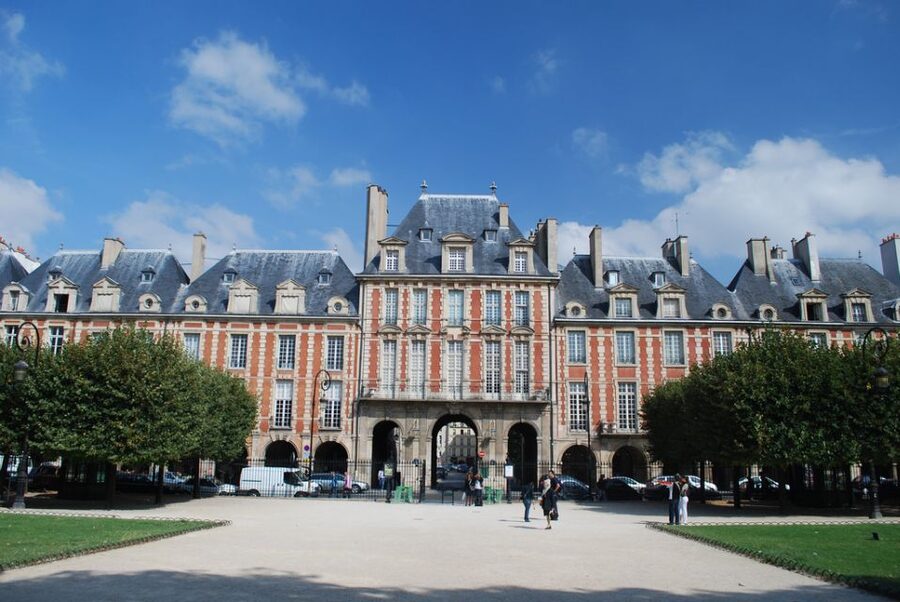
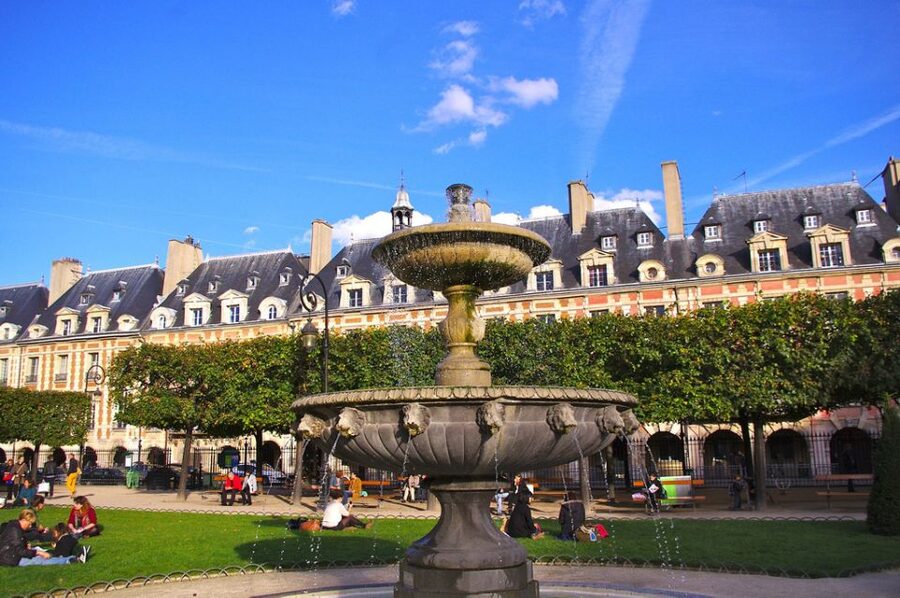
- Place des Vosges: stand in one of the world’s most beautiful squares and learn what it represents
- Pompidou Centre link: learn how medieval threads connect to the modern Pompidou Centre
- Street-level storytelling: guides like Boris and Anja are described as pleasant and good at keeping history clear
Why the Marais feels like Paris in miniature
The Marais is a shortcut to understanding Paris. In a small radius, you get major shifts in who lived where, what mattered, and how the city reinvented itself. The tour starts from that big idea: the Marais began as swamp land, then was drained, became habitable, and slowly pulled in settlers until it became one of the city’s key social and cultural centers.
You’ll also see the Marais has never been one single mood. It rose as a chic residential area with aristocrats and even a royal court. Then it suffered hard turns, including a period when parts of the neighborhood became a best-avoided kind of slum. Right now, it’s in a second renaissance, and the guide helps you notice what changed, and what never really left.
This is where the private format helps. You are not just collecting monuments. You are learning patterns, so the streets start to make sense.
More tours of the Marais:
- Award-Winning Paris French Bakery Experience — Le Marais, 4th Arr
★ 4.5 · 1,186 reviews - Paris Le Marais Food Tour With 10+ Tastings, Cheese, Wine & More
★ 5.0 · 985 reviews - Paris Le Marais District Original Food and Wine Tasting Tour
★ 4.5 · 880 reviews
Starting at Metro Étienne Marcel, and how the 2-hour format works
Your meeting point is Metro Étienne Marcel. The guide will be carrying a red canvas tote bag, which makes it easy to spot them and get going quickly.
Because it is a 2-hour private walking tour, the rhythm matters. You will be outside most of the time, walking between major landmarks and also through the connecting streets that give the Marais its texture. The tour is rain or shine, so you should come ready for wet streets and slower walking.
The guide is there to do two jobs at once: keep the story moving and manage your group’s pace. In past tours, guides like Fabienne adapted their explanations to the audience, including groups with a wide age range, from kids to seniors. That’s a good sign if you want history explained clearly rather than presented like a lecture you can’t use.
Also, this is not a food tour. If you want snacks, plan them separately before or after, because no food, drinks, or beverages are included.
Les Halles, the market that shaped a neighborhood
One of the first big stops on your Marais story is Les Halles, a place with outsized influence compared to how it feels on a map today. You’ll learn it was once the biggest open market in Paris, which matters because markets are not just commerce. They shape street life, housing demand, and even the daily movement of people.
On this tour, Les Halles acts like a historical anchor. From there, you can start to understand why the Marais grew as it did, why certain areas became desirable, and why the neighborhood attracted different communities over time. If you have ever wandered Paris and wondered why a street feels important even when the storefronts look modern, this is the kind of explanation that answers that question.
What to watch for: the guide’s job is to help you see transitions. Markets create constant motion. When that motion changes, the neighborhood identity changes too. Your “aha” moment will likely come when you connect the idea of a market center to the later cultural and political roles the area played.
Fontaine des Innocents, small stop, strong sense of place
You’ll also see Fontaine des Innocents. The reason this matters on a walking tour is simple: fountains are landmarks that people use to navigate, meet, and remember. Even if you’re not stopping for a long photo session, your brain registers it as a point in the neighborhood’s timeline.
This kind of stop is where a good guide makes a short moment feel like part of a bigger story. The Marais has several “big name” sights, but it’s the connecting points that make the area feel lived in. This fountain helps you do that.
If you prefer fewer stops and more time at each one, this is the kind of stop you might enjoy best at a quick glance, then come back later if you want extra time.
More walking tours in Paris:
- Paris Top Sights Half Day Walking Tour with a Fun Guide
★ 5.0 · 2,893 reviews - Montmartre Hidden Gems and Scenic Highlights Walking Tour
★ 5.0 · 2,684 reviews - Montmartre Hill French Gourmet Food and Wine Tasting Walking Tour
★ 5.0 · 2,588 reviews - Paris Île de la Cité and Notre-Dame Walking Tour With Crypt
★ 5.0 · 2,272 reviews
Centre Pompidou and the Middle Ages connection
One of the most interesting claims of this tour is that you will learn the connection between the Middle Ages and the modern Pompidou Centre. That could sound abstract, but on a neighborhood walk, it usually becomes concrete through how the guide explains location, movement, and old and new priorities.
Here’s what you should expect from a strong guide moment like this: you will not just be told that old Paris and new Paris exist. You’ll be shown how the neighborhood’s older patterns helped create the conditions for what came later. Think of it as a “how we got here” lesson, not a comparison of styles for style’s sake.
Practical tip: Pompidou is visually loud compared with the calmer square-and-street feel of the rest of the Marais. When you see it on the walk, give your eyes one minute to reset. Then let the guide’s explanation do its work. You’ll get more out of it if you treat it like a chapter transition.
Hôtel de Ville, Renaissance power in full view
Next comes Hôtel de Ville, described as an opulent Renaissance city hall. This is one of those stops that helps you understand how civic power looks when it wants to impress. The guide’s storytelling is likely to focus on what it meant for the neighborhood around it and how that ties into the Marais identity over the centuries.
Why I like this part of the tour for first-time visitors: it connects architecture to purpose. It’s easy to look at a grand building and move on. A guide who links it to earlier eras makes you understand that buildings are not just pretty. They are signals.
If you want great photos, bring your camera expectations down a notch. You’ll be walking through a real city. You may not get perfect angles at every moment, and that’s fine. The value here is learning what you’re seeing while you’re standing in the right place.
Pletzl and Rue Pavée, the Jewish quarter’s living landmarks
The heart of the Marais story, for many people, is the Pletzl area. This is described as the historic center of the Jewish community, and the tour brings you into that area so you can read the neighborhood through that lens.
You’ll also see the synagogue at Rue Pavée. Even if you know little about the area before you arrive, the guide will connect it to the Marais long-term identity. The neighborhood didn’t just “host” a community at one moment. It developed into a center, and that legacy is part of why the area still feels distinct.
This section is also where the private format becomes more than convenience. With a small group and an experienced guide, you can ask questions or follow the explanation at the pace that feels right. In past tours, guides were praised for clarity and for adjusting their talk to their group, including mixed ages. That matters here, because sensitive history needs careful framing.
If you prefer to be a quiet observer, you can do that too. The guide is there to provide context, but you still control your pace and your attention.
Hôtel de Sully and the calmer side streets
You’ll also visit Hôtel de Sully. The main benefit of stopping here on foot is that you experience the Marais as more than a list of famous points. Hotels and residences from earlier periods tell you what “important living” looked like, and they help you see the neighborhood’s shift between elite and less comfortable phases.
This part tends to feel less frantic than the market and major civic buildings. It’s the right time to look at details you might miss when you’re rushing to the next big sight. Even if you are not a design person, the guide will likely explain enough about why these buildings matter that you’ll walk away with understanding, not just photos.
Possible drawback: if your group is mostly focused on photography, this is one place where people can get a little impatient during explanations. If you want pictures, you may need to remind yourself that the explanation is what makes the visuals click. A good guide will keep things moving, but you’ll still want to manage your own expectations.
Place des Vosges, one of the world’s most beautiful squares
Then you reach Place des Vosges, described as one of the most beautiful squares in the world. A square like this is more than a backdrop. It is a public room. It shapes how people walk, linger, and gather.
The guide’s storytelling here is usually strong because it’s a visual setting for the Marais identity shift. Earlier you learned about aristocrats and even a royal court. When you stand in a place like Place des Vosges, that context stops being abstract.
I like squares on guided walks because they help you slow down without losing time. You get a reset point. You can look around, take in the geometry, and then continue with clearer context for what comes next.
If you’re traveling in busy seasons, expect the square to feel popular. That’s normal. The tour’s value is that you know what the square represents before you start snapping pictures.
Place de la Bastille, a big end point for the Marais story
Your walk also includes Place de la Bastille. Without adding too many extra promises, this stop works well as a finishing point because it gives your mental map a strong anchor. It helps you feel that you started near a historical market core and traveled through turning points in neighborhood identity.
A good walking tour ending like this does two things. It helps you reframe what you saw earlier, and it gives you an easy reference point for where to go next on your own. Even after the tour ends, you’ll likely feel more confident walking around nearby streets because you understand the logic that brought you there.
Price and value: is $176 per person worth it?
This tour costs $176 per person for a 2-hour private walk. That is not cheap, and you should be honest about what you’re paying for.
Here’s the value case. You’re buying (1) a guide who can connect major sights and neighborhood shifts into one clear story, and (2) time saved by having someone point out what matters right where it matters. In a neighborhood as layered as the Marais, the difference between a self-guided walk and a guided walk is often the difference between seeing buildings and understanding why they are there.
The reviews highlight strong teaching skills. Guides like Alexander tied Paris and the Marais together in a way that made the whole neighborhood feel like one coherent narrative. Caroline was praised for history and hidden corners. Fabienne and Yvana were praised for clear explanations that matched the group.
If your group is small, the private format can also feel efficient. You’re not waiting for everyone to catch up, and the guide can adapt to your pace.
Where cost can feel less worth it: if you mainly want unstructured wandering and you’re not very interested in history. In that case, you might prefer a self-guided route and spend the money on a meal. But if you want the neighborhood to make sense fast, this price buys that clarity.
Who should book this Marais walk, and who should pass
This tour is a strong fit if you want a structured way to understand the Marais in a short time. You like history that connects eras, from the neighborhood’s origins and shifts in social life, to the historic Jewish center in the Pletzl, to how the tour ties medieval themes to the modern Pompidou Centre.
It also works well if your group includes mixed ages, since guides have been praised for adjusting their delivery to the people in front of them.
I’d think twice if you get impatient with walking and explanations, or if you’re expecting a food-focused day. This is a walking, sight-based history tour with no snacks included. Plan to eat afterward, and plan comfortable shoes.
Should you book this Paris Marais private walking tour?
I’d recommend booking if you want a 2-hour private guide to turn the Marais from a pretty neighborhood into a place with meaning. The value is strongest when you care about how Paris changed over time, and when you appreciate a guide who explains what you’re seeing in plain language.
Skip it or consider a different option if you want a long, slow day with lots of downtime, or if you mainly want shopping and cafe time. With a fixed 2-hour window and a rain-or-shine schedule, this tour rewards people who like movement and stories.
If you book, you’ll start at Metro Étienne Marcel with that red tote bag in sight, then spend the next two hours walking through some of the Marais’s most important chapters, one stop at a time.
FAQ
Where is the meeting point for the tour?
The tour meets at the Metro Étienne Marcel. The guide will be carrying a red canvas tote bag.
How long is the walking tour?
It lasts 2 hours.
Is the tour private?
Yes, it is a private group tour.
What languages is the guide available in?
The tour offers guides in English, French, and Serbo-Croatian.
Does the tour run in bad weather?
Yes, the tour operates rain or shine.
What is included in the price?
The price includes the 2-hour guided walking tour.
Are food, snacks, or beverages included?
No, food, snacks, and beverages are not included.
What is the cancellation policy?
You can cancel up to 24 hours in advance for a full refund.
Can I reserve without paying right away?
Yes, it offers reserve now and pay later, so you can book and pay nothing today.
Recently added around Paris
- Paris: Louvre Masterpieces Private Tour with Reserved Entry★ 4.3 · 144 reviews
- Paris: Living Cheese Museum Guided Tour with Cheese Tasting★ 4.8 · 182 reviews
- Paris Louvre Exclusive Semi Private Guided Tour Max 6 People★ 4.6 · 28 reviews
- Paris: Louvre Guided Tour with Skip-the-Line Entry Tickets★ 3.5 · 73 reviews
- Paris Le Marais Walking Tour: Small Group Experience★ 5.0 · 7 reviews
- Paris: Lemon Tart Baking Class with a Pastry Chef★ 5.0 · 4 reviews
- Paris: Live Guided Cruise with Crepe and Soft Drink★ 3.9 · 14 reviews
- Paris Le Marais Food Tour: Full Traditional French Feast★ 4.8 · 119 reviews
Le Marais Tours, compared.

Award-Winning Paris French Bakery Experience — Le Marais, 4th Arr
Read our review →
Paris Le Marais Food Tour With 10+ Tastings, Cheese, Wine & More
Read our review →
Paris Le Marais District Original Food and Wine Tasting Tour
Read our review →
Paris Bike Tour Hidden Secrets in the Latin Quarter & Le Marais neighborhoods
Read our review →
Food and Wine Tasting Walking Tour in Le Marais
Read our review →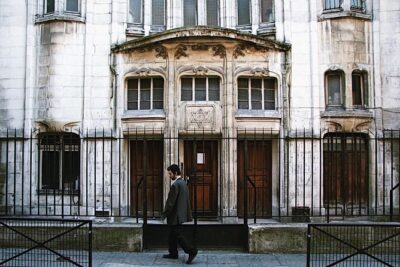
Le Marais District & Jewish Quarter Guided Walking Tour 12ppl Max
Read our review →
Le Marais/Paris – The Historic, Trendy, Jewish, LGBT district
Read our review →
Paris Le Marais Food & Wine Tour with Eating Europe
Read our review →Browse the lists this tour appears in