
Reviewed · SKIP THE LINE
Paris: Centre Pompidou Skip-the-Line Guided Museum Tour
The Pompidou Centre is interesting for one simple reason, it feels like a machine built for ideas, not just paintings. You get a small-group (max 8) guided sweep through modern and contemporary art, plus time focused on Renzo Piano’s striking “inside-out” design. I love the tight pacing in 2.5 hours, and I love that you look at specific movements and artworks, not random rooms. One consideration: no large bags or suitcases are allowed, so pack light.
This tour also works because it teaches you how to read modern art without turning it into a quiz. Guides like Dunya and Tanya are praised for making the art make sense, often by tying it to social context, not just dates. If you hate rules, note that some areas are “silent rooms,” so talking is off-limits in those spots.
Key things to know before you go
- Max 8 guests means you can actually ask questions and get real explanations
- Skip-the-line entrance helps when you have a tight Paris schedule
- Renzo Piano’s inside-out architecture is part of the tour, not an afterthought
- You’ll cover big movements, from Cubism and Fauvism to Dada and Surrealism
- A stop on the roof/panorama gives you a quick, cinematic view over Paris
Why the Pompidou’s architecture is part of the art lesson
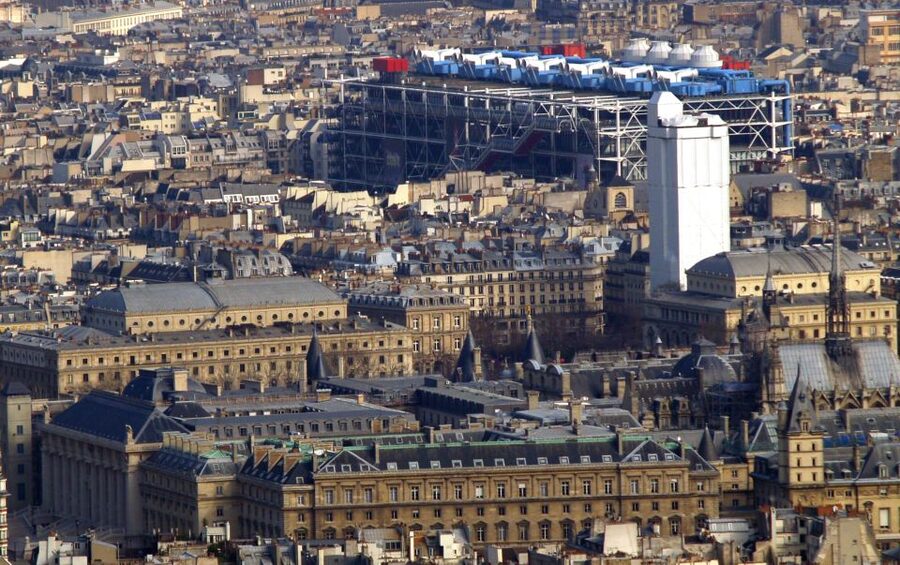
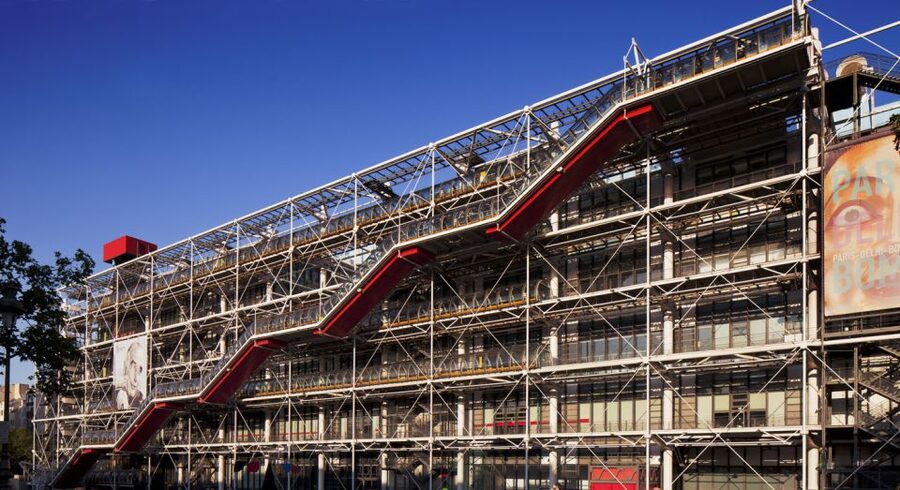
The Pompidou Centre is one of those buildings where you either roll your eyes and move on, or you start looking up. This tour leans into that second option. Your guide starts with the exterior and explains how Renzo Piano designed the museum as an “inside-out” structure, with vibrant color and a sense that the building shows its workings.
I like how that frame changes your mindset. Before you even enter, you’re primed to think about design, structure, and visibility. That matters for modern art, where meaning is often more about the system and the choices than about a single subject.
You also get a guide who can connect big ideas to what you’re seeing. In feedback tied to this experience, guides including Dunya and Belen are noted for turning modern and contemporary art into something you can understand and talk about. When Tanya leads, the focus on social context comes through, which is a good way to keep art from floating off into mystery.
More museum tickets in Paris:
- Paris: Louvre Museum Timed-Entrance Ticket
★ 4.6 · 71,977 reviews - Louvre Museum Masterpieces Guided Tour with Access
★ 4.5 · 12,023 reviews - Paris: Louvre Museum Entry Ticket With Host and River Cruise
★ 4.6 · 9,926 reviews
Meeting by the blue parking sign, then getting moving fast
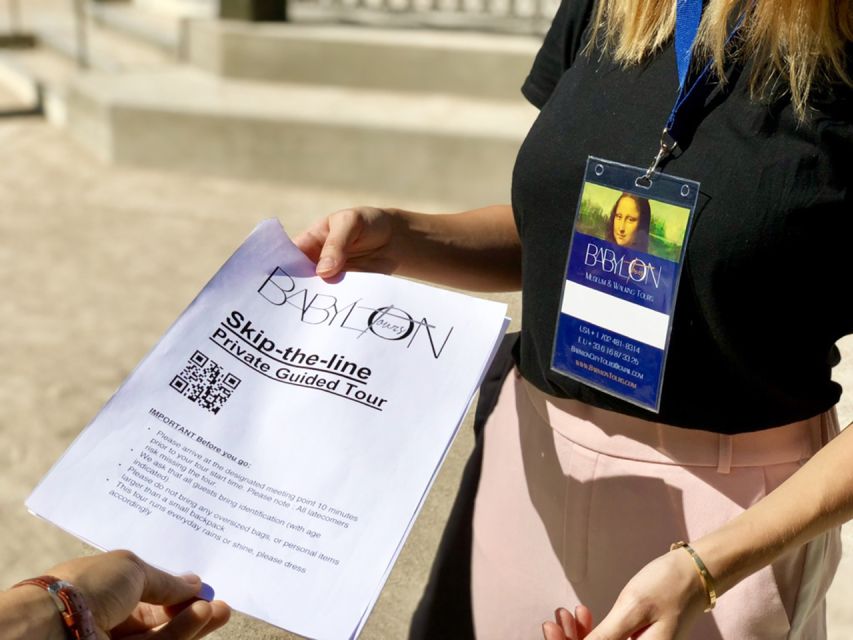
This is a 2.5-hour guided visit, so you want the meeting point to be painless. Meet your guide by the blue parking sign at the corner of Rue Beaubourg and Rue Rambuteau.
You’re also told to plan around the fact that you won’t have luggage space. No large bags or suitcases are allowed, so if you arrive with a big day-bag, you may need to rethink what you packed. Bring a photo passport or ID card as required.
One smart practical tip: get your guide’s contact details sent to you by email, and check spam or promotions. If something goes wrong, the instructions are clear that you can call or text your guide for urgent matters.
Finally, the tour ends back at the meeting point, so you are not stuck trying to find your way out of a maze on your own. It’s a relief when you’re trying to keep the rest of your day on schedule.
The Pompidou’s exterior: inside-out design and why it matters
You begin with the museum’s striking exterior, and that’s a big part of why this tour works even if modern art makes you nervous. Your guide points out how the Pompidou’s architecture tells a story. It is conceived as an “inside-out” structure, meaning you see the museum as a visible system.
Even if you’re more into paintings than buildings, this framing helps. Modern art often plays with structure too. It breaks the rules of perspective, swaps decoration for construction, and changes what the artwork is allowed to be. When you understand that the building itself is built on that attitude, the museum feels less random.
And since the group is small, you can actually pause and look, rather than speed-walking past details because everyone else is trying to catch up.
Modern art tour walkthrough: movements, major names, and real meaning
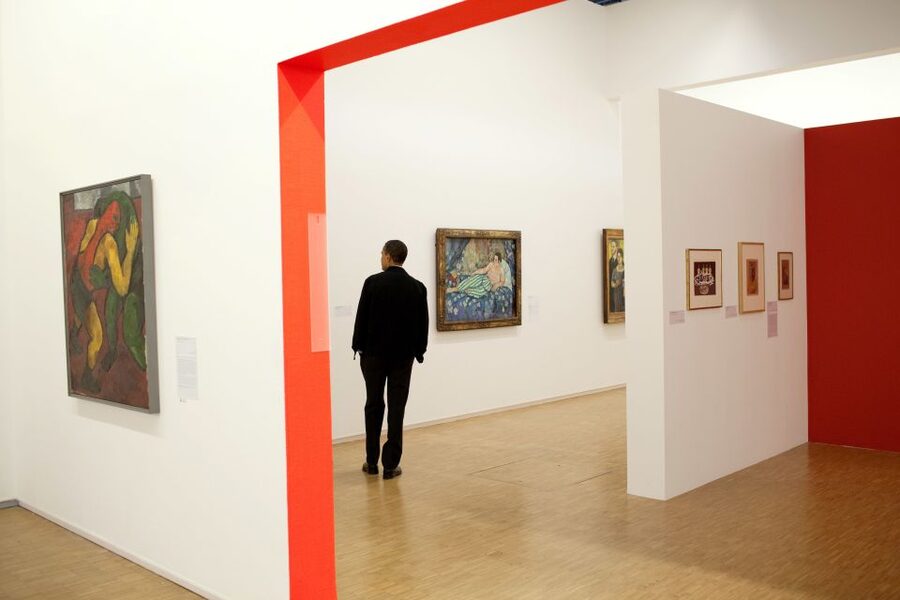
Once inside, the tour moves through the Musée National d’Art Moderne collection. The collection is described as containing nearly 3,200 works, and your guide doesn’t try to show everything. Instead, they pick the moments that explain how modern art evolved.
This is where the small-group format pays off. You’ll stand in front of key works and discuss the movement behind them. The guide uses concrete examples, like:
- Cubism and Picasso, so you understand why the painting looks “broken” on purpose
- Fauvism and Matisse, so bold color becomes a decision, not a mistake
- The impact of the World Wars on the art world, helping you see why artists reacted so strongly
Then you get into the chaos. Dada is framed as a reaction tied to the gore of World War I, which gives the movement a motive instead of treating it like nonsense. After that, the tour moves into surrealism, including Salvador Dalí.
If you’ve ever wondered why some modern works feel like they are joking at you, this portion is the answer. It shows how the art was formed in response to trauma, politics, and cultural shock. You’re not asked to pretend to love everything. You’re taught what artists were pushing against.
You’ll also cover other major threads, including:
- Pop Art, with some time on Andy Warhol
- Design and theory, like Bauhaus
- Style and emotion, like Abstract Expressionism
- International art names, including Georgia O’Keeffe, Jackson Pollock, and Piet Mondrian
- Plus beloved French artists, as part of the broader story
That mix is useful if you’re new to modern art. You see the big swings, and you start recognizing patterns in technique, subject matter, and attitude.
A few more Paris options to weigh up
- Versailles: Skip-the-Line Tour of Palace with Gardens Access
★ 4.7 · 9,778 reviews - Versailles: Skip-the-Line Guided Palace Tour and Full Access
★ 4.6 · 5,214 reviews - Louvre Museum: Skip-the-Line Small Group Guided Tour
★ 4.6 · 3,960 reviews - From Paris: Versailles Skip-the-Line Tour & Gardens Access
★ 4.7 · 3,011 reviews
Silent rooms and pacing: what to expect when the museum gets strict

Museums can be loud, and modern art museums often amplify that. Here, you’ll run into sections called silent rooms, where noise and talking are not allowed.
This isn’t just a rule to ignore. Your guide will steer the group with that in mind, so you don’t get the awkward feeling of being “too loud” while you’re trying to listen. It also means the tour has a more thoughtful pace in certain areas.
Another pacing note: collections can change throughout the year, and you are visiting a long-term museum collection rather than a temporary exhibit focused visit. That’s good for reliability. You’re learning the overall modern and contemporary story rather than hoping one specific temporary show is running.
Contemporary galleries: Fluxus, Minimalism, and a winter garden installation
After the modern art backbone, the tour heads into the contemporary galleries. This is where the story keeps moving forward into more recent ideas and formats.
You’ll learn about recent artistic movements such as Fluxus and Minimalism, which are useful terms because they help you classify what you are looking at. Fluxus tends to connect art with action and everyday life. Minimalism often pushes toward strict form and reduced elements. Even if you do not love the style, you’ll at least know what the artist is trying to do.
You’ll also see works highlighted in the tour such as Dubuffet’s winter garden installation. The key value here is not that you check off a famous name, it’s that the guide helps you interpret an installation style where the “art” might be the environment, rhythm, or texture as much as a single object.
At the end of this section, you’ll have a broader sense of how modern art evolves into contemporary practices. That’s one of the biggest reasons this tour feels different from a generic museum stroll.
Rooftop panorama time: Paris views as a reward
Yes, you’ll climb up to the top floor and get a unique view of Paris. This is the moment when the museum tour turns from art lesson to street-level reality.
The rooftop panorama works as a mental reset. After you’ve spent 2.5 hours training your eyes on color, form, and meaning inside, it’s satisfying to look out at the city and remember you are in Paris, not inside a theory.
It’s also a practical travel move. Getting the view right before your tour ends helps you orient yourself for the rest of your day, since the tour returns you back to the meeting point.
Price and value: is $371 per person worth it?

At $371 per person, this is not a budget museum add-on. You pay for a few concrete things at once: skip-the-line entrance, a professional guide, and a small group capped at 8. In Paris, that combination matters because lines can be unpredictable and self-guided museum exploring can turn into a time sink if you don’t know where to start.
You also get something harder to measure: guided interpretation across a wide stretch of modern and contemporary art. The tour covers multiple major movements and examples, including Picasso, Matisse, Dada, Dalí, Warhol, Bauhaus, Abstract Expressionism, Mondrian, and more. It’s a lot for a single sitting.
Where value becomes personal is whether you want structure. If you already know modern art and love wandering independently, you might prefer a lower-cost ticket and an audio guide. But if modern and contemporary art feels like a locked door, paying for a guide who can connect art to context is often the best investment you make in a museum day.
Who this Pompidou skip-the-line tour suits best
This tour is a strong fit if:
- You want a guided overview of modern and contemporary art without spending weeks learning terms
- You like architecture and want the building’s design explained as part of the visit
- You prefer small-group attention, not a large crowd herd
- You want famous anchor works and movements explained in plain language
It may be less ideal if:
- You plan to travel with large bags or suitcases, since the tour rules do not allow them
- You dislike rules like silent rooms
- You need a specific mobility setup, because the information notes this option is not suitable for those with mobility impairments who use a wheelchair, while wheelchair-suitable tours may be available upon request
Should you book this Pompidou skip-the-line guided tour?
Book it if you want your museum time to turn into understanding fast. The combination of skip-the-line, max 8 guests, and a guide who can connect movements to real context is the main reason it’s worth serious money. You’ll leave with a clearer map of modern art, and you’ll also get a memorable Paris view from the top floor.
Pass or reconsider if your plan is mostly about wandering at your own pace, or if you know you’ll be carrying big luggage. Also consider a different approach if modern art already excites you and you don’t need much explanation.
If you’re on the fence, I’d make the call based on one question: do you want help turning the Pompidou into an experience that makes sense? If yes, this tour is built for that.
FAQ
How long is the Pompidou Centre skip-the-line guided tour?
The tour lasts 2.5 hours.
What is the group size?
It’s a small-group experience with a maximum of 8 guests, and there is also a private tour option.
Where do I meet the guide?
Meet your guide by the blue parking sign at the corner of Rue Beaubourg and Rue Rambuteau.
Does the tour include skip-the-line entry?
Yes, the tour includes skip-the-line entrance.
What is included in the price?
Included are the entrance fee, skip-the-line entrance, a professional English guide, and the museum tour.
Is food or drinks included?
No. Food and drinks are not included.
Can I bring a large bag or suitcase?
No. Luggage or large bags are not allowed.
What should I bring with me?
Bring a valid photo ID, such as a passport or ID card.
Is the tour in English?
Yes, the live tour guide is provided in English.
Can I cancel for a refund?
Yes. Free cancellation is offered up to 24 hours in advance for a full refund.
Recently added around Paris
- Paris: Louvre Masterpieces Private Tour with Reserved Entry★ 4.3 · 144 reviews
- Paris: Living Cheese Museum Guided Tour with Cheese Tasting★ 4.8 · 182 reviews
- Paris Louvre Exclusive Semi Private Guided Tour Max 6 People★ 4.6 · 28 reviews
- Paris: Louvre Guided Tour with Skip-the-Line Entry Tickets★ 3.5 · 73 reviews
- Paris: Live Guided Cruise with Crepe and Soft Drink★ 3.9 · 14 reviews
- Paris Le Marais Walking Tour: Small Group Experience★ 5.0 · 7 reviews
- Paris: Lemon Tart Baking Class with a Pastry Chef★ 5.0 · 4 reviews
- Paris Le Marais Food Tour: Full Traditional French Feast★ 4.8 · 119 reviews
Skip the Line, compared.

Skip-the-Line Tour of Palace with Gardens Access
Read our review →
Skip-the-Line Guided Palace Tour and Full Access
Read our review →
Louvre Museum: Skip-the-Line Small Group Guided Tour
Read our review →
Versailles Skip-the-Line Tour & Gardens Access
Read our review →
Versailles Guided Tour with Skip-the-Line Entry
Read our review →
Palace of Versailles Skip-the-Line Guided Tour
Read our review →
Musée d’Orsay Skip-the-Line Tour with Expert Guide
Read our review →
Musée d’Orsay Skip-the-Line Tour with Expert Guide
Read our review →Browse the lists this tour appears in