Reviewed · TOURS
Paris: Anzac Day Day Tour to Villers Bretonneux
What makes this experience stick with you is the Anzac Day dawn service at Villers-Bretonneux, then the chance to spend the day at Somme sites where the war is visible in the landscape. Somme battlefields on a day like this hit different than a standard history tour.
I love the way the stop at Lochnagar Crater in La Boiselle turns big, vague war stories into something physical. I also love Thiepval’s Memorial to the Missing of the Somme, because the scale and names make you slow down and actually take it in.
One drawback to consider is timing. The schedule is fixed, and the Australian National Memorial’s central tower will not be open due to technical setup for the dawn service, so you should expect a structured, on-the-go day.
Key things you will notice on this Anzac Day Somme tour
- Dawn service in Villers-Bretonneux, right in the town with deep Australia-France ties
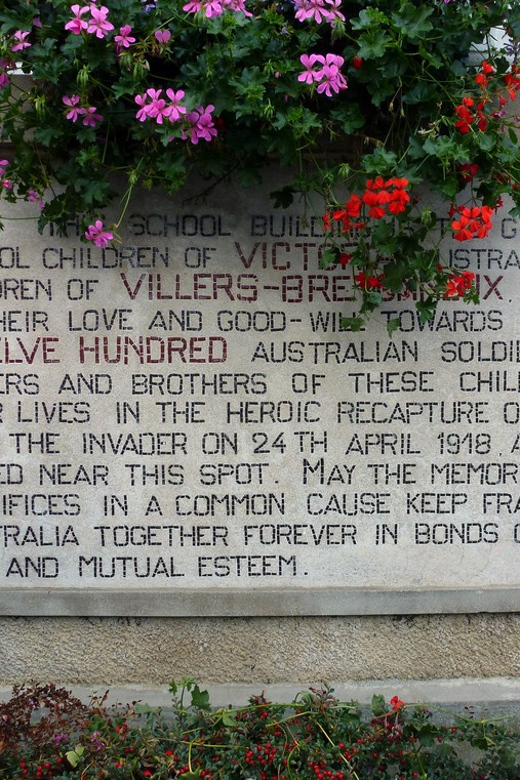
- Victoria School link: built in 1923-1927 as a gift from Victorian children to Villers-Bretonneux children
- Big memorial stops including Adelaide Cemetery, Thiepval, and the Missing of the Somme memorials
- Lochnagar Crater and Pozières battlefield area, where you can see the war’s mark up close
- Mont Saint-Quentin war memorial in Péronne, overlooking the Somme River for real perspective
- Group transport from Paris with an English-speaking guide and a comfortable minibus or coach depending on numbers
Why Anzac Day on the Somme hits harder than a normal battlefield day
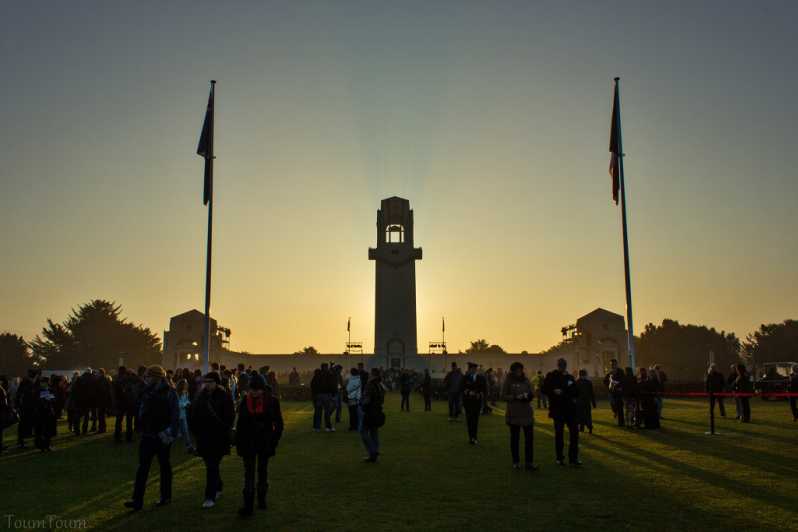
A battlefield tour can feel like a checklist. This one doesn’t, because the date matters. Villers-Bretonneux has a special emotional pull on Anzac Day, and the dawn service turns the morning into a moment you will remember long after you get home.
What I like most is the balance: you get reverence, then you get context. The guide helps you connect what you see to what happened here, including how the Somme shaped the war and why these particular places still matter. It is not just about monuments. It is about understanding the geography that decided so much.
You also learn how remembrance travels across countries. The Victoria School connection is a perfect example. It is a reminder that the war’s impact did not stay in one place, and the relationships formed after the fighting still show up in day-to-day local life.
Other Paris bookings worth comparing before you pick:
- Paris: Louvre Museum Timed-Entrance Ticket
★ 4.6 · 71,977 reviews - Disneyland® Paris 1-Day Ticket
★ 4.6 · 49,412 reviews - Paris: Versailles Palace and Gardens Full Access Ticket
★ 4.6 · 41,579 reviews
From the Opera Garnier to the Somme: how the 12-hour plan works
You start in Paris at the front of the Opera Garnier, at the Metro Opera stop or convenient bus lines 3, 7, and 8. That meeting point is easy to find, and it helps you avoid the usual “Where are we exactly?” scramble before a long day.
The tour runs for 12 hours, and you are using a group vehicle that can be a 15-seater minibus or a larger coach depending on participant numbers. Either way, it is practical for long-distance travel. You will want to keep your day bag simple so you are not hunting for everything once the day gets busy.
Plan for a schedule that moves. This is not a pick-your-own-time itinerary. You will see multiple sites, and the day is structured around key moments like the dawn service. If you are the type who loves lingering, this trip still lets you feel the places, but you will do it while staying within the group rhythm.
Villers-Bretonneux and the Victoria School gift that still matters
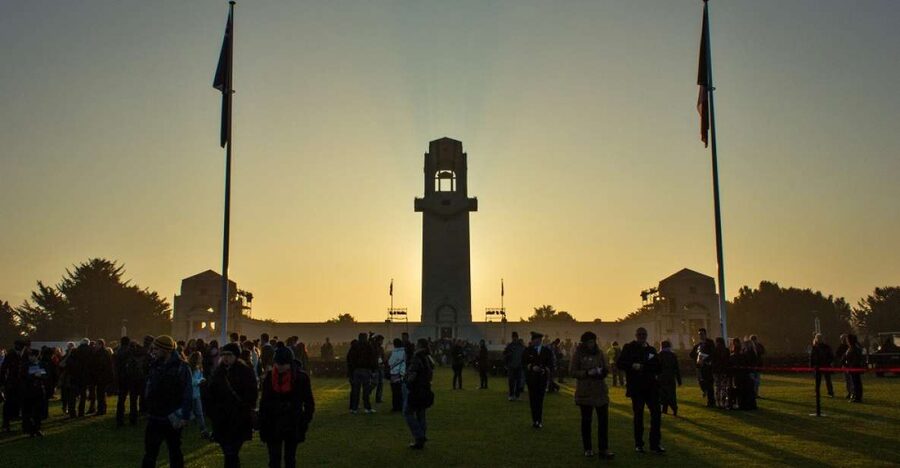
One of the most meaningful stops is the town of Villers-Bretonneux itself, where the tour begins its Australian connection. You visit the Victoria School, built between 1923 and 1927 as a gift from children in the Australian state of Victoria to children in Villers-Bretonneux.
That detail matters. This is not a vague “friendship after the war” story. You are looking at the physical outcome of goodwill: education, youth, and rebuilding. The war is everywhere here, but this stop shows the next chapter, the part where people tried to turn loss into something constructive.
I like that the tour includes this before it goes fully into battlefield sites. It gives you emotional grounding. You understand why Australians return here year after year, not just because of the battles, but because of the lasting bond created around them.
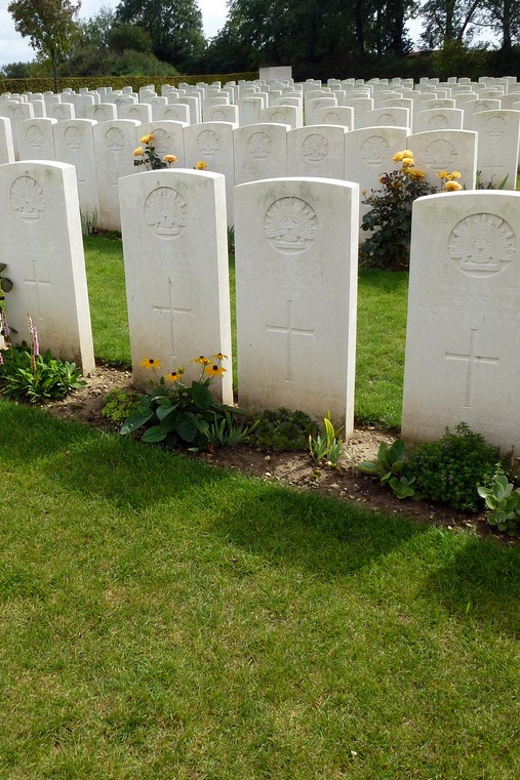
Adelaide Cemetery: the quiet stop that keeps you honest
After the school and town connection, you head to Adelaide Cemetery to pay your respects. Cemeteries can feel like “something to get through” on tours, but this kind of stop changes the pace of your whole day.
The key is to treat it like a moment, not a photo shoot. The guide’s background helps you understand what you are seeing, but your job is simple: slow down, look, and let the place do its work.
Even if you know your World War I history, the cemetery brings it down to human scale. You will notice rows, names, and the stark idea that each marker represents someone who had a life before the Somme. It is one of those stops where you feel the group get quieter without anyone telling them to.
Still in Paris, but a different sort of outing:
- Paris: Evening River Cruise with Music
★ 4.4 · 22,721 reviews - Paris: Eiffel Tower Entry Ticket with Optional Summit Access
★ 4.4 · 20,035 reviews - Paris: Eiffel Tower Summit or Second Floor Access
★ 4.3 · 17,248 reviews - Paris: Louvre Guided Tour with Reserved Access & Boat Cruise
★ 4.3 · 16,353 reviews
Lochnagar Crater at La Boiselle: where the ground still speaks
Next up is a battlefield site that is hard to forget: the deep Lochnagar Crater at La Boiselle. You visit it as a stark testimony of what war did to the land in 1916.
This stop is valuable because it is not abstract. You see the aftermath of the fighting in a single glance. A crater is not a “nice viewpoint.” It is damage made permanent. The guide helps you connect the crater to what was happening in the broader battle context, so it does not feel like a random war scar. It feels like a clue.
If you are someone who likes visuals, this is one of the strongest parts of the tour. It gives you a mental anchor for everything else you will see later, including the names and memorial walls. When you finally reach the big memorials, you will have the right imagery in your head.
Pozières battlefield area: understanding the fight in the open
You also visit the site of the Battle of Pozières. The Somme region has a lot of memorials, but Pozières is special because you are dealing with how people fought for ground that was hard, exposed, and punishing.
A guided stop here helps you do the important thing: connect the names to terrain. When you understand where fighting happened, the battlefield stops stop being “places where something happened” and become “places where difficult choices played out in real space.”
This is also where I recommend you slow your walking a bit, even if the bus timing feels tight. If you rush, you miss the real point. Pozières and nearby areas are about perspective, and perspective takes a few minutes to set in.
Thiepval Memorial to the Missing of the Somme: names that refuse to fade
Then you reach Thiepval, where you see the Memorial to the Missing of the Somme. This is one of the most powerful memorials in the region, and it has a specific kind of emotional weight.
The word missing is not decoration here. It is the gap left by war, the people whose remains were never recovered, whose stories were never closed. You will likely feel that as you stand in front of it. It is the kind of stop that makes you look longer than you planned.
I also like that the tour keeps returning to remembrance themes throughout the day. Earlier you pay respects at a cemetery. Later you face a memorial for those who could not be laid to rest. That progression is thoughtful, and it helps you understand what World War I remembrance looks like when it is not just about one type of grief.
Péronne and Mont Saint-Quentin: the view that puts everything in context
After the wall of names, the tour heads to Péronne to see the war memorial of Mont Saint-Quentin, overlooking the Somme River.
This stop works because it gives your brain a breather and a new tool: viewpoint. In battlefield country, you can read memorials and still struggle to picture how the landscape affected tactics. A high point over the Somme River helps you connect the dots, even if you are not a military historian.
Think of it as the “why here” moment. From a vantage like this, you can understand why positions mattered and why battles were fought with such intensity. It does not erase the sadness, but it gives your understanding a backbone.
Practical side of the day: what to pack and how to stay comfortable
This tour is not wheelchair accessible and is not suitable for people with mobility impairments. You will be spending time walking at outdoor sites. So wear shoes you trust.
Warm clothing is strongly recommended. Even if Paris is mild, the Somme region and the early morning dawn service can feel colder than you expect. Bring layers you can adjust without turning into a human scarf store.
Also, food and drinks are not included. That means you should plan your day around meals on your own. Since the itinerary is tight and you are moving between sites, you want energy that does not depend on luck.
One more note that affects how you plan your expectations: due to technical equipment for the dawn service, the central tower of the Australian National Memorial will not be open to the public. It is a detail worth knowing ahead of time so you do not build your morning around a view you cannot access.
Price and value: is $330 for 12 hours worth it?
At $330 per person for a 12-hour, guided day from Paris, you are paying for two things: transport and an organized, English-speaking interpretation of major World War I sites.
That price can feel steep until you consider what you are actually getting. You are covering Villers-Bretonneux, Adelaide Cemetery, the Lochnagar Crater at La Boiselle, the Battle of Pozières area, Thiepval, and a Péronne memorial on Mont Saint-Quentin in Péronne. Doing all that on your own, in time for Anzac Day morning, is not easy. A group vehicle plus an informed guide saves you the stress of planning routes and timing.
Where the value gets a little complicated is that you are not getting food. So your real cost might be a bit more once you add your own meals and drinks. Still, for a day centered on a dawn service and multiple major memorials, the guided structure is where a lot of the value lives.
Smooth day or tight timing: what to watch for on Anzac Day
I can’t promise every day runs perfectly. But I can tell you what the strongest outcomes usually look like and what to watch for.
One highlight from an experienced booking was that the trip ran smoothly. The excursions were informative, the bus was comfortable, and the guides were friendly, welcoming, and enthusiastic. That kind of guide energy matters a lot on days with emotional stops because it helps you focus and makes you feel taken care of.
On the other hand, I want you to take timing seriously. One verified booking described a pickup issue tied to paperwork that led to a delay around Villers-Bretonneux. The result was that the group arrived in a rush for seating around the dawn service, and there was little time afterward for things like wreaths.
So here is my practical advice: arrive ready to move fast. Keep your essentials easy to grab, and do not plan to treat this like an “extra flexible” day. Dawn service days can be exacting, and you will feel calmer if you plan for that.
Also, if you are coming from Australia and planning your own participation details, do a quick check on whether you need any registration. One booking reported confusion on Australian government related registration, first being told you did not need it, then receiving an urgent message a week before. You do not want that kind of surprise on the night before a long day.
Who should book this tour, and who should skip it
This tour is a great match if you:
- Want a respectful Anzac Day experience in Villers-Bretonneux
- Care about World War I sites you can actually see, not just read about
- Enjoy guided context, especially around memorials like Thiepval
- Are comfortable with a full day plan and some walking
You might want to skip it if you:
- Need wheelchair access or have mobility limitations
- Want long free time at each stop
- Are hoping for food included or a slow paced itinerary
It also suits history-minded Aussies in particular, because the emotional center of the day is Australian remembrance in France. But even if you are not Australian, the Somme sites and memorials are undeniably central to European World War I understanding.
Should you book this Paris to Somme Anzac Day tour?
If your priority is to experience Anzac Day in Villers-Bretonneux and then see the Somme sites that matter most, I think this is a solid choice. You are getting major stops, an English-speaking guide, and the kind of structured day that makes sense for a 12-hour trip from Paris.
Book it if you go in with the right mindset: respectful, ready to move, and prepared for cold morning conditions and no included meals. Also, plan for timing to be tight around the dawn service.
Skip it if you need lots of flexibility, heavy accessibility support, or a relaxed pace with lots of extra time after key moments. In short: this tour is for people who want the meaning of the day, not just the checklist of places.
FAQ
How long is the Paris to Villers Bretonneux Anzac Day tour?
It runs for 12 hours.
Where do I meet the tour in Paris?
Meet in front of the Opera Garnier, at the Metro Station Opera or bus lines 3, 7, and 8.
Is food included on the tour?
No. Food and drinks are not included.
What is included in the price?
An English-speaking guide and round-trip transportation by minibus, 15 seater coach, or coach depending on group size.
Is the tour in English?
Yes, the live tour guide is English.
Is this tour wheelchair accessible?
No. It is not wheelchair accessible and is not suitable for people with mobility impairments.
Will the Australian National Memorial tower be open during the dawn service?
No. Due to technical equipment for the Dawn Service, the central tower of the Australian National Memorial will not be open to the public.
What World War I memorials and sites will we see?
The tour includes stops at Adelaide Cemetery, Lochnagar Crater in La Boiselle, the Battle of Pozières site, the Memorial to the Missing of the Somme at Thiepval, and the Mont Saint-Quentin war memorial in Péronne, plus the Villers-Bretonneux connection.
What is the cancellation policy?
You can cancel up to 24 hours in advance for a full refund. There are no cancellations, modifications, or refunds 5 days prior to the scheduled tour date.
Can I reserve without paying right away?
Yes. You can reserve now & pay later.
Recently added around Paris
- Paris: Louvre Museum Timed Entry Ticket & Pop Culture Tour★ 4.6 · 26 reviews
- Paris: Louvre Must-See Tour with Reserved Entry Ticket★ 4.9 · 164 reviews
- Paris: Louvre photoshoot or Seine bridges Eiffel Tower walk★ 5.0 · 49 reviews
- Louvre & Mona Lisa Morning Tour with Reserved Access★ 4.0 · 15 reviews
- Paris: Louvre Museum Skip-the-Line Tickets for Monalisa★ 3.0 · 42 reviews
- Paris: Louvre Museum Ticket with Optional Hosted★ 3.1 · 89 reviews
- Paris: Louvre Museum and Orsay Museum Guided Tour★ 5.0 · 6 reviews
- Paris: Louvre Museum Mona Lisa First Viewing Semi-Private★ 4.2 · 21 reviews
Tours, compared.
Louvre Guided Tour with Reserved Access & Boat Cruise
Read our review →
Big Bus Hop-On Hop-Off Tour with Optional Cruise
Read our review →
Louvre Museum Masterpieces Guided Tour with Access
Read our review →
Skip-the-Line Tour of Palace with Gardens Access
Read our review →
Mona Lisa & Louvre Masterpieces Tour with Reserved Access
Read our review →
Paris Big Bus Hop-On Hop-Off Tour with Optional River Cruise
Read our review →
Louvre Museum – Exclusive Guided Tour (Entry Included)
Read our review →