

Reviewed · MUSéE D'ORSAY TOURS & TICKETS
Musée d’Orsay: Impressionists with skip-the-line ticket
What makes this Musée d’Orsay visit interesting is that the 19th century station shell is part of the experience, not just a background. I like the skip-the-line access and the way the guide ties art directly to the building and the 1800s city around it. You also get a well-paced tour of the museum’s biggest names, from Monet and Cézanne to Degas and Rodin.
One possible drawback to plan for: the meeting point is under an elephant statue in front of the main entrance, and if that elephant is moved or less visible, you may need an extra minute to find the guide holding the yellow My Super Tour sign.
Key Things You’ll Notice on This Orsay Tour
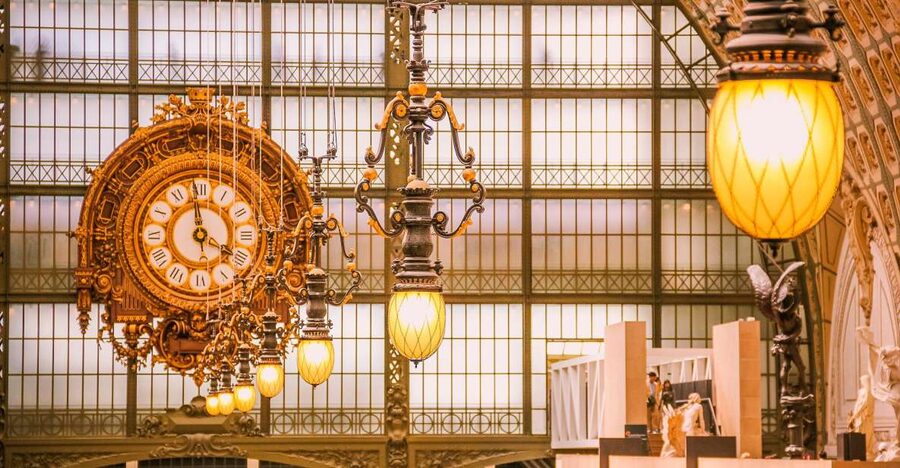
- The museum building counts as a main attraction, because Orsay was an electrified urban terminal station before it became a museum in 1986.
- Skip-the-line really matters here, since this museum can be crowded and you only have 2 hours.
- Headsets keep the commentary clear, which helps a lot when rooms get noisy.
- You’ll get 19th century context, not just names, with styles ranging from neoclassicism to symbolism and the Arts & Crafts movement.
- You see how technology shaped art, including early photography and film ideas tied to the Lumière brothers, plus an early Liberty Statue model.
- Small group size means better focus, with a limit of 6 participants and a licensed guide speaking in English or Russian.
Why Musée d’Orsay Feels Different From Most Paris Museums
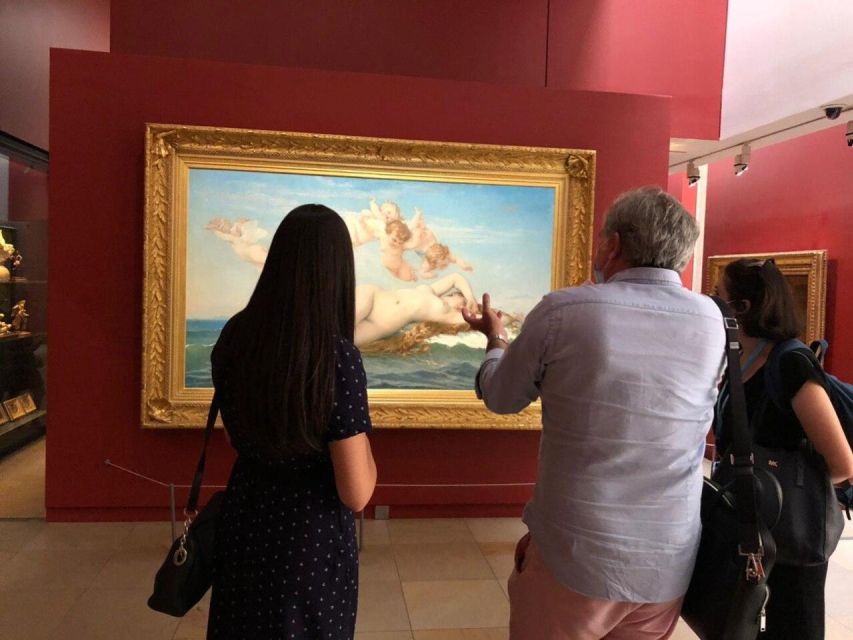
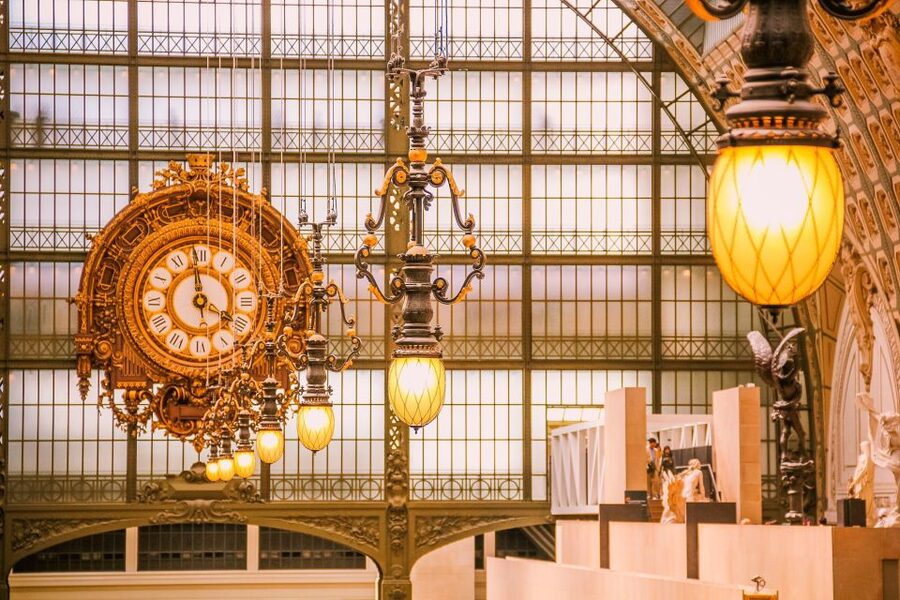
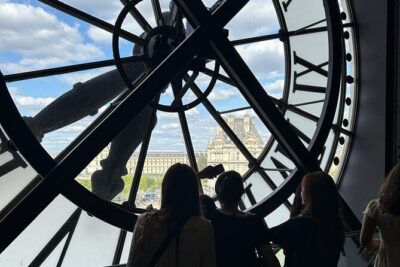
Musée d’Orsay is special because it is not trying to hide its past. The museum sits inside a former railway station, and the architecture is part of what you are there to understand. Instead of walking through a neutral box, you move through a 19th century terminal space that still looks engineered for movement and light.
This tour is built around that idea. You are not only chasing paintings. You are also learning how the same century that produced Impressionism also produced new construction methods, new urban planning, and new ways to capture images.
I also like that the museum view is shaped like a guide-led story. You start thinking about why art looked the way it did, not just what the famous artworks are called. That makes the 2 hours feel focused, instead of like a quick hit-and-run.
More Orsay Museum tours and tickets:
- Paris in a Day: Louvre or Orsay, Eiffel Tower, City Walk & Cruise
★ 5.0 · 1,956 reviews - Paris: Musée d’Orsay Skip-the-Line Tour with Expert Guide
★ 4.5 · 1,145 reviews - Musée d’Orsay Skip-the-Line Tour with Expert Guide
★ 4.8 · 1,088 reviews
Getting In Fast: Skip-the-Line, Headsets, and a Tight 2-Hour Visit
The biggest practical advantage is straightforward: you enter using a separate skip-the-line entrance. In a museum as popular as Orsay, those saved minutes can go straight into extra rooms, a better look at details, or just not rushing your own pace.
You also get headsets, which sounds like a small thing until you’re in a room where everyone is talking at once. With clear audio, you can actually follow the guide’s explanations about technique, symbolism, and the historical setting. That is especially helpful when you’re looking at 19th century works where context changes what you notice.
The tour is designed for a short visit, about 2 hours, in a small group of up to 6. That group size matters because the guide can keep the pace without losing you, and you are more likely to ask quick questions if something is unclear.
Orsay’s Station Architecture: The 1800s You Can Walk Through
Most art museums try to be silent about their building. Orsay does the opposite. You are in a space that was built for trains, then adapted into a museum, and it gives you a physical sense of the 19th century obsession with infrastructure and spectacle.
As you move through the galleries, you also connect the museum architecture with other big Paris 1800s landmarks, including the opera house Palais Garnier and the surrounding opera neighborhood. Even if you have visited the Opera area before, this framing helps you see those buildings as part of the same urban conversation, not separate projects.
The tour also highlights how the 19th century mixed styles. You can expect the guide to point out how different aesthetics show up in the same era, including neoclassicism, neo-Gothic, romanticism, eclecticism, Arts & Crafts, academism, realism, and symbolism. That list can look like trivia until you start noticing it in staircases, ironwork, layouts, and the way rooms are staged.
And because the building itself is in the spotlight, you learn to look up as well as at eye-level art. It changes your whole museum rhythm.
Impressionist Core: Monet, Manet, Renoir, and the Paintings That Teach You How to Look
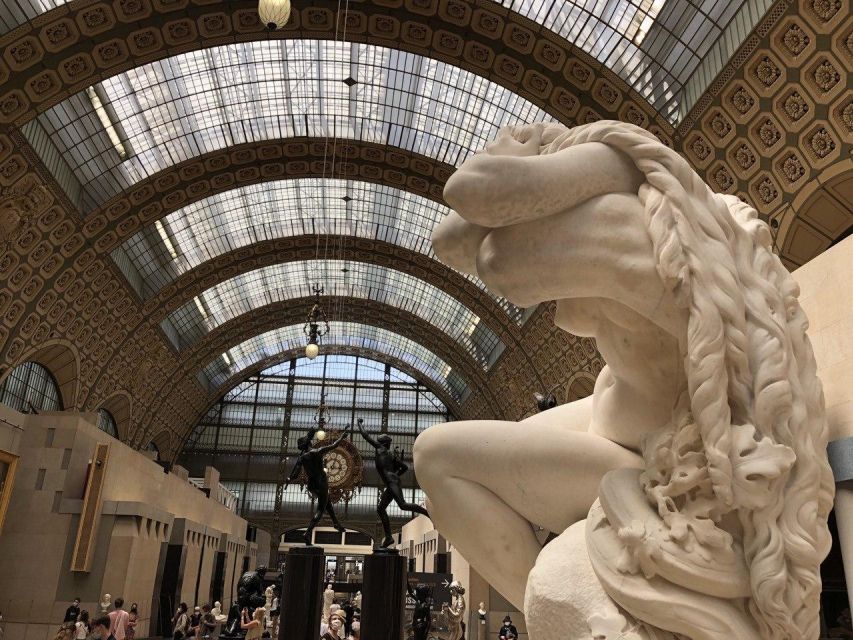
The heart of the collection is still the Impressionists, and this tour aims at the big names you want to see in a single visit. You’ll focus on paintings by Monet, Manet, Renoir, and other major artists.
What I like about this approach is that it does not treat Impressionism like just pretty colors. The guide helps you notice how the artists constructed a sense of modern life: changing light, quick perceptions, and a looser brush language that still feels controlled.
You also get a sense of variety within the movement. Impressionism was not one style clone. It included different approaches to light and subject matter, from everyday scenes to more modern, sometimes uncomfortable subject choices.
If you’re new to Impressionism, this tour helps you build a simple way to look. If you already love it, the guide’s context makes you see why the works landed the way they did in the 1800s.
A few more Paris options to weigh up
- Versailles: Skip-the-Line Tour of Palace with Gardens Access
★ 4.7 · 9,778 reviews - Versailles: Skip-the-Line Guided Palace Tour and Full Access
★ 4.6 · 5,214 reviews - Louvre Museum: Skip-the-Line Small Group Guided Tour
★ 4.6 · 3,960 reviews - From Paris: Versailles Skip-the-Line Tour & Gardens Access
★ 4.7 · 3,011 reviews
Cézanne Still Lives and the Creative Logic Behind Them
Cézanne’s still lifes can feel calm at first glance, then strangely challenging when you realize they are not just depicting objects. They are exploring structure and perception, and that is where context matters.
This tour includes Cézanne’s still-life focus. The guide’s role is to point you toward how Cézanne thinks with form and depth, and how his approach connects to what comes later. It’s a good stop because it slows you down. You end up standing longer, even if the tour is moving.
If you tend to rush through still lifes in museums, this is one place to resist that habit. The value here is learning what to look for, so the painting keeps giving after you walk away.
Degas and the Ballet Dancers: Motion, Practice, and Modern Life
Degas is a perfect match for Orsay because he sits right in the middle of art and modern urban observation. The tour includes Degas’ ballet dancers, which is a smart choice for understanding how 19th century artists used contemporary culture as subject matter.
Ballet scenes might sound predictable, but Degas’ versions often feel like you’re catching a moment in the middle of work, not watching a staged performance. That makes them feel modern even now.
The guide’s commentary helps you look beyond the choreography and into the design choices: the angle, the cropping, and the way the figure sits in space. It’s an art class in how to see movement.
When Van Gogh Meets Gauguin: The Tension of Two Visions
One of the most interesting parts of the tour is the way it frames the comparison between Van Gogh and Gauguin. Even if you already know their names, this kind of pairing can sharpen how you understand their artistic impulses.
You are not just seeing two styles. You are seeing two ways of interpreting the world that both respond to the same era’s changing ideas. That tension between expressive color, personal vision, and artistic identity is exactly what makes this period feel alive.
In a 2-hour tour, a guided comparison is efficient. You get more insight than you would by wandering randomly room to room.
Rodin’s Sculpture: A Different Kind of Modernity
This tour also includes Rodin sculptures, which matter because they change how you experience the museum. Paintings can hold your attention, but sculpture makes you physically navigate the artwork.
Rodin’s presence in Orsay works well because he belongs to that same 19th century shift toward realism, emotion, and ideas you feel in the body. The guide helps you connect the sculptural language to the broader artistic climate of the time.
Even if you usually focus on paintings, plan to spend real time here. Sculpture rewards slow looking and it changes your pace.
Realists Like Millet and Courbet, Including the Provocative Origin of the World
Orsay does not only celebrate the Impressionists. It also makes space for realism, including artists like Millet and Courbet. This is where the museum becomes more than a timeline of style. It becomes a story about what subjects people wanted to face.
Courbet’s Origin of the World is included, and it can be a jolt. The guide’s framing helps you understand why it was provocative, not just that it is famous. You learn to think about what the painting or subject challenged in its own moment.
This is a great section for anyone who worries art museums will feel like polished decoration only. Realism forces you to notice social attitudes and the boundaries artists tested in the 1800s.
19th Century Innovation in the Same Place as Fine Art
A unique thing about this Orsay focus is the inclusion of technology and media that shaped the era’s imagination. You’ll hear about the first model of the Statue of Liberty, plus early photographs and movies created by the Lumière brothers.
That part of the tour gives you a broader lens. You start seeing why the 1800s did not just produce new art styles. It also produced new ways of copying the world, new tools for storytelling, and new fascination with motion and realism.
It also makes the museum feel less like a sealed display and more like a snapshot of an entire century trying to reinvent how people see.
Not Just a One-Style Museum: How the Guide Connects Movements
What you get from a licensed guide is the connecting thread. Instead of a list of famous painters, you get an explanation of how many aesthetics were active at the same time in the same century.
The tour’s structure supports that. You move through galleries where different movements appear in sequence, and the guide helps you notice that neoclassicism, neo-Gothic, romanticism, eclecticism, Arts & Crafts, academism, realism, symbolism, and Impressionism can all coexist in one museum.
That is useful if you feel overwhelmed by art history names. The goal here is not memorizing everything. The goal is understanding that the 1800s were messy and creative, not neat and linear.
In past tours, guides such as Sacha and Deli have been highlighted for strong English and high-energy clarity, and Maria has also been noted for detail-focused explanations. That kind of guidance makes the differences between movements easier to sort out on your feet.
Practical Tips to Make the Most of Your Orsay Time
This is a short tour, so you want your attention ready when you enter. If you love art, still take in the building layout. Looking up at the station architecture helps you get your bearings fast.
Bring a mindset that says, I’m here to understand a century, not just tick a list. When the guide connects art to the station and to broader 1800s Paris like Palais Garnier and the opera quarter, you get more payoff from each stop.
Also, because it is not wheelchair accessible, plan your route accordingly and give yourself an easy pace where you need extra time.
Who Should Book This Orsay Tour (And Who Might Skip It)
This tour fits you if you want a short, high-focus museum experience. With a small group of 6, headsets, and skip-the-line entry, it is a good choice when you have limited time in Paris and you want more than random wandering.
It also fits you if you like comparisons and explanations. The pairing of Van Gogh and Gauguin, plus the inclusion of realism side stories like Courbet, helps you see art as debate, not just beauty.
You might consider skipping if you prefer complete freedom and you already know exactly which galleries you want at Orsay. A DIY plan can work, but you will lose the architecture and 19th century context thread that this guided approach provides.
Should You Book? My Honest Recommendation
Yes, I think this is worth booking if you care about art history context and you want to spend your limited time at Orsay wisely. At $104 per person for about 2 hours, you are paying for three things that matter in a major museum: the guide, the skip-the-line entry, and the headsets.
If your biggest priority is simply seeing Impressionist masterpieces, you can still enjoy this even if you are not an art expert. The guide’s job is to help you understand what you are looking at, and that is the difference between a quick glance and a visit that sticks.
The only real reason to hesitate is the meeting point sensitivity. Stand near the main entrance elephant statue, and if it looks moved or unclear, take a minute to confirm the yellow My Super Tour sign before you wander.
FAQ
Where is the meeting point for the tour?
Look for the guide with the yellow sign My Super Tour waiting under the statue of an elephant in front of the main entrance of the Musée d’Orsay.
How long is the Musée d’Orsay skip-the-line tour?
The duration is about 2 hours.
How does the skip-the-line entry work?
You skip the waiting line using a separate entrance.
What is included in the ticket price?
The tour includes a professional licensed guide, the entrance ticket, skip-the-line entry, and headsets for better hearing.
What languages are available?
The live tour guide is available in English and Russian.
How big is the group?
The group is small, limited to 6 participants.
Is the tour wheelchair accessible?
No, the tour is not suitable for wheelchair users.
How much does the tour cost?
The price listed is $104 per person.
Are there start times available?
You’ll need to check availability to see starting times.
Can I cancel or reserve without paying right away?
Yes. There is free cancellation up to 24 hours in advance for a full refund, and you can reserve now and pay later.
Recently added around Paris
- Paris: Louvre Masterpieces Private Tour with Reserved Entry★ 4.3 · 144 reviews
- Paris: Living Cheese Museum Guided Tour with Cheese Tasting★ 4.8 · 182 reviews
- Paris Louvre Exclusive Semi Private Guided Tour Max 6 People★ 4.6 · 28 reviews
- Paris: Louvre Guided Tour with Skip-the-Line Entry Tickets★ 3.5 · 73 reviews
- Paris Le Marais Walking Tour: Small Group Experience★ 5.0 · 7 reviews
- Paris: Lemon Tart Baking Class with a Pastry Chef★ 5.0 · 4 reviews
- Paris: Live Guided Cruise with Crepe and Soft Drink★ 3.9 · 14 reviews
- Paris Le Marais Food Tour: Full Traditional French Feast★ 4.8 · 119 reviews
Musée d'Orsay Tours & Tickets, compared.
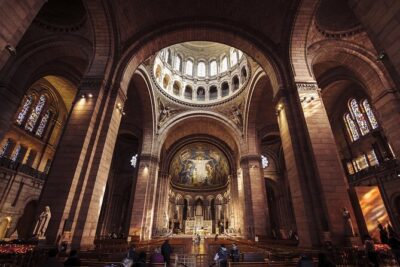
Paris in a Day: Louvre or Orsay, Eiffel Tower, City Walk & Cruise
Read our review →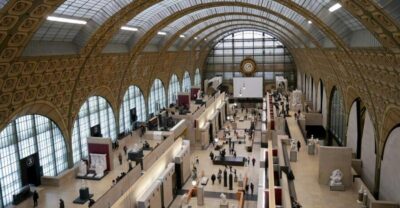
Musée d’Orsay Entry Ticket and Seine River Cruise
Read our review →
Musée d’Orsay Skip-the-Line Tour with Expert Guide
Read our review →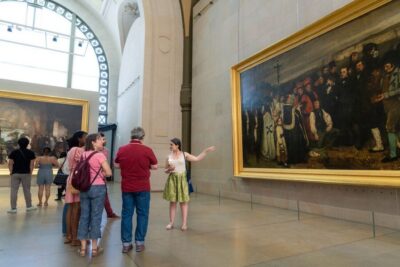
Musée d’Orsay Skip-the-Line Tour with Expert Guide
Read our review →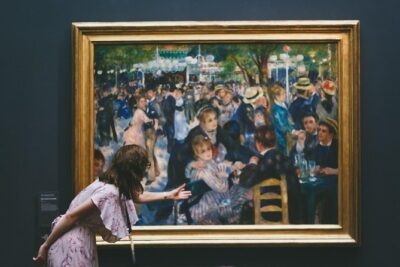
The Musée d’Orsay Guided Tour Orsay Museum Semi-Private 6ppl Max
Read our review →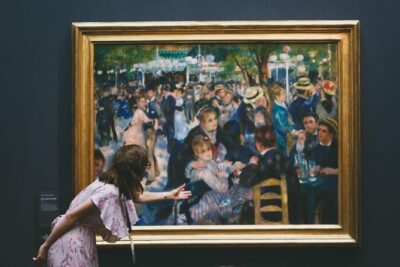
Louvre & Musée d’Orsay Guided Museum Tour Semi-Private 6ppl Max
Read our review →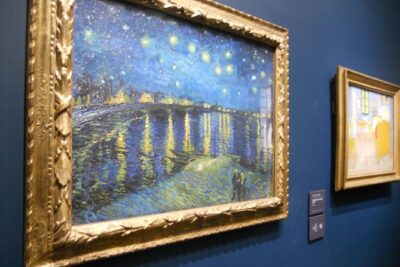
Browse the lists this tour appears in