
Reviewed · 2-HOUR EXPERIENCES
Haussmannian Paris 2-Hour Private Walking Tour
What makes this tour interesting is how you can read 19th-century city planning with your own eyes, walking the lines of Haussmann’s makeover. I love the lineup: Opéra Garnier and the Galeries Lafayette show off the era’s ambition in a way photos never do. I also like that the guide connects the grand buildings to everyday Paris, including the spots tied to Picasso. One thing to consider: two hours is short, so you’ll want to stay alert and let the details stack up.
I like that it’s a true walking tour with a live guide, so the story comes with street-level orientation. You get a private group, and you can choose English or French. Even in rain or shine, the route stays practical, with major stops like Park Monceau and Saint Augustin that give your legs a reason to keep moving.
Key things to know before you go
- Haussmann’s massive rebuild, made understandable: you’ll learn how most of Paris was flattened and rebuilt, with only two neighborhoods left mostly as they were.
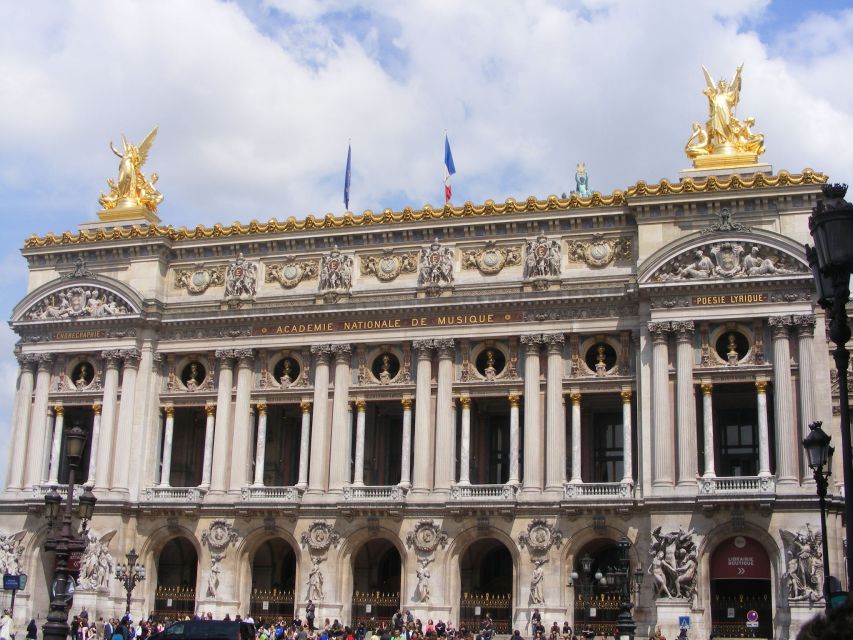
- Opéra Garnier and Galeries Lafayette, side-by-side with context: you won’t just look up, you’ll understand what the era wanted Paris to feel like.
- Boulevard Haussmann as the backbone of the style: you’ll walk a classic example of Haussmann’s clean, commanding urban layout.
- Park Monceau as the refined counterpoint: you’ll see how elegance can live in a park, not just a palace or a theater.
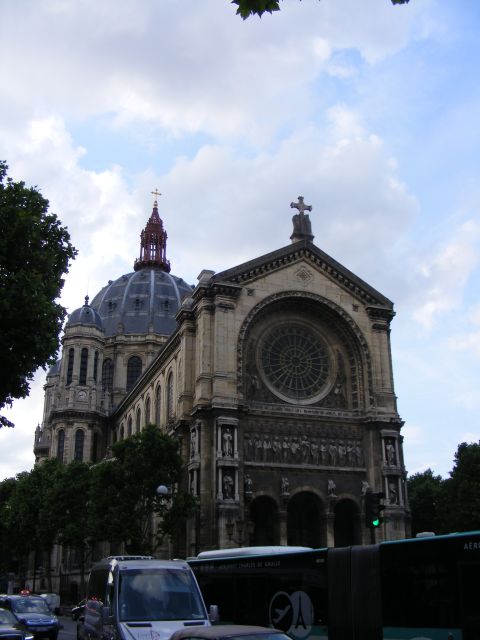
- Jacquemart-André and Saint Augustin broaden the architecture lesson: lavish interiors and bold religious design both get tied back to planning and taste.
- A human thread through Picasso’s favorite drinking dens: it’s not all grand planning, you also get the people stories.
Haussmann’s Paris, in a format you can actually use
The Haussmann era is easy to romanticize because the result is so photogenic. But the more interesting part is the logic behind it, and that’s what this tour helps you grasp. In the 19th century, Paris was radically redesigned. Most of the city was flattened and rebuilt, with just two neighborhoods left out of the overhaul. The goal was to make Paris more functional and more beautiful, and to create a uniform look that people could recognize instantly.
What you’ll get on this walk is the translation from “big plan” to “street reality.” You’ll stand where decisions were made and learn how they changed movement, visibility, and even the feel of public space. That’s valuable because it shifts your attention from “cool buildings” to “why the city looks like this.”
And yes, you’ll end up seeing Paris with different eyes. Not magic, just better connections in your head.
More walking tours in Paris:
- Paris Top Sights Half Day Walking Tour with a Fun Guide
★ 5.0 · 2,893 reviews - Montmartre Hidden Gems and Scenic Highlights Walking Tour
★ 5.0 · 2,684 reviews - Montmartre Hill French Gourmet Food and Wine Tasting Walking Tour
★ 5.0 · 2,588 reviews
Starting at Métro Opéra, in front of Café de la Paix
The meeting point is simple: Métro Opéra, right in front of Café de la Paix. Your guide will be carrying a red canvas tote bag, so you can spot them fast and avoid the usual awkward waiting.
This matters because a tour like this lives or dies by pacing. In two hours, you need to start on time and keep walking. Once you’re with the guide, the route is set up to keep you close to the core Haussmann “statement” areas rather than scattering you around too much.
Opéra Garnier, the era made visible
Opéra Garnier is the kind of building you can’t fully appreciate from a distance. The best part of this stop is not only the façade, it’s the way the guide frames it as a product of the Haussmann push for spectacle and order. This was a landmark designed to be seen, approached, and remembered.
Here’s what I’d watch for as you stand there:
- How the building signals importance through scale and placement, not just decoration
- How its presence fits into the broader idea of Paris as a planned showpiece city
- How the surrounding streets and sightlines make the whole area feel “composed,” even while you’re walking through real traffic and pedestrians
The tour’s angle is smart: it doesn’t treat Opéra Garnier like a standalone postcard. It treats it like a piece of a system.
Boulevard Haussmann, where the planning is the point
Boulevard Haussmann is a classic example of Haussmannian style, and it’s the perfect middle of the route because you can feel the urban design under your feet. Long straight lines, consistent building rhythm, and a street layout that encourages movement rather than hesitation. You’re basically walking through the rules of the era.
This stop is valuable for two reasons. First, it helps you understand what “planned” means in real terms, how a boulevard organizes views and movement. Second, it shows the cost of the plan. Haussmann’s intervention was massive, and it took its toll on precious buildings and streets that were lost forever.
So as you walk, try to notice both:
- The unified look created by the intervention
- The sense of what might have been there before, based on the guide’s explanation
That tension is part of why Haussmann’s Paris is such a powerful lesson. It’s excessive, yes, but also coherent.
A few more Paris options to weigh up
- Paris: Private Photoshoot at the Eiffel Tower
★ 4.7 · 2,636 reviews - Top Private Cruises in Paris with French Champagne and surprises
★ 5.0 · 1,553 reviews - Private Paris Airport Arrival Transfer – CDG & ORLY Airports
★ 4.5 · 1,119 reviews - Paris Private Arrival Transfer from Charles de Gaulle (CDG) or Orly (ORY)
★ 4.0 · 1,084 reviews
Jacquemart-André, where opulence meets design details
The route also includes Museum of Jacquemart-André, described as a lavish, opulent villa from the period. Even if you don’t spend a long time inside any single building, this stop gives you a different angle on the same era. Haussmann planning didn’t exist in isolation. The wealth and taste of the time shaped what people built, displayed, and called culture.
Why this stop works on a walking tour:
- It anchors the architecture conversation in a specific setting, not vague theory
- It gives you a sense of how “beauty” was defined by those with money
- It adds texture to your understanding of the neighborhood, because you’re seeing lifestyle reflected in design
If you care about how interiors and façades communicate status, you’ll likely enjoy this part a lot.
Saint Augustin, an architectural marvel you can feel up close
Next comes the Church of Saint Augustin, highlighted as an architectural marvel. Churches can sometimes feel like a separate category from civil planning, but the Haussmann story makes it connect. In a city rebuilt for visibility and prestige, religious architecture also becomes part of the public image.
As you approach, focus on how it reads at street level:
- How the church is composed to draw attention
- How its presence contributes to the boulevard and skyline effect
- How it fits the era’s idea of Paris as a city of monuments
This is a good stop for your “pause and look” moment. After walking a while, you get a chance to slow down and take in a structure meant to dominate perception.
Galeries Lafayette, elegant shopping inside grand Paris design
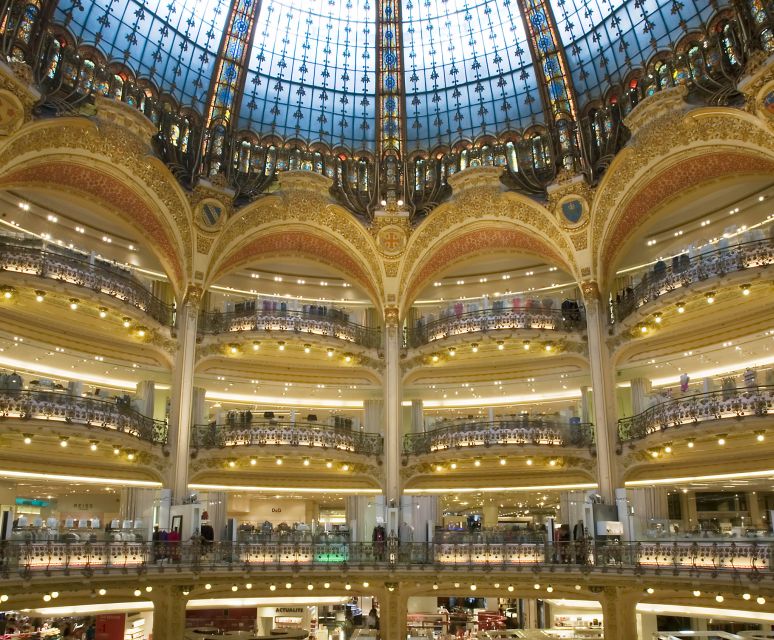
Galeries Lafayette is one of those places where you might already know the name. The tour’s value is how it uses the building to explain the era’s taste. You’ll discover the Galeries Lafayette, described as the most elegant shopping mall in Paris, and you’ll treat it as part of the same design philosophy that shaped the grand boulevards and monumental institutions.
What’s great here is the contrast. You go from major landmarks to a commercial interior, but the city-planning logic still shows up. The point is that Haussmann’s Paris wasn’t only about government and grandeur. It was also about creating impressive public spaces that people would want to enter, move through, and remember.
If you like to understand how a space is engineered for people traffic, take your time with this stop. Even on a two-hour tour, your guide will likely help you see more than just “stores.” You’ll see a designed environment.
Park Monceau, a refined pause in the middle of the lesson
Park Monceau is described as the city’s most elegant park, and it’s a smart choice in a tour like this. You can’t process urban design theory only through buildings. Parks change how a city breathes. They soften the street grid and give you a different rhythm.
This stop helps you balance the heaviness of the planning story with something more human in scale. It also lets you reset your eyes. After monumental architecture and long sightlines, you’ll get greenery and a calmer pace, which makes the final stops feel more connected rather than rushed.
If you’re the kind of person who enjoys noticing how public spaces support social life, you’ll probably appreciate this part.
Picasso’s favorite drinking dens, the city behind the planning
One of the highlights is the favorite drinking dens of Picasso. This is where the tour gains a stronger “life” vibe, because you’re reminded that these streets were used by real people, not just designed by planners.
I love this kind of stop because it makes the city feel less like a museum. Even when you’re looking at carefully planned areas, you’re also seeing the everyday layers that make Paris Paris. Your guide connects the Haussmann-era setting to creative life, so the buildings stop being static objects and start becoming stages.
Just keep in mind this is still a walking tour, so the Picasso connection is more about location and context than a long stop inside a museum.
Price and value for a $176 private 2-hour walk
At $176 per person for a two-hour private walking tour, this is not a bargain-basement outing. But you’re paying for the combination that’s hard to replicate on your own: a focused route through major Haussmann sites plus a live guide who can connect them into one story.
Here’s what makes it feel worth it:
- Private group means you’re not fighting for attention or rushing someone else’s questions.
- Two hours is long enough to build a coherent picture, but short enough that you’re not stuck all afternoon in one neighborhood.
- Live guidance in English or French means you can actually interpret what you see, not just collect names.
The main value tradeoff is time and your own interests. If you only want highlights for quick photos, you may feel the emphasis on city planning and architecture is more than you bargained for. If you enjoy understanding why a city looks the way it does, this price starts to make sense fast.
Also note food, snacks, and drinks are not included. For a two-hour walk, that’s manageable. Still, I recommend carrying water, especially if you’re doing this on a warmer day.
Timing, pace, and who will enjoy this most
This tour runs rain or shine, and it’s built as a walk. That means you should plan on time on your feet and time spent stopping to look up and listen.
It’s a strong match for:
- People who like architecture and urban design, and want more than surface-level facts
- Travelers who prefer structured sightseeing over wandering
- Couples or small groups who want a private pace and space for questions
- Anyone who wants a smoother first pass at central Paris before planning the rest of their trip
It may be less ideal if:
- You dislike walking tours and prefer long museum stays
- You’re only in Paris for a tiny window and want maximum “time in one room” rather than streetside context
- You want food included or a longer itinerary
Should you book the Haussmannian Paris 2-hour private tour?
I’d book this if you want to understand Paris as an engineered city, not just an impressive backdrop. You’ll see the big names, Opéra Garnier and Galeries Lafayette, and you’ll also learn how Boulevard Haussmann and the rest of the route connect to the larger Haussmann transformation. The addition of Museum of Jacquemart-André, Church of Saint Augustin, Park Monceau, and the Picasso drinking dens gives the story more variety than a simple monument checklist.
Make the call if you fit one of these profiles: you enjoy architecture, you like history that explains the present, and you want a guide who can turn buildings into real-city meaning. If you’re hoping for a relaxed stroll with minimal thinking, you might find it more intense than expected, because the tour’s whole point is interpretation.
FAQ
How long is the Haussmannian Paris 2-hour private walking tour?
The tour duration is 2 hours.
Where do we meet for the tour?
You meet at Métro Opéra, in front of Café de la Paix. The guide will be carrying a red canvas tote bag.
Is this tour private?
Yes, it is a private group tour.
What languages are offered for the live guide?
The live guide is available in English and French.
Does the tour operate in rain?
Yes. Tours operate rain or shine.
Is the tour wheelchair accessible?
Yes, the tour is wheelchair accessible.
What is included in the tour price?
The tour includes a guided walking tour.
Are food, snacks, or drinks included?
No, food, snacks, and drinks are not included.
Can I pay later and cancel for a full refund?
You can reserve now and pay later, and you can cancel up to 24 hours in advance for a full refund.
Recently added around Paris
- Paris: Louvre Museum Timed Entry Ticket & Pop Culture Tour★ 4.6 · 26 reviews
- Paris: Louvre Must-See Tour with Reserved Entry Ticket★ 4.9 · 164 reviews
- Paris: Louvre photoshoot or Seine bridges Eiffel Tower walk★ 5.0 · 49 reviews
- Louvre & Mona Lisa Morning Tour with Reserved Access★ 4.0 · 15 reviews
- Paris: Louvre Museum Skip-the-Line Tickets for Monalisa★ 3.0 · 42 reviews
- Paris: Louvre Museum Ticket with Optional Hosted★ 3.1 · 89 reviews
- Paris: Louvre Museum and Orsay Museum Guided Tour★ 5.0 · 6 reviews
- Paris: Louvre Museum Mona Lisa First Viewing Semi-Private★ 4.2 · 21 reviews
2-Hour Experiences, compared.
The Père Lachaise Cemetery: Guided 2-Hour Small-Group Tour
Read our review →
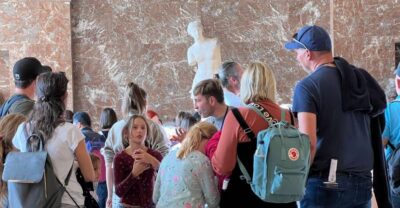
Paris Louvre: 2-Hour Private Tour for Groups or Families
Read our review →

2-hour tour of the D-Day beaches, by vintage sidecar
Read our review →
Paris 2-Hour Private Walking Tour with a Photographer
Read our review →

Normandy World War II Private 2 Hours Sidecar Tour Bayeux
Read our review →Browse the lists this tour appears in