Reviewed · TOURS
Art nouveau Paris tour
Art Nouveau in Paris is interesting because the city didn’t treat it like a museum style. It shows up where you live your day: metro stations, hotels, villas, and even the more secret corners tied to occult societies. I particularly like how this tour focuses on symbolism and how the guide makes the style feel logical, not just pretty.
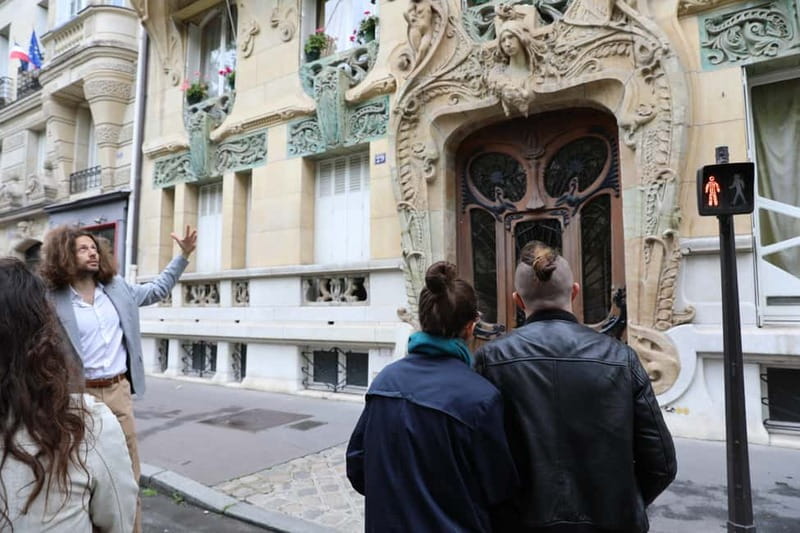
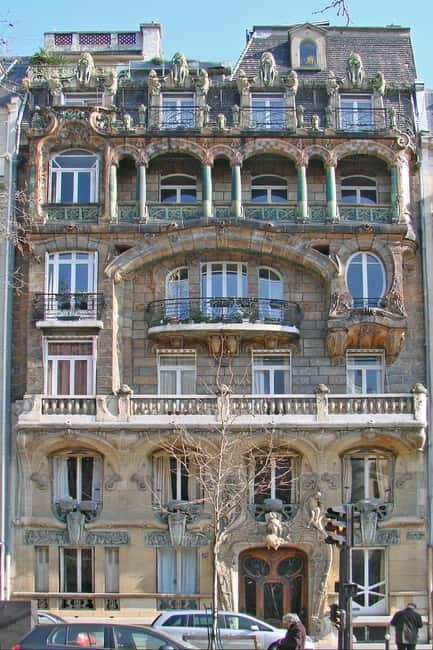
I also like the mix of famous names and very specific buildings, especially the Ceramic Hotel facade and the Jules Lavirotte houses on Avenue Rapp. One thing to consider: it is a street walk, so you’ll want comfortable shoes and a willingness to enjoy details up close rather than rushing from one photo spot to another.
Key things you’ll notice on this Art Nouveau Paris walk
- How Art Nouveau symbolism works, from nature-inspired lines to coded meanings
- Ceramic Hotel craftsmanship, including why this facade is often called one of the city’s most beautiful
- Jules Lavirotte on Avenue Rapp, with houses that look like they have opinions
- The Theosophic society of Paris building, where you see the occult thread of the Belle Epoque
- Links to the Eiffel Tower, including how you can connect ideas across styles and decades
- Picasso’s favorite drinking dens nearby, adding a human, artistic layer to the architecture
What makes Paris Art Nouveau more than decorative walls
Art Nouveau is often sold as curves, flowers, and fancy ironwork. The real story is more interesting: it grew at the turn of the 19th and 20th century as a new way of thinking about beauty, modern life, and status. In Paris, it is tied to the wealthy and to the Belle Epoque mood, where people wanted design to feel elegant, innovative, and slightly theatrical.
What I like about a well-run Art Nouveau tour is that you stop seeing facades as backgrounds. You start reading them. The shapes, materials, and motifs often point to ideas: nature as a language, craftsmanship as proof of taste, and architecture as a kind of worldview.
This tour is built to do that. You start at the roots of the movement, then move through a more mature period, so you can see how the style changes instead of freezing it in time. Along the way, you’ll also get the connections to what came before, since one guide named Boris explained how Art Nouveau evolved from new Gothic architecture, with social issues in the mix too.
Other Paris bookings worth comparing before you pick:
- Paris: Louvre Museum Timed-Entrance Ticket
★ 4.6 · 71,977 reviews - Disneyland® Paris 1-Day Ticket
★ 4.6 · 49,412 reviews - Paris: Versailles Palace and Gardens Full Access Ticket
★ 4.6 · 41,579 reviews
Start point, walking pace, and how the private format helps
The walk begins at the Franprix store at the corner of rue de l’Université and avenue de la Bourdonnais. You’ll spot your guide by looking for a red canvas tote bag. The tour ends back at the same meeting point, which makes planning easy.
Time matters here because the tour is only 2 hours. That sounds short, but the private group format helps you actually slow down. In past groups, the walking has been described as not strenuous, so it is a good choice if you want architecture without a marathon.
Also, since the tour is offered in English and French, you’re less likely to lose threads if you care about the “why,” not just the “what.” The guide can shape the pacing around questions, which is a big deal when you’re trying to interpret symbolism and historical context at street level.
Following the movement’s roots, not just the showy late style
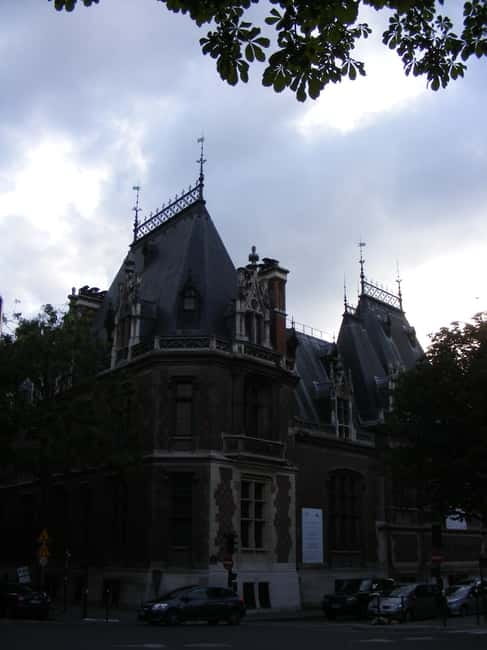
A strong Art Nouveau experience doesn’t start with the most famous facade. It starts with the reasons the style appeared in the first place, and with the building blocks it borrowed and transformed.
On this tour, you begin at the roots of the Art Nouveau movement, then continue toward the mature period. That sequencing helps you notice patterns instead of getting overwhelmed. When you see early influences first, later buildings make more sense. The curves are no longer random, and the ornament is no longer just a costume.
You’ll also hear how the style connected to the world outside art. One guide named Boris put the buildings into a bigger cultural and philosophical framework, not by lecturing, but by tying what you see to the ideas shaping the era. Expect a mix of architectural evolution and social context, including the way newer Gothic architecture fed into Art Nouveau’s thinking.
If you like explanations you can carry with you while you walk, this structure is a smart use of time.
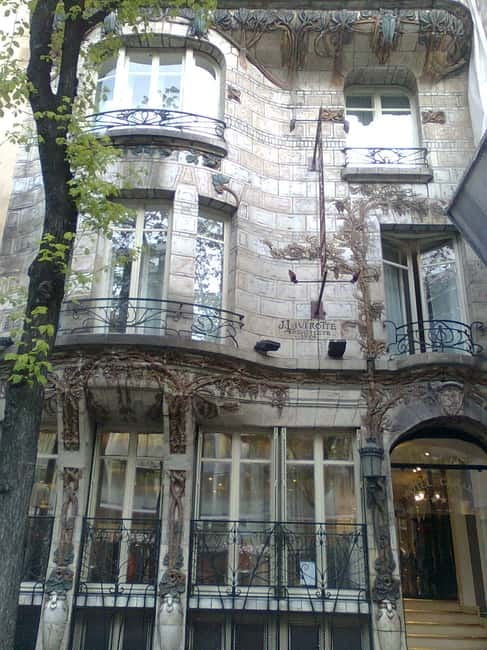
The Ceramic Hotel facade, where detail becomes the main event
One of the highlights is the Ceramic Hotel, known for one of Paris’s most beautiful facades. This is the kind of stop where you’ll understand why Art Nouveau is loved by people who normally only care about “real architecture,” not decorative everything.
Ceramics and surface work do a lot in Art Nouveau. They help create depth, texture, and that sense of motion that makes buildings feel almost alive. The facade works because the ornament is not stuck on like decoration. It’s part of the design language, tied to the building’s rhythm and shape.
How to enjoy this stop:
- Look at the overall silhouette first, then come back for smaller details.
- Spend a minute studying how the materials catch light, especially if the weather is bright.
- If your guide points out symbolic elements, don’t rush past them. Art Nouveau rewards close looking.
This is also where a good guide changes the experience from “pretty facade” into “I get what this was trying to say.”
Still in Paris, but a different sort of outing:
- Paris: Evening River Cruise with Music
★ 4.4 · 22,721 reviews - Paris: Eiffel Tower Entry Ticket with Optional Summit Access
★ 4.4 · 20,035 reviews - Paris: Eiffel Tower Summit or Second Floor Access
★ 4.3 · 17,248 reviews - Paris: Louvre Guided Tour with Reserved Access & Boat Cruise
★ 4.3 · 16,353 reviews
Avenue Rapp and Jules Lavirotte, the flamboyant side of good taste
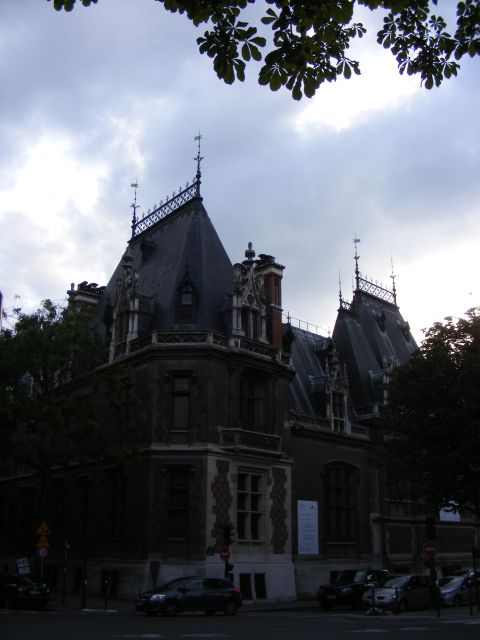
Next, you walk down Avenue Rapp to see houses by Jules Lavirotte. Lavirotte is associated with a flamboyant style of Art Nouveau in Paris, and Avenue Rapp is a street where that personality shows up clearly.
This is a stop for people who enjoy seeing how an architect’s signature becomes visible at street scale. The facades here can look dramatic, but the drama is controlled. The best Art Nouveau buildings balance complexity with design logic, so even when something feels exuberant, it still feels intentional.
Practical tip: Avenue Rapp can be busy at certain hours, so use the quiet moments your guide offers to stand back and take in the facade as a whole. If you’re photographing, think about angle. A flat photo often misses what makes these houses feel different: their layered surfaces and the way ornament follows the building’s structure.
The Theosophic society of Paris building and the occult thread
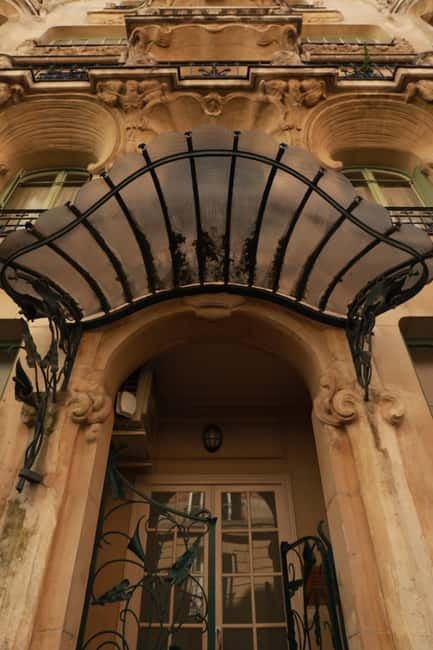
Art Nouveau is often treated as a purely aesthetic movement, but this tour adds an important layer: the links between architecture and occult societies. One of the featured stops is the imposing Theosophic society of Paris building.
Theosophy and related ideas mattered to many people in that era because they offered a framework for understanding the universe, the self, and spiritual meaning. When you connect that to Art Nouveau, symbolism starts to make more sense. Forms can feel like more than decoration. They can feel like signals.
At this stop, you’re not just looking at style. You’re looking at attitude. You’ll see how a building can communicate with people who want their surroundings to have meaning beyond function.
If you’re curious about how design and belief systems overlap in history, this is one of the more thought-provoking parts of the tour.
Picasso’s favorite drinking dens, where art history becomes personal
Another highlight is the chance to discover the favorite drinking dens of Picasso and more. This is the human part of the itinerary, and it works because it reminds you that artists didn’t work in a vacuum.
Why it matters: seeing an artistic building style in the context of who later used the neighborhood helps you remember that design is part of daily life. It also connects the Belle Epoque atmosphere to later modern creativity, including the kinds of places where ideas get exchanged.
Even if you’re not a Picasso expert, this section can still click because it adds atmosphere. You’re learning about style and symbolism, but you’re also learning about people and habits tied to the city.
Eiffel Tower connections, how to see a landmark in a new way
This Art Nouveau tour includes the Eiffel Tower, or at least the kind of link that helps you connect Art Nouveau thinking to the Eiffel era. The highlight specifically calls out the links between Art Nouveau and the Eiffel Tower.
Here’s the value: the Eiffel Tower is usually treated as one icon, one story. But design history is messy in a good way. Different movements influence each other over time, and new materials and approaches to structure shift how people perceive beauty.
When you hear the guide’s explanation while you’re looking at the surrounding city, you start noticing how Art Nouveau fits into a broader timeline of Paris innovation. It becomes less about memorizing facts and more about learning a visual method: compare styles, track ideas, and ask what changed and why.
Price and value for 2 hours, and who gets the most out of it
The price is $171 per person for a 2-hour private guided tour. That sounds like a premium, but it’s worth judging it by what’s included: a live guide plus a focused route through major Art Nouveau landmarks, including the Ceramic Hotel, Lavirotte on Avenue Rapp, the Theosophic society building, the Picasso area, and the Eiffel Tower connection.
You’re not paying for a long bus ride or a packed checklist. You’re paying for interpretation, and for a sequence that helps you see the movement evolve from roots to mature forms.
This tour is a great fit if you:
- Love architecture and want to understand symbolism, not just take photos
- Want a compact introduction to Art Nouveau in Paris without spending days researching
- Prefer a private format where your questions can shape the pace
It may be less ideal if you want an off-the-map neighborhood crawl with dozens of stops. This is still a street walk, and the value comes from quality of explanation and a tight route.
What to bring for the best Art Nouveau street experience
Because you’re walking around facades and you’ll likely pause often, keep your plan simple.
- Wear comfortable shoes, since the tour is designed as a walk even if it is not strenuous
- Bring a camera if you like details, especially for ceramics, ironwork, and decorative surfaces
- Bring a light layer, because Paris weather can change quickly during a short window
Most importantly, slow down for the guide’s points. Art Nouveau rewards attention. If you treat it like a quick sightseeing sweep, you’ll miss what makes the style distinctive.
Should you book this Art Nouveau Paris tour?
Book it if you want a high-signal, 2-hour private walk that explains Art Nouveau in a way you can actually use while you’re looking at buildings. The strongest reason to choose it is how the guide connects the facades to bigger cultural and philosophical context, with strong attention to principles and historical evolution. If you get a guide like Boris, you’ll likely get especially clear, structured explanations, plus time to look in detail.
Skip it if you want a long, wide-ranging tour with lots of far-flung stops or if you’re only interested in broad, easy sights. This experience is compact by design, so you’ll get the most from it when you care about detail and meaning.
FAQ
How long is the Art Nouveau Paris tour?
It lasts 2 hours.
Is this tour private?
Yes, it is a private group.
What languages are available?
The live guide speaks English and French.
Where do I meet the guide?
Meet your guide in front of the Franprix store at the corner of rue de l’Université and avenue de la Bourdonnais. Look for the guide with the red canvas tote bag.
What landmarks will we see during the walk?
You’ll see Art Nouveau landmarks around Paris, including the Ceramic Hotel facade, houses by Jules Lavirotte on Avenue Rapp, the Theosophic society of Paris building, links between Art Nouveau and the Eiffel Tower, and the area tied to Picasso’s favorite drinking dens.
Is food included?
No, food and drinks are not included.
How much does it cost?
The price is $171 per person.
Can I reserve now and pay later?
Yes, you can reserve now and pay later.
What is the cancellation policy?
You can cancel up to 24 hours in advance for a full refund.
Recently added around Paris
- Paris: Louvre Museum Timed Entry Ticket & Pop Culture Tour★ 4.6 · 26 reviews
- Paris: Louvre Must-See Tour with Reserved Entry Ticket★ 4.9 · 164 reviews
- Paris: Louvre photoshoot or Seine bridges Eiffel Tower walk★ 5.0 · 49 reviews
- Louvre & Mona Lisa Morning Tour with Reserved Access★ 4.0 · 15 reviews
- Paris: Louvre Museum Skip-the-Line Tickets for Monalisa★ 3.0 · 42 reviews
- Paris: Louvre Museum Ticket with Optional Hosted★ 3.1 · 89 reviews
- Paris: Louvre Museum and Orsay Museum Guided Tour★ 5.0 · 6 reviews
- Paris: Louvre Museum Mona Lisa First Viewing Semi-Private★ 4.2 · 21 reviews
Tours, compared.
Louvre Guided Tour with Reserved Access & Boat Cruise
Read our review →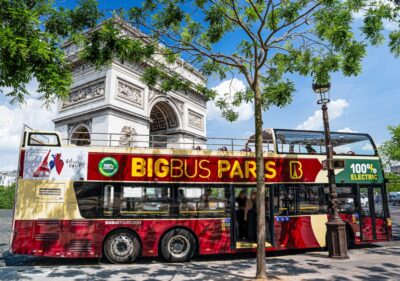
Big Bus Hop-On Hop-Off Tour with Optional Cruise
Read our review →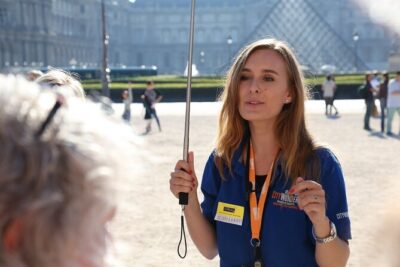
Louvre Museum Masterpieces Guided Tour with Access
Read our review →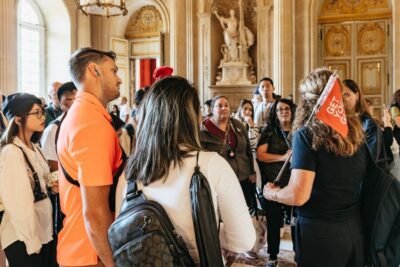
Skip-the-Line Tour of Palace with Gardens Access
Read our review →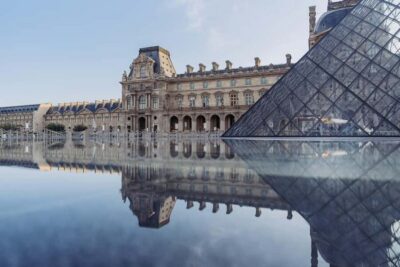
Mona Lisa & Louvre Masterpieces Tour with Reserved Access
Read our review →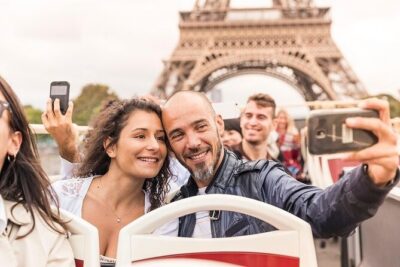
Paris Big Bus Hop-On Hop-Off Tour with Optional River Cruise
Read our review →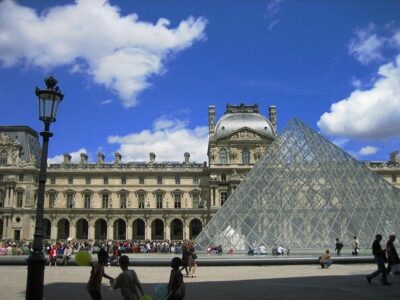
Louvre Museum – Exclusive Guided Tour (Entry Included)
Read our review →