

Reviewed · WALKING TOURS
Paris: French Revolution Walking Tour
Paris has a talent for turning ordinary corners into dramatic scenes. This French Revolution walking tour makes that click fast, by walking the streets linked to the years of conspiracy, intrigue, mystery, and mass murder. I love how the story stays street-specific instead of sounding like a textbook. I also like that it is only 2 hours, so you get momentum without feeling trapped in a long lecture.
I love the way the guide brings the biggest names to life, from the looming guillotine to the events that push the city toward the Bastille. You’ll feel like you’re reading the city like a map, not just looking at monuments, and guides such as Francois, Louis, and Ilan are known for speaking clearly and using vivid, grounded explanations. One possible drawback: because it is a short walk, it may leave out some extra on-site context you might hope for, and the route may not always follow a strict day-by-day timeline.
Key things to know before you go
- Start at Fontaine au Sphinx on Place du Châtelet, a central spot that helps you settle in quickly
- A 2-hour format that compresses a complicated revolution into a story you can follow
- Guillotine era focus, including Louis XVI and Marie Antoinette
- Macabre details, told carefully, including murder and massacre themes
- Guides who answer questions, with English that stays easy to hear on noisy streets
- Short breaks built in, so the walk stays manageable
Where to meet in Paris (and how to avoid a stressful start)
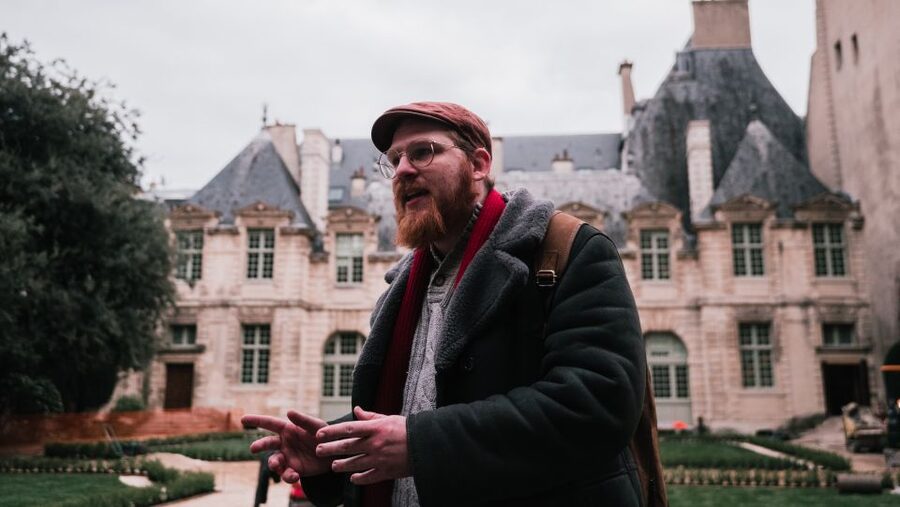
You will meet your guide in front of the Fontaine au Sphinx on Place du Châtelet, right before the tour begins. This matters more than it sounds. Place du Châtelet is busy, and the faster you locate your guide, the more enjoyable the first 10 minutes will be.
Plan to arrive a few minutes early and do a quick scan. Look for the guide and the group gathering near the fountain. Also, since there is no hotel pickup, you will want to be ready to make your own way there by metro or on foot.
If you are traveling with someone who has trouble walking long distances, the good news is that the tour is listed as wheelchair accessible. Paris streets can still be uneven, so you will want comfortable footwear for the rest of your day too.
More walking tours in Paris:
- Paris Top Sights Half Day Walking Tour with a Fun Guide
★ 5.0 · 2,893 reviews - Montmartre Hidden Gems and Scenic Highlights Walking Tour
★ 5.0 · 2,684 reviews - Montmartre Hill French Gourmet Food and Wine Tasting Walking Tour
★ 5.0 · 2,588 reviews
The “revolution in revolutionary shoes” idea, in real life
This tour is designed to replace the dry lesson version of the French Revolution with a walking, story-driven format. The pitch is simple: you walk the same kind of urban space where the revolution’s tension played out, and your guide turns that space into a timeline you can remember.
In practice, that means you will hear a fast-moving narrative that connects streets to decisions, rumors, and power struggles. The tour leans into the darker side of the era: the conspiracy, the intrigue, the mystery, and the mass murder. You will also hear about the fight for freedom and how the Revolution reshaped Paris itself.
Two things make this style work. First, the pace is built for a short 2-hour experience, so you keep moving while key themes land. Second, guides use vivid scene-setting, often describing what places might have felt like at the time, which helps you picture the stakes without needing a museum stop.
If you are sensitive to violent or grim history, treat this as a caution flag. It is not a polite, sanitized version. It’s also why having a clear guide matters, since the story is heavy.
How the 2-hour timing keeps you from getting lost
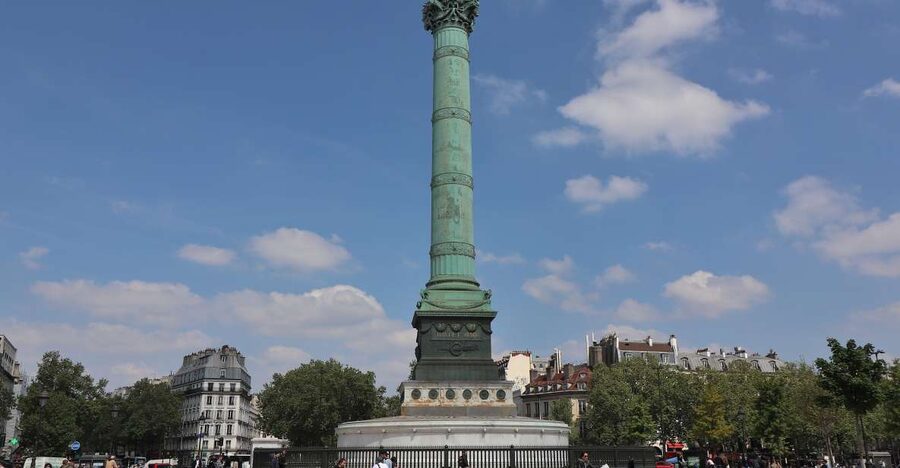
A lot of history tours fail in one of two ways: they either rush so hard you miss the point, or they stretch so long you stop caring. This one targets the middle, and that shows in how it is structured for a short walk.
The tour is 2 hours, which is just long enough for a good arc: you start with why things were ready to explode, then you move through the major twists and turning points, and you end with the kind of payoff that makes the Revolution feel like a chain reaction rather than a random series of dates.
One thing to know: the walk may not be strictly chronological. Some people found the route to feel organized around themes or key moments rather than following dates in order. That is not necessarily a problem, as long as your guide clearly ties each stop back to the larger story, and that is exactly what many guides focus on in their explanations.
You will likely also have a small pause during the experience. Some tours include a comfort break in the middle, which helps if you want to keep your energy up for the rest of your day.
The story focus: guillotine, Louis XVI, and Marie Antoinette
The French Revolution is often summarized with a single image, the guillotine. This tour treats that image as part of a wider system of fear, propaganda, and political retribution.
You can expect the guide to connect the guillotine era to the people who became symbols, including Louis XVI and Marie Antoinette. The goal is not just name recognition. It’s to show why these figures mattered to the public story being told at the time, and how that story fed the next step of the Revolution.
This is where good guiding really shows. The guide’s job is to keep the events understandable without turning the details into a list. Many guides are praised for condensation, meaning they can squeeze a complex subject into a short walk without losing accuracy.
For you, this section is valuable because it puts emotion back into chronology. When you connect the political logic to the street-level consequences, the Revolution stops feeling like distant tragedy and starts feeling like a chain of decisions unfolding in real places.
Still in Paris, but a different sort of outing:
- Paris: Louvre Museum Timed-Entrance Ticket
★ 4.6 · 71,977 reviews - Disneyland® Paris 1-Day Ticket
★ 4.6 · 49,412 reviews - Paris: Versailles Palace and Gardens Full Access Ticket
★ 4.6 · 41,579 reviews - Paris: Evening River Cruise with Music
★ 4.4 · 22,721 reviews
Following Paris toward the Bastille
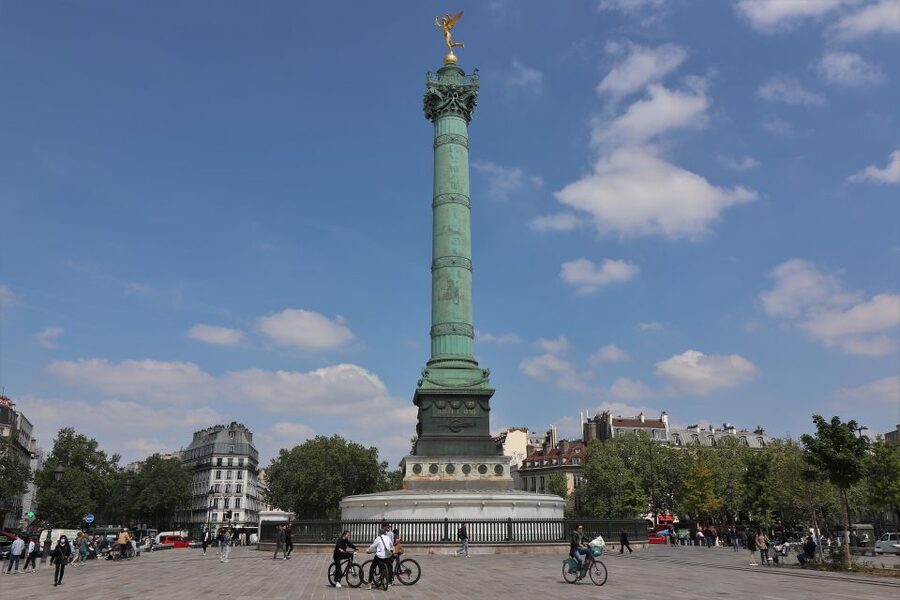
If there is one emotional high point people remember, it is the way the tour leads up to the storming of the Bastille. Even if the route jumps around, the story arc is designed to build toward that moment.
You should expect explanations about what came before the Bastille, why people were ready to act, and how the Revolution escalated from tension into confrontation. One guide’s approach is even described as day-by-day leading up to July 1789, which is helpful if you want a clearer sense of momentum instead of just isolated events.
There is also a sense of hidden texture in the experience. The tour description talks about uncovering hidden objects and long-forgotten tales. You may not see museum-level artifacts, but your guide can point out small features and local details that help you understand how a place carries stories over time.
The theme to watch for is transformation. The Revolution did not only change rulers, it changed how Paris functioned as a city, and your guide should make that shift feel concrete. That is what turns the Bastille from a headline into a lived moment tied to streets.
Conspiracy, intrigue, and the “murder and massacre” tone
This tour leans into the Revolution’s dark side on purpose. You will hear condensed accounts of conspiracy, intrigue, mystery, and mass murder. That means the content is not gentle, and it can feel intense if you prefer lighter sightseeing.
At the same time, the point is not sensationalism for its own sake. A good guide keeps the tone story-driven and grounded in what led to what. Many guides are praised for using nuance and accuracy, especially when answering questions that complicate the simple version of events.
You get a benefit here if you are an independent thinker. The guide is not only reciting facts. They explain how interpretations can differ, then bring you back to the larger narrative so you leave with a coherent understanding.
For you, this tone matters because it helps you grasp why ordinary people felt pulled into history. Fear and hope shaped decisions, and the Revolution was powered as much by emotion and rumor as by official declarations.
Churches, the Marais, and seeing different Paris layers
One of the best surprises in this kind of walking tour is when it shows how revolutionary history intersects with still-standing parts of the city. Some people noted stops that included churches and references to areas like La Marais, which is useful because you get contrast.
Paris in the present is beautiful, and that beauty can distract you from how much power struggles reshaped the city. The guide’s references help you connect architecture and street life with what changed during the Revolution.
You should also expect stops that look ordinary at first glance, until the guide explains why that corner matters. That is where the tour can feel like a treasure hunt. The city becomes a clue board.
There is a fair consideration here. Since the tour is only 2 hours, there may be limits to how many major sites you can cover in a meaningful way. People who wanted more discussion around specific landmark areas noted that including everything in extra detail would have required a longer walk. So if you are the type who wants every famous monument unpacked on-site, you might want to pair this with a self-guided visit later.
The guide quality is the whole difference
In a walking story like this, the guide is not a background role. They set the pace, decide what to emphasize, and keep the narrative from turning into a jumble of dates.
From what I’ve seen in the performance style described by past groups, the best guides do a few consistent things. They speak in clear English, with a voice that carries even on noisy streets. They use first-person language at times, which helps you picture the scene without it becoming a theatrical mess. They also answer questions and can pivot when someone asks something related but not exactly on the script.
Some guides specifically praised by name include Francois and Louis, with other guides such as Fran, Guillaume, Amber, Sam, and Ilan also noted for delivering a tight story in a friendly way.
There is another quiet plus: guides are often described as relaxed and easy to hear. That matters on cobblestones and busy squares. If you struggle with spoken English in crowded areas, you’ll still likely be able to follow because the explanations are paced and structured.
Price and value: is $46 fair for a 2-hour walk?
At $46 per person for a 2-hour walking tour, the value comes down to one thing: you are paying for interpretation, pacing, and a guide who can connect the French Revolution to specific street spaces.
This is not a museum ticket. You do not get a building, you get a guide, and you get a moving story. If you like history best when it feels personal and place-based, the cost makes sense because you’re buying time plus expertise plus the hard part of condensation.
If your style is purely self-guided reading, you might find you can replicate some of this with a good book and a map. But you would miss the spoken narrative, the on-the-spot explanations, and the way a strong guide highlights what to look for.
Also, the fact that there is live guiding in English is part of the value. You can ask questions, and you’re not left guessing what you are looking at.
Who should book this tour, and who might skip it
This tour is a strong match if you want the French Revolution to make sense fast, with a story that connects people and events to actual Paris locations. It’s also a good choice if you like your history with a bit of suspense, since the tour leans into conspiracy and intrigue.
It works well for mixed groups, including adults plus teens. When you have a wide range of interest levels in one group, the guide’s ability to keep the pace and answer questions can make a difference.
You might skip it if you want only a gentle overview of the era, or if you prefer museum-style chronology with lots of time at each landmark. The walk is focused and short, and it will not be everything about the Revolution.
Should you book the Paris French Revolution Walking Tour?
I’d book this if you want a place-based way to understand the Revolution in a short window. Starting at Fontaine au Sphinx on Place du Châtelet is central, and the guide-led format means you will get street-level meaning instead of just sightseeing.
If you are comfortable with grim subject matter and you enjoy asking questions, you should leave with a sharper sense of how the Revolution transformed Paris, not just a list of dates. If you need every detail of every famous site, plan to do extra reading or add self-guided time elsewhere after.
Either way, this is the kind of tour that makes a city feel like it has memory. You will look at Paris corners differently after you walk them with the Revolution’s story running in your head.
FAQ
How much does the Paris French Revolution Walking Tour cost?
The tour costs $46 per person.
Where do I meet the guide?
Meet your guide in front of the Fontaine au Sphinx on Place du Châtelet.
How long is the tour?
The tour lasts 2 hours.
Is hotel pickup or drop-off included?
No. Hotel pickup and drop-off are not included.
Is the tour offered in English and is it wheelchair accessible?
Yes, the live guide provides the tour in English, and the tour is listed as wheelchair accessible.
What is the cancellation policy?
You can cancel up to 24 hours in advance for a full refund.
Can I reserve and pay later?
Yes. The tour offers a reserve now, pay later option so you can book your spot and pay nothing today.
Recently added around Paris
- Paris: Louvre Museum Timed Entry Ticket & Pop Culture Tour★ 4.6 · 26 reviews
- Paris: Louvre Must-See Tour with Reserved Entry Ticket★ 4.9 · 164 reviews
- Paris: Louvre photoshoot or Seine bridges Eiffel Tower walk★ 5.0 · 49 reviews
- Louvre & Mona Lisa Morning Tour with Reserved Access★ 4.0 · 15 reviews
- Paris: Louvre Museum Skip-the-Line Tickets for Monalisa★ 3.0 · 42 reviews
- Paris: Louvre Museum Ticket with Optional Hosted★ 3.1 · 89 reviews
- Paris: Louvre Museum and Orsay Museum Guided Tour★ 5.0 · 6 reviews
- Paris: Louvre Museum Mona Lisa First Viewing Semi-Private★ 4.2 · 21 reviews
Walking Tours, compared.

Paris Top Sights Half Day Walking Tour with a Fun Guide
Read our review →
Montmartre Hidden Gems and Scenic Highlights Walking Tour
Read our review →
Montmartre Hill French Gourmet Food and Wine Tasting Walking Tour
Read our review →
Paris Île de la Cité and Notre-Dame Walking Tour With Crypt
Read our review →
Montmartre Cheese, Wine & Pastry Guided Walking Tour
Read our review →
Paris in a Day: Louvre or Orsay, Eiffel Tower, City Walk & Cruise
Read our review →
Montmartre Highlights Walking Tour with a Local Guide
Read our review →
Paris City Center Free Walking Tour (Tip-Based)
Read our review →Browse the lists this tour appears in