
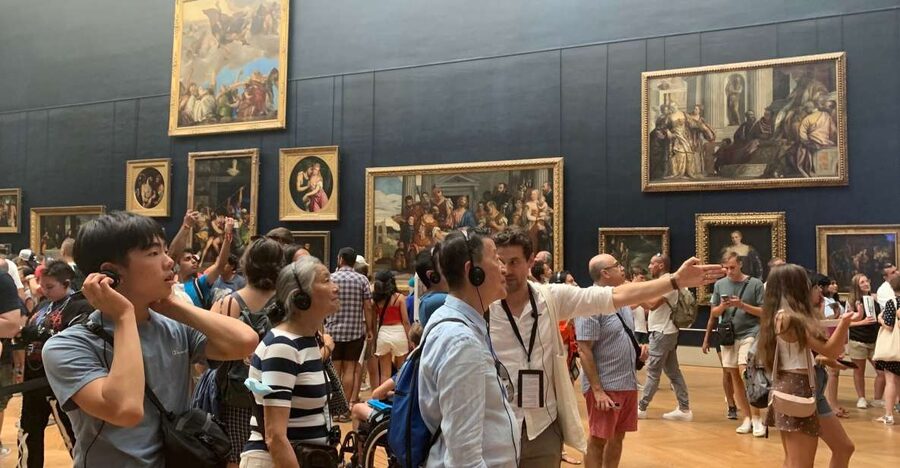
Reviewed · LOUVRE TOURS & TICKETS
Paris: Louvre Masterpieces Tour with Pre-Reserved Tickets
This Louvre experience is interesting because it trades the usual museum chaos for a small six-guest group and a route that gets you to the key masterpieces fast, using pre-reserved priority entry. I like that setup because you can spend your energy looking, not guessing where to go next.
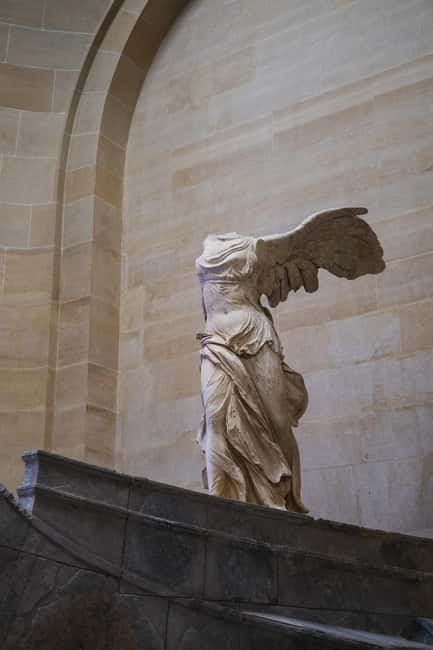
I also like the way the tour hits the big names in a logical order, including the Mona Lisa, Venus de Milo, and Winged Victory of Samothrace, so the museum feels more readable. The one drawback to consider is that everything runs on strict timing, and the timed tickets only work in a small window after security.
Key highlights to look for
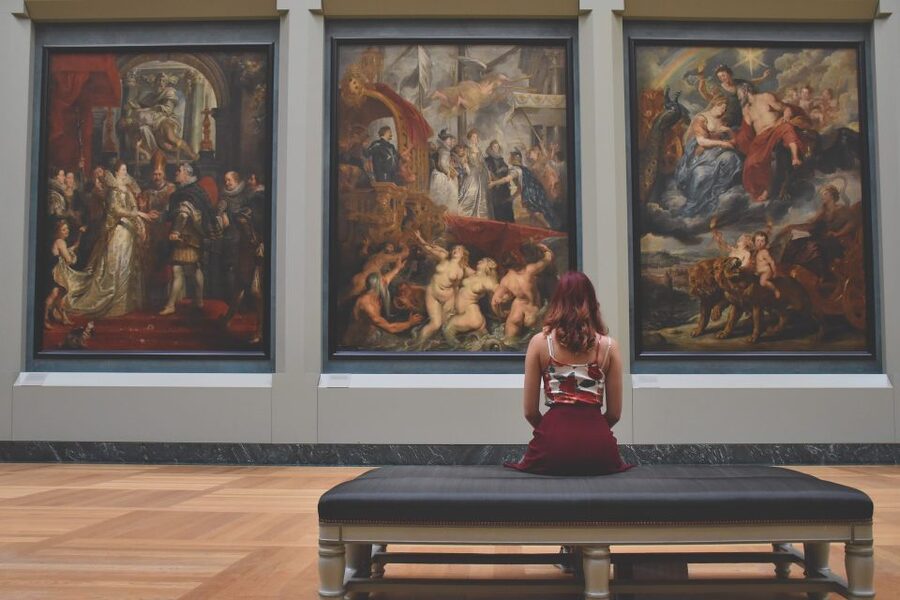
- Priority entry through a separate entrance, so you do less queue-watching
- Six-guest max for a calmer pace and real Q and A time
- A tight 2-hour route focused on major icons and major eras
- Works you can actually name after you leave: Mona Lisa, Venus de Milo, Winged Victory
- More than just art labels, with story-driven explanations about what you’re seeing
- Stay after the tour with your pre-reserved tickets to explore on your own
Why this Louvre tour works: priority entry plus a smart 2-hour route
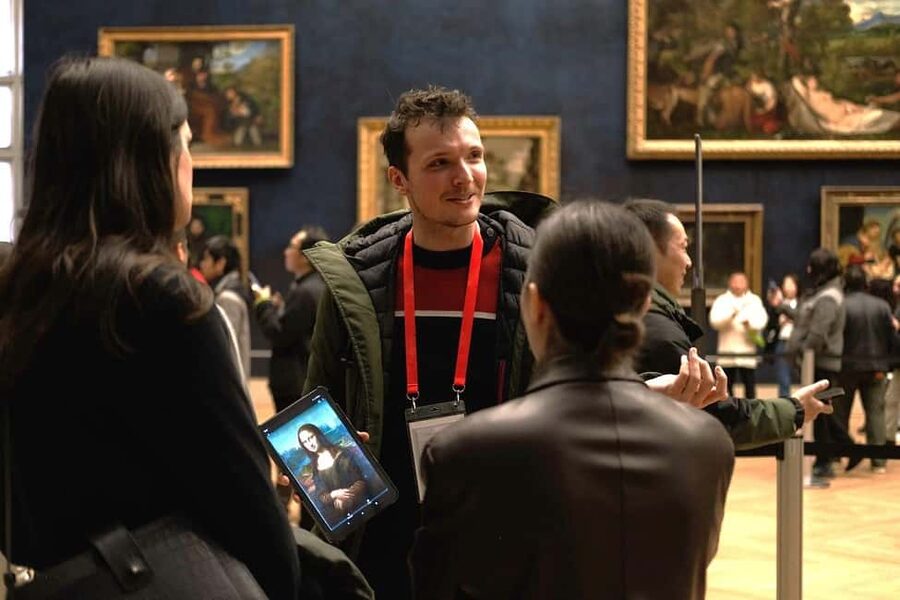
The Louvre is huge. Like, you can walk for an hour and still feel lost, because the museum is not laid out for quick “greatest hits” viewing. This tour solves that problem with two things that matter in real life: pre-reserved priority entry and an expert guide route that aims at the museum’s best-known masterpieces without trying to cover every wing.
You get a guided walk for 2 hours, but you also get something that’s easy to forget when planning big museums: time after. Once the tour ends, your pre-reserved tickets still let you keep exploring at your own pace. That means the tour can act like a high-quality introduction, and then you can follow your curiosity wherever it points next.
Also, the tour is limited to a maximum of six people. That small group size changes the vibe. You are more likely to hear what the guide says, ask a question, and stand in decent sight lines when a famous work attracts a crowd.
More Louvre tours and tickets:
- Paris: Louvre Museum Timed-Entrance Ticket
★ 4.6 · 71,977 reviews - Paris: Louvre Guided Tour with Reserved Access & Boat Cruise
★ 4.3 · 16,353 reviews - Louvre Museum Masterpieces Guided Tour with Access
★ 4.5 · 12,023 reviews
Café Le Nemours meeting point: easy to find, but don’t show up late
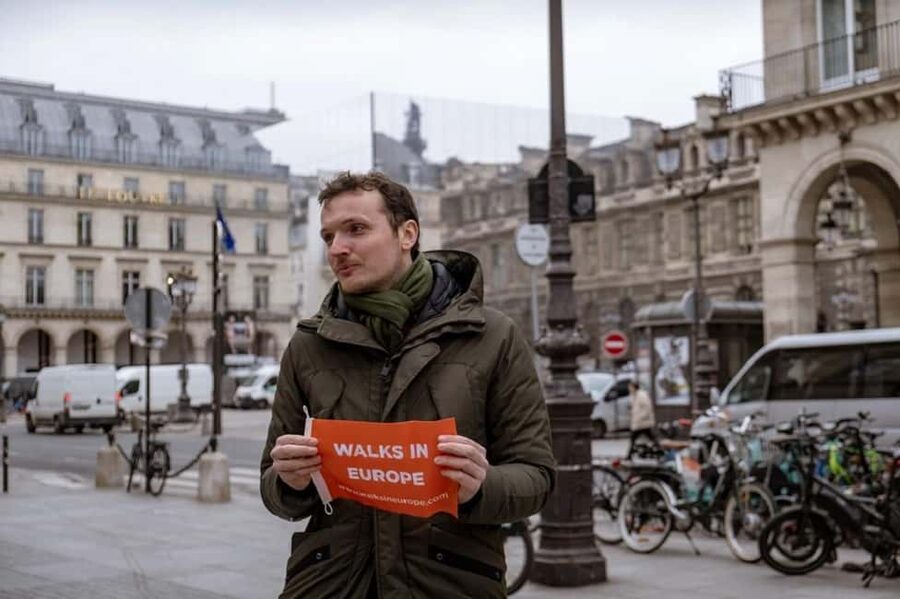
Your start is Café Le Nemours. The guide meets you in front holding a sign with Walks In Europe on it. If you’re coming by metro, the closest station is Palais Royal, and you want exit 5, Place Colette. When you come out of the metro exit, turn around and you should see the café.
This is not the kind of tour where you drift in whenever. Paris traffic and crowds are real, and the operator notes you cannot join after the tour begins. So I suggest building in extra buffer time, especially if you’re walking over from another stop on the same day.
Skip-the-line entry, security, and timed tickets you must respect
Even with priority access, you still go through security. That line can be long in high season, so it helps to have tickets already reserved and pointed at a separate entry flow.
Here is the part you absolutely should plan around: the tickets are timed and they expire within 5 to 10 minutes. That means you cannot arrive late, then casually stroll into the museum. You need to be ready, ID in hand, and moving when it’s time.
Two other ticket rules matter for planning:
- Your tickets can only be used once. If you leave one museum wing and then want to come back through that same ticket, you might not be able to re-enter.
- You’ll have to be realistic about how much ground you can cover in 2 hours, then how you’ll structure your solo time afterward.
What to bring is simple: a passport or ID card. What not to bring is also clear: no luggage or large bags, no umbrellas, and no mobility scooters. If you travel with a big daypack, keep it small enough to pass security comfortably.
One more heads-up, because it can happen at major museums: strikes at the Louvre may lead to closure with no prior notice. In that case, there would be no refund. That’s rare, but when you plan only one Louvre day, it’s smart to keep other museum options in mind.
The Louvre’s icons on an elegant route: Mona Lisa, Venus de Milo, Winged Victory
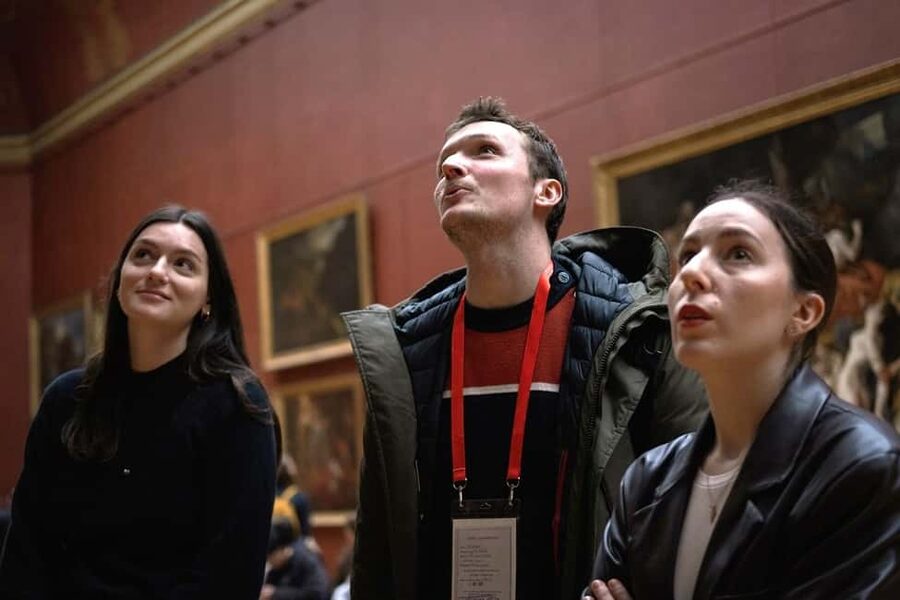
The biggest reason to do a guided “masterpieces” route is not that you cannot find the icons on your own. You can. It is that you can waste a lot of time trying to reach them in the middle of peak congestion.
This tour focuses on an elegant path to the headline works. You will see:
- Mona Lisa
- Venus de Milo
- Winged Victory of Samothrace
On a normal day, those three are also three of the most crowded spots. A good guide helps you time your viewing, choose the right viewing moments, and get the stories behind what you’re looking at, so the experience becomes more than a photo stop.
A pattern I kept seeing in guide mentions is that the best sessions are the ones where the guide connects the artwork to the moment it was created, not just the basic facts. Names that showed up repeatedly included Jerome, Laura, Patrick, and Matteo (and several others). People praised them for turning familiar works into something you can interpret, and for keeping the pacing smooth through a museum that can feel overwhelming.
A few more Paris options to weigh up
- Disneyland® Paris 1-Day Ticket
★ 4.6 · 49,412 reviews - Paris: Versailles Palace and Gardens Full Access Ticket
★ 4.6 · 41,579 reviews - Paris: Eiffel Tower Entry Ticket with Optional Summit Access
★ 4.4 · 20,035 reviews - Paris: Moulin Rouge Cabaret Show Ticket with Champagne
★ 4.7 · 16,088 reviews
Renaissance to French Romanticism: how the tour teaches you to read art history
In 2 hours, you do not “see the Louvre.” You see a curated arc, and that arc is what makes this tour useful. Instead of random wandering, you get an order of eras so you can notice how styles and politics shift across centuries.
The Italian Renaissance stops include major works like:
- The Wedding Feast at Cana
- Michelangelo’s Slaves
The effect of seeing these as a sequence is practical. You start to recognize how Renaissance art uses drama, anatomy, and storytelling to make religious and mythic themes feel immediate. Without someone pointing that out, it is easy to treat paintings and sculpture like isolated masterpieces. With the guide, they start to talk to each other.
Then the tour moves into French Romanticism, including:
- The Raft of the Medusa
- Liberty Leading the People
- The Coronation of Napoleon
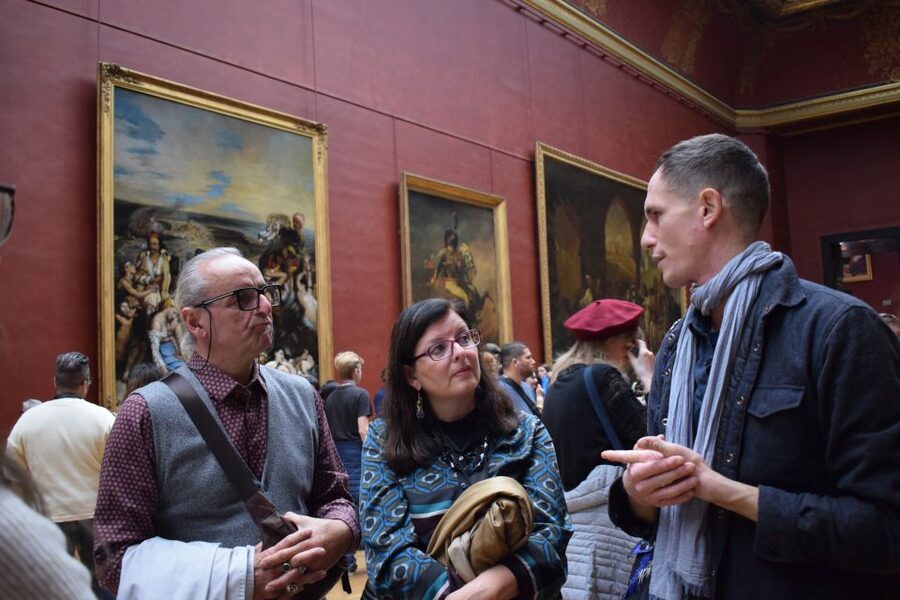
This is where the museum suddenly feels less like a quiet art library and more like a visual record of major political moments. The guide helps you connect the emotions in the works to the historical events around them, so you understand why these artists chose certain figures, gestures, and compositions.
If you like art that has stakes, this section is where you will feel it most. Even if you are not an art student, you start to pick up how power, tragedy, and national identity are expressed through images.
Neoclassical beauty and the Salon Carré: when you look up and slow down
After the big paintings and revolutionary-era moments, you still get the kind of “Louvre awe” that comes from scale, architecture, and craftsmanship.
Expect stops that include:
- Psyche Revived by Cupid’s Kiss
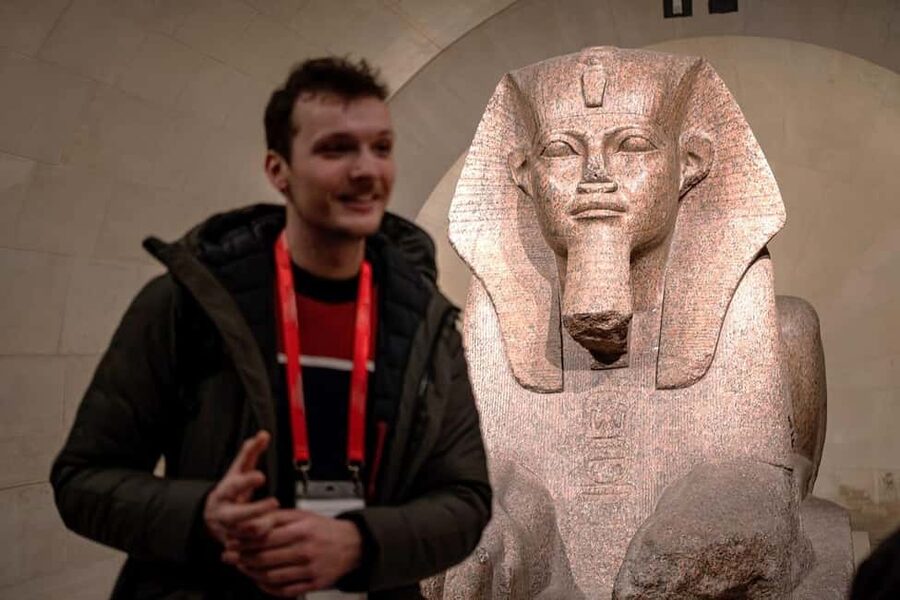
- The Caryatids
- The Salon Carré
Psyche and Cupid are a nice reminder that neoclassical art can feel intimate, even when it is technically formal. The guide points you toward the details that make the work visually persuasive, so you do not just see a famous subject, you see how the artist shaped mood and movement.
The Caryatids are especially worth your attention because they force you to look up. They are not only art objects, they are part of the building’s language. And the Salon Carré is one of those spaces where the setting matters. You notice it more after your guide frames what you’re looking at and why the museum designed these rooms the way it did.
One practical drawback: because the tour is 2 hours, it is not built for slow, long stays at every single work. The best approach is to let the guide set the pace, then save extra lingering for after the tour when you can choose your own priorities.
What “2 hours” means in a museum this big
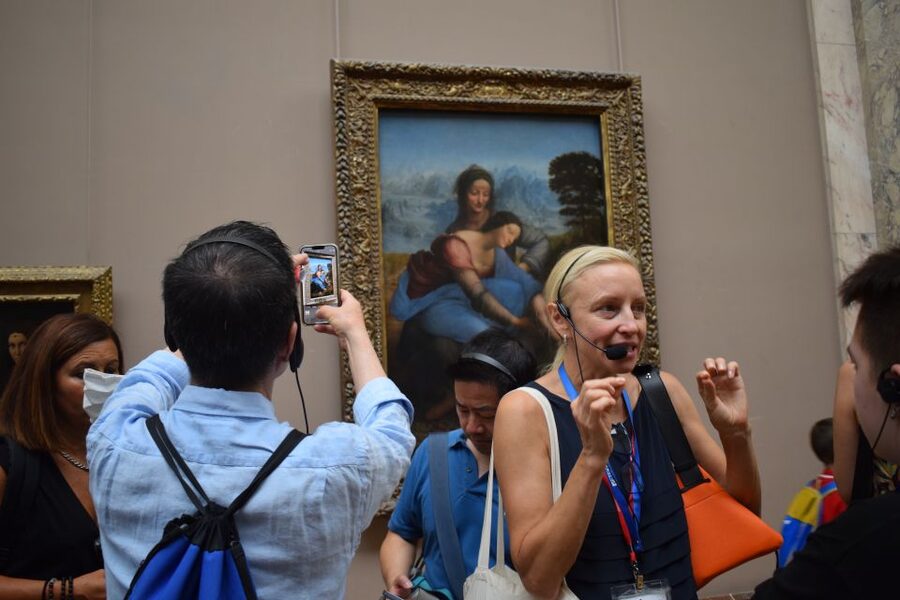
A helpful way to think about this experience is that the 2 hours are about choosing the right highlights and getting the right explanations for them. The tour introduces eight departments and references how massive the collection is, with tens of thousands of artworks across the museum.
That scale can make you feel pressure to see everything. Don’t do that. If you try to consume the Louvre like a checklist, you’ll end up tired and slightly numb. With this tour, you get a guided focus that leaves room for genuine looking.
A lot of the best feedback I saw mentioned exactly this point: people did not feel lost, and they came away with a clearer sense of the museum’s structure and themes. That is not a small thing in a place where the signage and floor plans can feel like a puzzle.
After the tour: keep exploring with your pre-reserved tickets
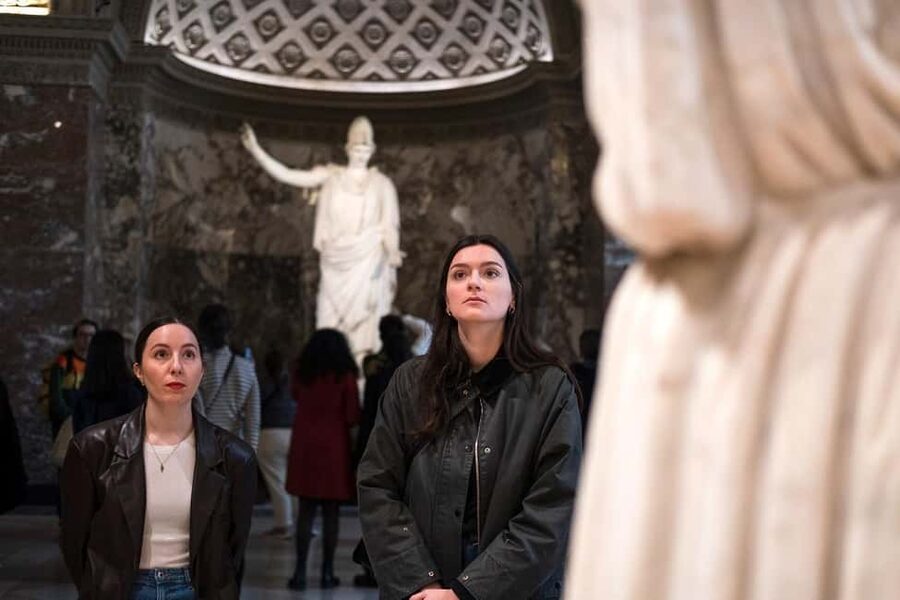
One of the smartest parts of this experience is that the guided portion ends, but your entry does not. Once the tour ends, you can stay inside and explore at your own pace.
So I recommend a simple plan for your solo time:
- Pick one or two extra works that genuinely pulled you in during the tour.
- Don’t try to “fix” time by sprinting through more wings.
- Use your guide’s route as a backbone, then wander from there.
If you want to return to the icons for another look, you can often do it more calmly after the initial crowd flow. Just remember the ticket rules about single-use entry, so plan your route to avoid getting stuck outside the wings you want to continue in.
Price and value: why $152 can make sense for the Louvre
At $152 per person for a 2-hour small-group tour, you are paying for time compression and expert direction. In the Louvre, time is everything. The cost is not just for a guide voice. It is for:
- Priority entry that can reduce the waiting pressure
- A route that points you to the right rooms in the right order
- Explanations that help you understand what you are seeing, not just where to stand
Is it cheaper to DIY the Louvre? Usually, yes, especially if you already know your priorities and you’re comfortable navigating crowds. But the value shifts fast if you are short on time, overwhelmed by the museum size, or worried about missing the big icons.
This is one of those tours where the small-group limit matters financially. With six people, your guide can actually keep control of sight lines, pace, and attention. With a large group, you often get a loud headcount experience and less meaningful interaction.
If you like flexibility, you can also reserve and pay later. That is useful when you want to hold your spot without committing cash immediately.
Who should book this Louvre Masterpieces tour
This is a great fit if you:
- Want the major highlights without spending hours planning
- Feel overwhelmed by the Louvre’s size and want a reliable path
- Like art history stories that connect works to eras and events
- Are traveling in a group small enough for everyone to actually hear and participate
It also shows up as a strong choice for families with kids, based on guide feedback that singled out engagement and pacing. If you bring children, a guide who keeps the tour interactive can turn a daunting building into a moving scavenger hunt for stories.
Two clear “not for you” notes from the experience details:
- Not suitable for mobility impairments and wheelchair users
- No mobility scooters allowed
The guide factor: why names like Jerome, Laura, and Matteo keep coming up
In a museum as famous as the Louvre, your guide can change the day. In the feedback patterns I saw, the strongest sessions often came from guides who had a clear talent for storytelling, humor, and answering questions in a way that makes the art easier to interpret.
Some guide names that came up often included Jerome, Laura, Patrick, Mattéo, Ashkan, Alban, and Iason. People praised them for being able to keep kids engaged, explain the politics and meaning behind major works, and guide visitors through dense areas without turning the experience into a frantic queue shuffle.
If you get assigned one of the guides who leans into that style, you’ll likely come away feeling like you learned something practical, not just facts.
One more possible upside: even though the group is capped at six, some departures can end up smaller than expected. When that happens, the tour feels more private, and the guide can tailor the route and pacing more closely to your interests.
Should you book this Louvre Masterpieces tour?
Book it if you want a high-confidence Louvre day. This tour is built for first-time visitors who want the icons and the context, and for anyone who knows the Louvre is too big to “wing” efficiently.
Skip it if you are the kind of traveler who loves long unstructured wandering and already has a detailed personal list, including which wings you want to do first and how you’ll manage timed tickets around security.
My practical take: if you have limited time in Paris, this is one of the most cost-effective ways to turn the Louvre from a stressful maze into a memorable sequence of stories and masterpieces.
FAQ
How long is the Louvre Masterpieces tour?
The tour lasts 2 hours.
What group size is this tour limited to?
It is a small-group tour limited to up to 6 people.
Where do I meet the guide, and what metro exit should I use?
Meet in front of Café Le Nemours. The nearest metro station is Palais Royal, and you should take exit 5, Place Colette. After you come out, turn around and you should see Café Le Nemours.
Do I get timed tickets, and can I re-enter after leaving?
Yes. Tickets are timed and expire within 5 to 10 minutes. Tickets can only be used once, and you will not be able to get back in if you leave one of the museum wings.
What should I bring, and what items are not allowed?
Bring your passport or ID card. Luggage or large bags are not allowed, and umbrellas and mobility scooters are also not allowed.
What languages are the guides, and is the tour suitable for wheelchair users?
The tour is offered with a live guide in English or German. The tour is not suitable for people with mobility impairments or wheelchair users.
Recently added around Paris
- Paris: Louvre Masterpieces Private Tour with Reserved Entry★ 4.3 · 144 reviews
- Paris: Living Cheese Museum Guided Tour with Cheese Tasting★ 4.8 · 182 reviews
- Paris Louvre Exclusive Semi Private Guided Tour Max 6 People★ 4.6 · 28 reviews
- Paris: Louvre Guided Tour with Skip-the-Line Entry Tickets★ 3.5 · 73 reviews
- Paris Le Marais Walking Tour: Small Group Experience★ 5.0 · 7 reviews
- Paris: Lemon Tart Baking Class with a Pastry Chef★ 5.0 · 4 reviews
- Paris: Live Guided Cruise with Crepe and Soft Drink★ 3.9 · 14 reviews
- Paris Le Marais Food Tour: Full Traditional French Feast★ 4.8 · 119 reviews
Louvre Tours & Tickets, compared.

Louvre Guided Tour with Reserved Access & Boat Cruise
Read our review →
Louvre Museum Masterpieces Guided Tour with Access
Read our review →
Louvre Museum Entry Ticket With Host and River Cruise
Read our review →
Priority Access Louvre with Host -Direct to Mona Lisa
Read our review →
Mona Lisa & Louvre Masterpieces Tour with Reserved Access
Read our review →
Louvre Museum – Exclusive Guided Tour (Entry Included)
Read our review →
Louvre Reserved Ticket and River Cruise Combo
Read our review →Browse the lists this tour appears in