
Reviewed · LOUVRE TOURS & TICKETS
Paris: Les Caves du Louvre Guided Tour with Wine Tastings
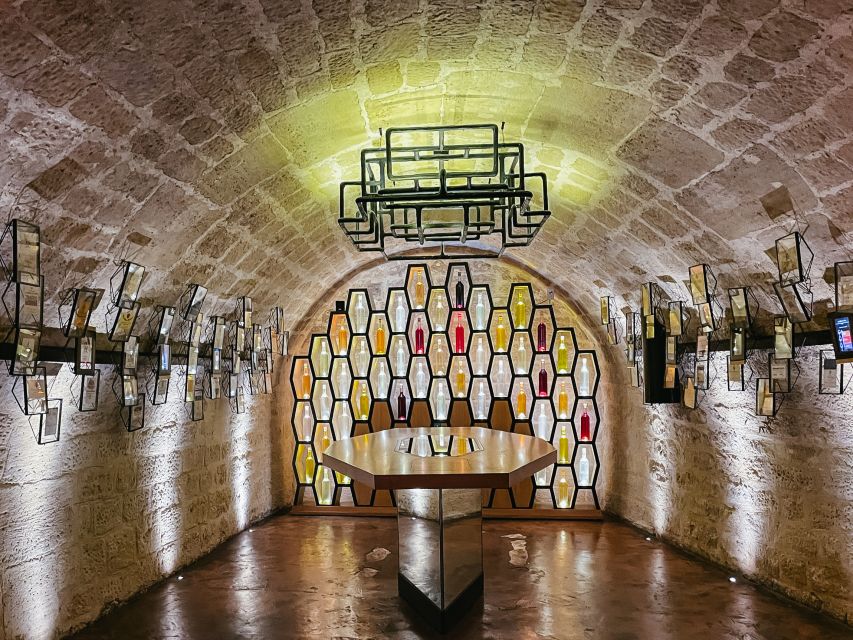
Most Paris wine experiences are about what is in your glass. This one starts with where wine was stored, in the 18th-century cellars by the Louvre, tied to the King of France. It feels like you are stepping into a working secret, then immediately learning how French wine gets from grape to bottle.
I like how the visit mixes hands-on sensory games with short explanations, so you are not stuck listening to wine jargon. I also like that you taste three wines of your choice, with a sommelier showing you how to smell and sip with more confidence. One thing to consider: the tour is English only, and it is not designed for everyone, including people with mobility impairments or pregnant women.
Key Highlights You Should Know Before You Go
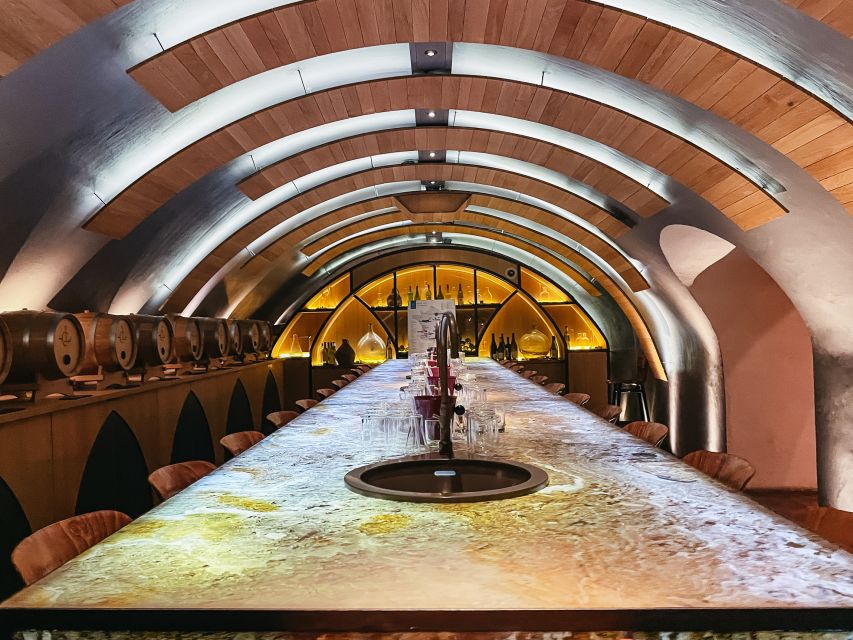
- 18th-century wine cellars by the Louvre, linked to royal storage
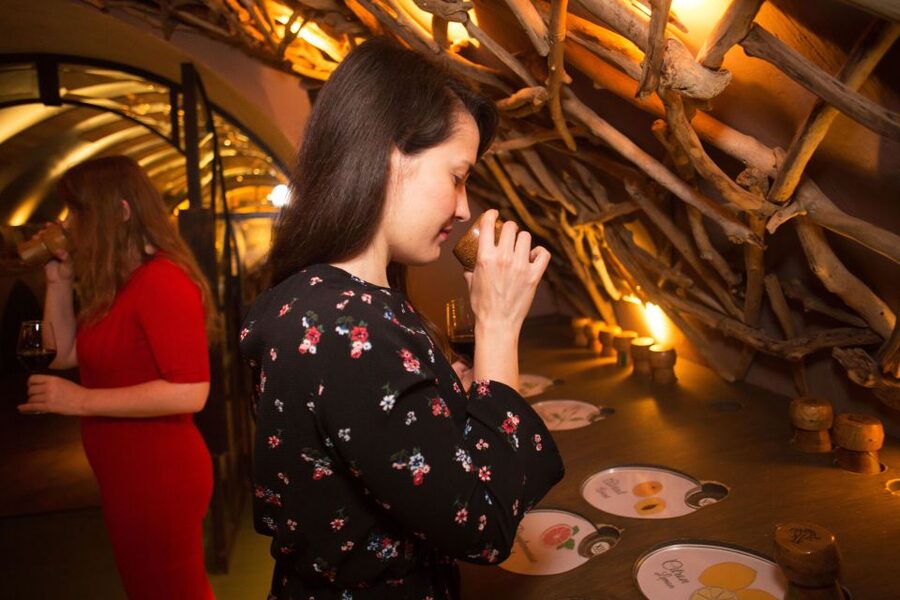
- Sensory learning with games, videos, and aroma-based activities
- Choose and taste three French wines, guided by the sommelier
- French grapes and wine regions explained clearly through tasting
- Interactive app used during the walk-through
- Small group vibe, which makes questions easier (and more fun)
Les Caves du Louvre: Underground Wine Storage, Next to the Louvre

Walking up to 52, Rue de l’Arbre Sec puts you in the sweet spot, close enough to the Louvre that you can pair this with museum time. Then you go underground into the cellars, and the mood flips. Instead of big marble rooms and selfie lines, you get stone, quiet, and the kind of setting that makes wine feel like a real craft, not just a drink.
The real hook here is the royal angle. This is described as the former wine cellars used by the King of France. Even if you do not go full history-nerd, the location changes how you pay attention. You see how wine storage mattered, and you start to connect the dots between terroir, aging, fermentation, and why French wine culture takes the long view.
What I find especially appealing is that the experience is not only “look at cool caves.” It is a guided wine education built into the space. You do not just wander. You move room to room, doing little tasks along the way that help your brain remember what you are learning.
One practical note: this is not marketed as an accessibility-friendly tour. Since it is specifically listed as not suitable for people with mobility impairments and it also is not suitable for pregnant women, plan for an active visit in underground conditions.
More Louvre tours and tickets:
- Paris: Louvre Museum Timed-Entrance Ticket
★ 4.6 · 71,977 reviews - Paris: Louvre Guided Tour with Reserved Access & Boat Cruise
★ 4.3 · 16,353 reviews - Louvre Museum Masterpieces Guided Tour with Access
★ 4.5 · 12,023 reviews
A 1-Hour Walk Through Wine Making, Using Your Senses
The visit is scheduled for about 1 hour, so it is a compact plan that fits neatly into a busy Paris day. The flow is designed to keep you engaged. You will learn the steps of wine making, from grape to bottle, but you will do it using games, videos, and sensory activities rather than a straight lecture.
Here is the practical rhythm you can expect. You start in the cellar environment and quickly transition into learning the basics of how wine is made. Then the tour shifts into the sensory part, where you use smell and taste as your tools. That is the secret sauce for people who feel intimidated by wine. Instead of being told what to think, you get helped to discover what you can actually detect.
A lot of the learning is tied to French grapes and wine regions, and the tasting is woven into that story. That matters, because tasting on its own can feel random. Taste first, context second, and it becomes easy to forget. Here, you get the context as you go.
One detail that shows up repeatedly in the experience design is the emphasis on aromas. Guests mention interactive displays for aroma notes, and they also mention puzzles that reinforce what they are smelling. You can think of it like “wine training wheels,” except the wheels are scent-based.
Also, this includes an interactive app. That is helpful for two reasons. First, it keeps you from getting lost in the flow. Second, it turns the learning into something you do, not something that happens to you.
Your Guided Tastings: Pick 3 Wines and Learn the Technique
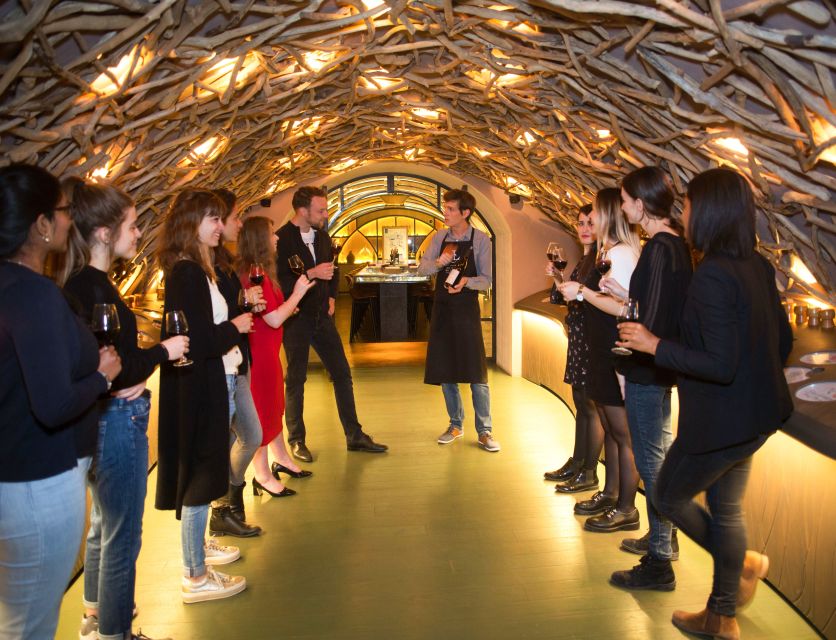
At the end of the tour, you get to choose and taste three wines. That choice is more than just a nice perk. It gives you control, and it helps you compare styles without feeling trapped with a single option.
The sommelier teaches tasting techniques during the process. You are guided through how to smell and taste, and the goal is to make the tasting feel more like analysis than guesswork. Based on guest feedback, guides also focus on how factors like terroir and fermentation can show up in the glass.
Wine lists are said to change every week, so you are not guaranteed the same set of grapes from one departure to the next. The upside is variety. The downside is that you should not book this expecting a specific bottle by name. Treat it like a rotating “lesson set,” and you will enjoy it more.
What makes the tastings feel worthwhile is that they are positioned as a conclusion to the learning trail. You have been nudged through the why behind wine. Then you use your senses to spot differences among the three wines. Even if you are not chasing knowledge for its own sake, you can leave with a clearer sense of what you like and why.
Some guests also talk about an upgraded or premium tasting option being worth it. I cannot promise what that means for your exact departure without checking your ticket details, but the general point is consistent: people feel the wine selection matches the teaching, rather than being an afterthought.
Finally, there is often mention of being able to buy bottles at the end. If you liked what you tasted, this gives you a way to bring part of the experience back to your hotel.
Why the Guides Make It Work, from JB to Lou to Pierre
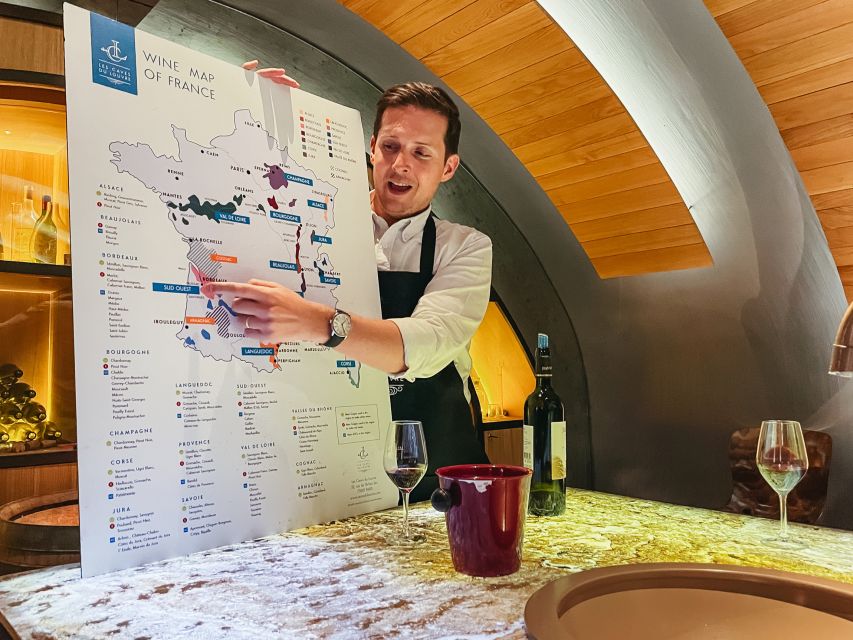
The tour lives or dies on delivery, and the feedback you have here is strongly guide-driven. Names that come up include JB, Pierre, Lou, Irwin, Justin, Clement, and Jean-Baptiste. What connects these stories is not just that the guide talks a lot. It is that the guides keep the mood light, while still giving real structure to the learning.
You will likely see the same teaching pattern again and again: short explanations tied to what you are doing right now. Guests describe guides as enthusiastic and friendly, and several mention humor and storytelling. That matters because wine education can feel serious and stiff. Here, it is built to be approachable, even if you do not know the difference between a grape variety and a wine region yet.
One guest shared a memorable analogy about aged trees having access to deeper soil. That kind of imagery is not random. It is exactly the sort of mental hook that helps you remember what terroir means in practical terms. You start to connect soil depth to flavor impressions, rather than treating terroir as a buzzword.
Another praised aspect is Q and A. With a small group format, you are more likely to get answers to the things you actually want to know, like what to look for on a French wine label or how to interpret aroma notes.
More wine tastings in Paris:
- Authentic Parisian Gourmet Food Tour with 10 Local Dishes & Wines
★ 5.0 · 4,754 reviews - Loire Valley Castles Day Trip from Paris with Complementary Wine
★ 4.5 · 3,907 reviews - Montmartre Hill French Gourmet Food and Wine Tasting Walking Tour
★ 5.0 · 2,588 reviews - Paris: Montmartre Cheese, Wine & Pastry Guided Walking Tour
★ 4.8 · 2,255 reviews
French Grapes and Wine Regions, Made Tangible in Stone Cellars
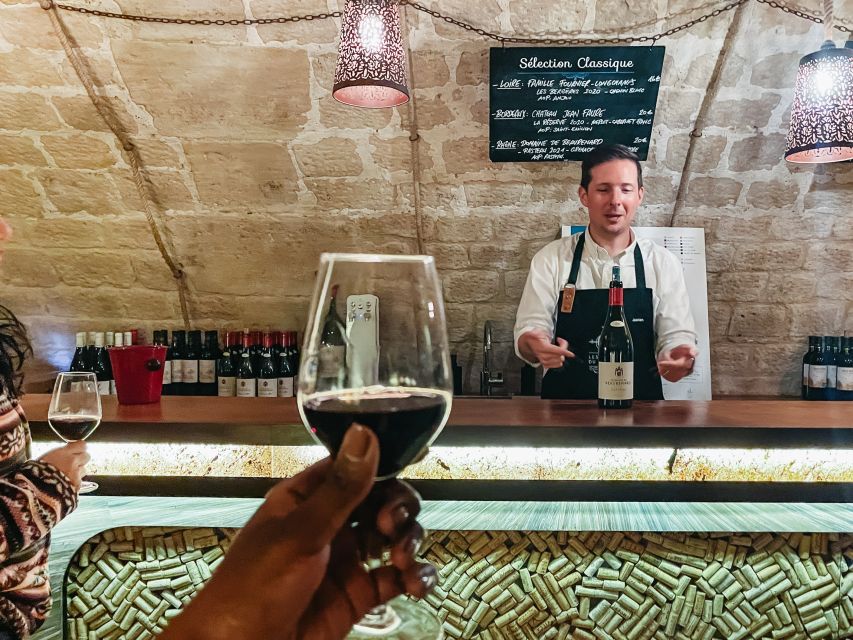
Wine can feel abstract when you first start learning. You see labels, you hear terms like terroir, and you wonder what any of it means beyond marketing. This tour helps because it treats French wine as a system.
You learn about different grapes, different regions, and how those choices relate to taste. You also get guided attention toward fermentation and other parts of the winemaking process. Guests specifically mention fermentation details, including yeasts, and they mention terroir as a theme you can taste.
That combination is powerful. Grapes explain the raw material. Regions explain the conditions. Fermentation explains what happens to transform grape to wine. Then the tastings show you the result.
For you, the practical payoff is this: you will likely be better at describing what you like and why. Even if you only absorb part of it, the sensory training gives you a better vocabulary in your own head. Instead of sipping and thinking, this is nice, you can start noticing patterns like acidity, fruit character, and how aromas evolve.
If you are the type who wants to return home and shop smarter, this is a good step. You are not just tasting. You are learning a method you can use later.
Who Should Book Les Caves du Louvre, and Who Should Skip
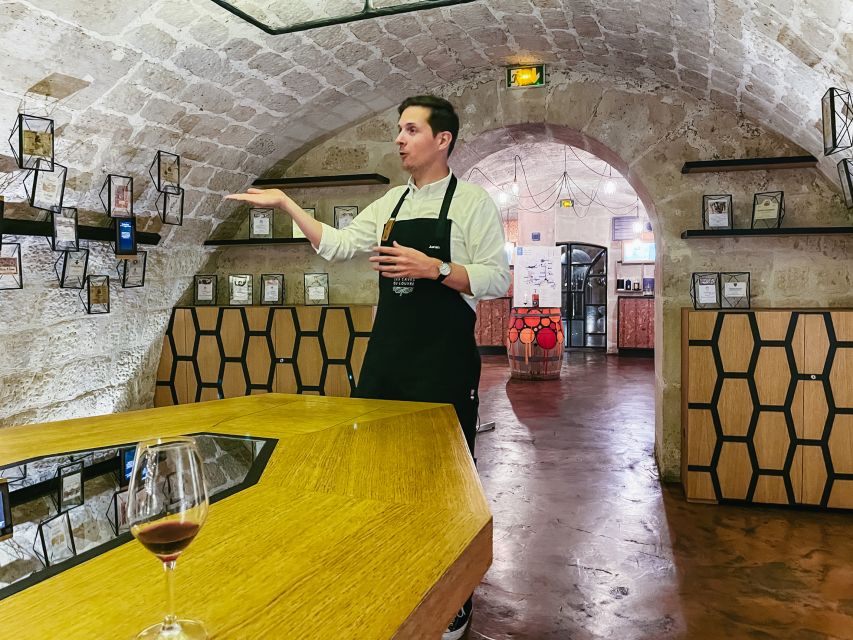
This experience is a strong fit if you want a fun, educational Paris stop that does not require prior wine knowledge. Guests repeatedly mention it being interesting even for people who do not know much about wine. The structure is interactive, and the pace keeps you from getting lost.
It also suits couples, friends, and solo travelers who want a break from the typical museum grind. Because it is near the Louvre, you can slot it in before or after other central sights. Several guests explicitly call out that timing as convenient, like exploring the area around the tour.
It is not a fit if you need accessible accommodations. It is not suitable for people with mobility impairments, and it is also not suitable for pregnant women. If you fall into either category, do not plan on this being a comfortable experience. Choose something else that fits your needs.
It is also not for children under 18. So keep it adult-focused.
Price and Value for a 1-Hour Wine Lesson
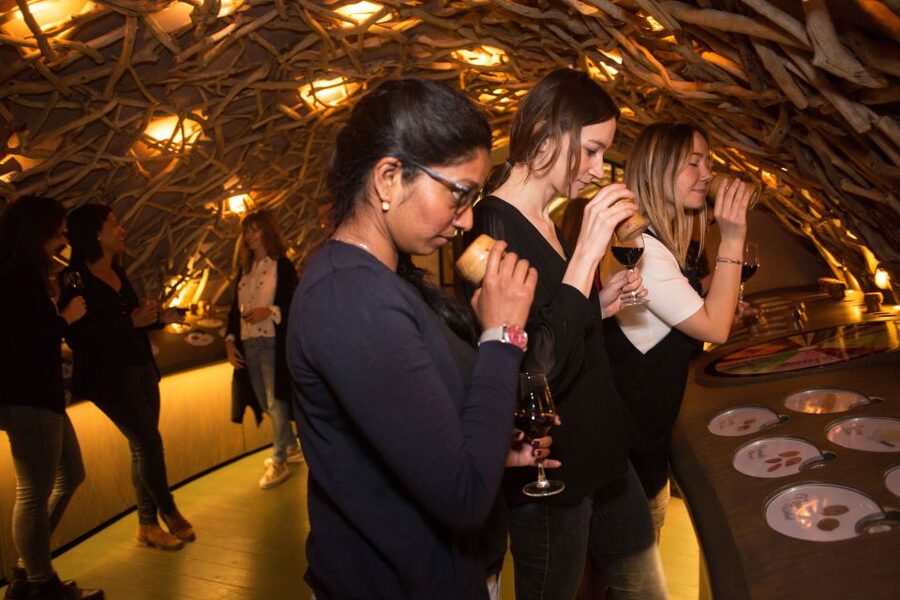
The price listed is $41 per person for a 1-hour guided experience with French wine tastings. Value in Paris is tricky because you can spend the same amount on things that give you memories but not much learning. This one gives you two tangible outputs: wine in your glass and technique in your head.
You are not just tasting random pours. You learn how wine is made, then you taste three wines of your choice with a sommelier teaching technique. Add in the sensory activities and the app-based interaction, and the price starts to make sense as “pay for a guided method,” not just “pay for alcohol.”
If you are a wine drinker, this is a particularly efficient deal because you will leave with a clearer sense of what to order next time. If you are not sure you like wine, the sensory approach can turn learning into something more playful, which helps you avoid the intimidation factor.
One more value point: people mention the location as perfect for pairing with other plans. That reduces “hidden costs” of planning, like adding a long transit trip just to do one thing.
You also get free cancellation up to 24 hours in advance for a full refund, so you can book without feeling locked in.
Should You Book This Paris Wine Cellar Tour?
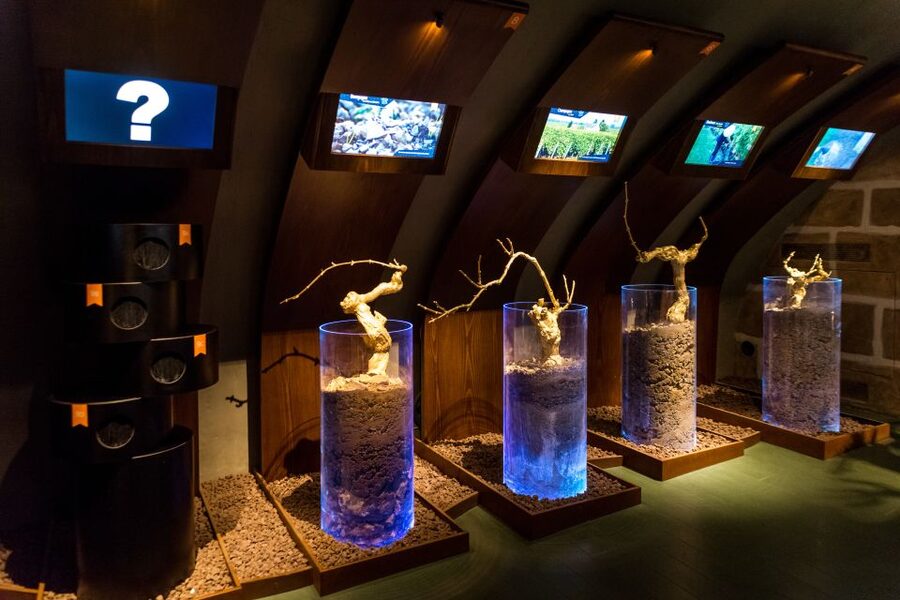
Yes, if you want a short, interactive French wine experience in the center of Paris. You get the setting, but you also get the structure, especially with the sensory stations, the interactive app, and the guided tasting where you pick three wines.
Book it if you like hands-on learning. The whole point is using your senses to understand wine making and tasting, not memorizing a list of facts.
Skip it if English-only is a problem for your group, or if mobility needs, pregnancy, or age limits apply. Also, if you only want casual sipping with zero instruction, this might feel a little too “lesson first, relax second.”
If you are building a well-rounded Louvre day, this is one of the better ways to add something different without dragging your schedule around the city.
FAQ
Is the tour in English only?
Yes. This guided tour is English only.
How long is the Les Caves du Louvre tour?
The duration is 1 hour.
Where do I meet for the tour?
The meeting point is 52, Rue de l’Arbre Sec, 75001 Paris.
How many wines do I taste, and can I choose them?
At the end of the tour, you choose and taste three wines. The sommelier teaches tasting techniques and explains nuances of French grapes. The wine list changes every week.
Is food included in the ticket?
No. Food is not included and may be purchased on site.
Who is this tour not suitable for?
It is not suitable for pregnant women, people with mobility impairments, and children under 18 years old.
More Wine Tours in Paris
- Paris: Moulin Rouge Cabaret Show Ticket with Champagne
★ 4.7 · 16,088 reviews - Paris: Paradis Latin Cabaret Show with Optional Champagne
★ 4.6 · 2,231 reviews - From Paris: Loire Valley Castles Day Trip With Wine Tasting
★ 4.6 · 1,727 reviews - Paris 3-Courses Gourmet Dinner Seine River Cruise with Champagne
★ 4.0 · 1,659 reviews
Recently added around Paris
- Paris: Louvre Masterpieces Private Tour with Reserved Entry★ 4.3 · 144 reviews
- Paris: Living Cheese Museum Guided Tour with Cheese Tasting★ 4.8 · 182 reviews
- Paris Louvre Exclusive Semi Private Guided Tour Max 6 People★ 4.6 · 28 reviews
- Paris: Louvre Guided Tour with Skip-the-Line Entry Tickets★ 3.5 · 73 reviews
- Paris: Live Guided Cruise with Crepe and Soft Drink★ 3.9 · 14 reviews
- Paris Le Marais Walking Tour: Small Group Experience★ 5.0 · 7 reviews
- Paris: Lemon Tart Baking Class with a Pastry Chef★ 5.0 · 4 reviews
- Paris Le Marais Food Tour: Full Traditional French Feast★ 4.8 · 119 reviews
Louvre Tours & Tickets, compared.

Louvre Guided Tour with Reserved Access & Boat Cruise
Read our review →
Louvre Museum Masterpieces Guided Tour with Access
Read our review →
Louvre Museum Entry Ticket With Host and River Cruise
Read our review →
Priority Access Louvre with Host -Direct to Mona Lisa
Read our review →
Mona Lisa & Louvre Masterpieces Tour with Reserved Access
Read our review →
Louvre Museum – Exclusive Guided Tour (Entry Included)
Read our review →
Louvre Reserved Ticket and River Cruise Combo
Read our review →Browse the lists this tour appears in