
Reviewed · NORMANDY & D-DAY TOURS
Discover Caen like never before: guided tours of history and secrets!
Caen is one of those Normandy cities where the past keeps showing up in street corners, church stones, and even in the scars from WWII. This tour is interesting because it turns the historic center into a story you can actually follow, with Abbaye aux Hommes and fun facts about Caen as your anchors. I like that it blends big monuments with small, human details, and I like that the pace stays friendly instead of rushed. The one drawback to keep in mind is that it is not suitable for people with mobility impairments, wheelchair users, visually impaired people, or people over 95.
The tour lasts about 2 hours and it is set up for a private group. You start at Place Courtonne Caen, then you walk through Caen’s highlights, including the Château de Caen area and the market life around Place Saint-Sauveur. You can do it in French or English, depending on your needs.
One more practical note, the guide reaches out by telephone to confirm the time and place, and he is easy to spot in a Caen-colored sweater. You will want comfortable shoes, because you are doing a real walking tour, not a museum-only stroll.
Key highlights at a glance
- Abbaye aux Hommes: William the Conqueror’s Romanesque masterpiece
- Abbaye aux Dames: architecture in a greener setting
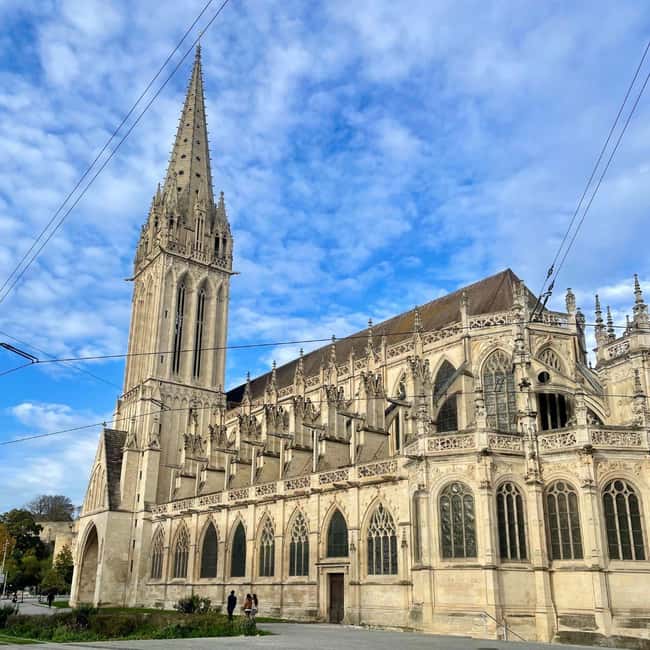
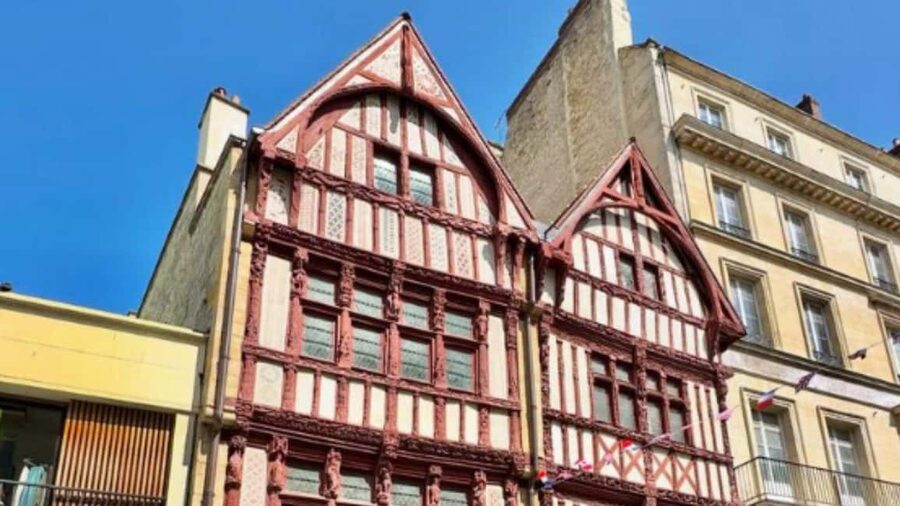
- Medieval streets: cobbles and half-timbered houses with sculpted details
- Place Saint-Sauveur: a market-and-cafés stop that feels local
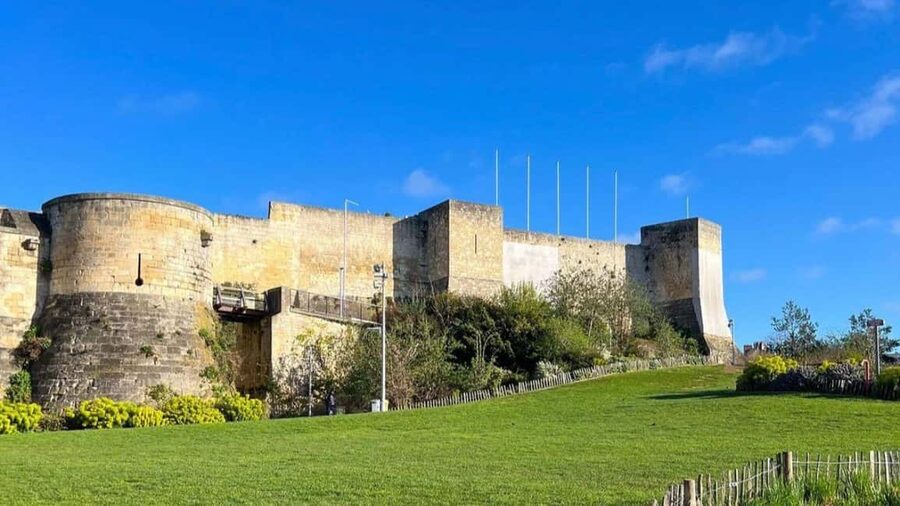
- Château de Caen: military history with wide city views
- Thomas-style guiding: maps and old-city photos, plus personal touches like warm coffee for viewpoints
Why Caen’s Hundred Spires fits a 2-hour guided tour

Caen can feel like two cities at once. You have the medieval identity, the kind you see in abbeys, stonework, and half-timber facades. Then you have the modern rebuild after WWII, which changes the way the city reads street to street. A 2-hour guided tour is a smart window for this because you get the big story without losing energy, and you still finish near the center where you can keep exploring on your own.
What makes this experience work is how it connects monuments to names and events you will actually remember. You start with the medieval power centers, then you move into the older streets, then you end in the zone of military history. That mix matters. If you only visit abbeys, you miss the everyday medieval city. If you only wander streets, you miss the why behind the stones.
And yes, it helps that the guide is clearly proud of Caen. In the strongest reviews, guides like Thomas are described as intelligent and well prepared, with photos of the old city and maps showing how things used to be. That sort of setup is not fluff. It helps you picture the city before and after major changes, so the present-day streets make sense instead of just looking pretty.
More Normandy and D-Day trips:
- Normandy D-Day Sites & Cemetery Day Trip from Paris with Lunch
★ 5.0 · 6,877 reviews - Normandy D-Day Small-Group Day Trip with Omaha Beach, Cemetery & Cider Tasting
★ 5.0 · 2,786 reviews - Normandy D-Day Beaches and American Cemetery Day Trip from Paris
★ 4.5 · 2,673 reviews
Getting oriented in Place Courtonne Caen, then walking the real center
Your tour starts at Place Courtonne Caen and ends back at the same meeting point. That round trip is practical. You do not have to worry about transportation to another drop-off area, and you can plan your next stop right after the tour.
After you meet your guide, you get the first layer of orientation: where the historic heart sits, which streets are worth lingering on, and how the medieval landmarks connect. The guide also brings the tour down to the street level. You will hear stories tied to specific places, not just generic background.
You should expect a walking route through cobbled sections and older streets. Even though the tour is only around 2 hours, you will still want comfortable shoes. The operator also lists sports or hiking shoes as fine options, which tells you to take the ground underfoot seriously.
Abbaye aux Hommes: William the Conqueror’s stone story

One of the most compelling stops is Abbaye aux Hommes. This abbey is Romanesque and it is directly linked to William the Conqueror, which gives you a clear reason this place matters beyond being pretty. When you stand there with a guide, the style of the architecture starts to feel connected to the political weight of the era.
Here is the payoff for your trip planning. Many visitors walk past abbeys like they are isolated monuments. On this tour, you get the city’s medieval logic. William the Conqueror’s mark on Caen is not treated like a trivia fact, it is treated like a cause-and-effect thread. That is why this stop is so central for a first visit.
You also get a better sense of why Caen earned its reputation for religious and political authority in the medieval period. Once you understand that, the rest of the walk feels less random, including the half-timbered street facades you see later.
If you care about WWII, this still matters. Historical layers overlap in Caen. Learning how the city formed helps you understand what changed after the destruction and what rebuilt form.
Abbaye aux Dames: architecture you notice more slowly
After the bigger, more power-linked feeling of Abbaye aux Hommes, Abbaye aux Dames shifts the mood. This stop is described as an architectural gem set in a greener setting. That matters on a tour like this because it changes your pace. You get a moment where you can look longer at proportions, details, and how the complex sits within its surroundings.
This is the kind of place where a guide helps you slow down without turning the tour into a standstill. You get the architectural story in a way that makes you look at shapes and stonework instead of just reading a plaque.
And this stop balances the theme of the walk. If one abbey anchors you to William the Conqueror, the other helps you see how Caen’s religious identity played out across different institutions, spaces, and eras. The tour keeps those points clear so you do not leave with a list of buildings. You leave with connections.
More history tours in Normandy:
- Mont Saint Michel: Village History and Legends Walking Tour
★ 4.8 · 96 reviews - Normandy: Explore The Historical sites of D-Day
★ 5.0 · 15 reviews - Paris: Louvre Museum Entry with History of Mona Lisa
★ 3.9 · 2,823 reviews - Paris: Dark History and Ghostly Guided Walking Tour
★ 4.7 · 1,000 reviews
Half-timbered streets and cobbles: the medieval city in miniature
Between the abbeys, the tour turns into a walk through cobbled streets with half-timbered houses. This is one of the best parts for visitors who like real texture. The facades have sculpted details, and a good guide points out what you would otherwise miss.
What I like about this section for your experience is the way it brings daily life into the same frame as grand monuments. Those carved elements can tell you about craftsmen, merchants, and the people who helped make the town function. That does not just make photos look better. It helps you understand why Caen’s center feels so readable even today.
If you enjoy strolling, this is where you will probably slow down on your own. The tour gives you permission to look closely. After that, you can decide what to revisit. The half-timber streets are a natural place to do it.
Place Saint-Sauveur: a market-and-cafés stop that feels like today

Place Saint-Sauveur is famous for its market and cafés. This is not just a “pretty square” moment. It is where you get a sense of Caen as a working city, not a set of monuments.
On a short tour, this kind of stop is valuable because it gives you something to use later. You can use what you learn here to plan a snack, coffee, or a quick sit-down during the rest of your day. You also get an easy contrast to the abbeys and the castle, which can start to blur together if you do not get a modern anchor.
This is one of those stops that makes the tour feel human. You are not only learning why Caen used to matter, you are also seeing how the city keeps living.
Château de Caen: military history and a viewpoint worth bundling up for

The Château de Caen is an imposing witness to Caen’s military history. Even if you do not consider yourself a military-history fan, the location helps. Castles and fortifications are built to shape how the city is understood, and on this tour you get that context.
One of the most memorable practical details mentioned in top reviews is that Thomas brought a thermos of coffee to warm people up while looking out over the streets of Caen. That is the kind of small, thoughtful touch that turns a viewpoint into an experience.
Another review detail I love for you: the guide is described as prepared with photos of the old city and maps showing how Caen once was. At a castle viewpoint, those materials help you connect past and present quickly. You can look at the city layout and understand why certain areas matter historically, instead of just guessing.
If you are coming during cool weather, plan on bundling up a little here. Viewpoints tend to be breezier, and a hot drink can go a long way.
The WWII rebuilding story: why Caen feels resilient, not just old
A big theme of the tour is Caen’s resilience after the Second World War. The guide shares the reality that the city was almost entirely rebuilt after the destruction. That line does more than add a dramatic historical note. It changes how you read the city.
You might notice how certain streets and building styles shift in character. You might wonder why something looks older in one direction and newer in another. The WWII context gives you a reason, and it helps you stop treating the city like a single uniform time period.
In other words, you leave with better eyes. You do not just collect landmarks, you understand why Caen looks the way it does today.
How the guide style makes the difference: Thomas, maps, and stories you can repeat
The strongest reviews emphasize the guide more than anything else. People describe Thomas as friendly, knowledgeable, and clearly proud of his city. That pride matters, because it shows up in how he tells stories, not just in the facts.
A few practical traits stand out:
- He is described as extremely prepared, with photos of the old city and maps showing how it used to look.
- The tour does not feel rushed, it feels like a local friend sharing what to notice.
- He gives personalized recommendations for activities in the area, which can help you plan the rest of your day.
That last point is quietly valuable for first-timers. You might come thinking you only need a quick overview. You leave with next-step ideas that fit your interests, whether you want more history, a slower café break, or another walking loop.
Also, the tour is private group. That typically means you can ask questions without feeling like you are waiting your turn.
Languages, pace, and who this tour suits best
This tour runs in French or English. If you care about being able to ask follow-up questions, having a guide who can talk comfortably in your language is a real quality-of-life upgrade.
Time-wise, plan for about 2 hours. That is long enough to see multiple anchors, but short enough to keep energy for lunch and more exploration afterward. The route is focused on the historic heart, so it works well even if Caen is one stop on a bigger Normandy itinerary.
Who it suits best:
- First-time visitors who want the medieval core without missing the key connections
- History-minded travelers who like architecture and place-based stories
- Families, since the pace is described as friendly and not rushed
- Anyone who wants practical recommendations at the end
Who should think twice:
- People with mobility impairments or wheelchair users, since it is not suitable
- Visually impaired people, since it is not suitable
- People over 95, since it is not suitable
- Anyone who struggles with sustained walking on cobbled streets
Price and value, $44 for a guided walk that saves you time and confusion
At $44 per person for around 2 hours, this is priced like a focused guided experience, not a free-for-all city walk. The value comes from what you get with a good guide: context, names tied to places, and the ability to connect medieval history to what you see today.
If you self-guide Caen, you can absolutely see the abbeys and walk the streets. But you might miss why the abbeys matter to Caen’s identity, and you might not connect WWII rebuilding to the way the city reads in modern form. Paying for the guide is basically paying for clarity.
Also, top reviews highlight personal touches like maps and old-city photos, plus coffee at the castle viewpoint. Those details cost time and effort to prepare, and they are part of why the tour earns a high rating.
So for value, I look at this way: $44 is a small cost compared to the cost of wandering for an hour trying to piece together the story from signs and guidebooks.
Quick practical tips before you go
Here are a few things that will help you enjoy the tour without thinking about logistics:
- Wear comfortable shoes for cobbles and older streets.
- Bring a warm layer if the weather is cool, especially near viewpoints like the château area.
- Expect real walking. This is not a sit-down lecture.
- Plan to ask questions. Since it is a private group, you can get answers tuned to what you care about.
And when your guide calls, confirm the exact time and meeting details. It makes the start smoother, and you avoid that last-minute scramble that can cut into sightseeing time.
Should you book this Caen guided tour?
Book it if you want a guided plan that actually makes Caen feel coherent. The abbeys, medieval streets, Place Saint-Sauveur, and the château viewpoint are a strong set of anchors, and the WWII rebuilding story ties them into one clear picture. If you like learning from a guide who brings maps, old photos, and a warm, local approach, this is the kind of tour that can turn a half day into a highlight.
Skip it, or at least reconsider, if walking is difficult for you. The operator states it is not suitable for mobility impairments, wheelchairs, visual impairments, and people over 95. If you fit the walking profile, though, this is a high-value way to get your bearings and learn what to notice as you continue exploring Caen on your own.
Recently added around Normandy
- Padel Deauville★ 4.6 · 5 reviews
- From Bayeux: Omaha Beach, Cemetery, and Pointe du Hoc Tour★ 4.9 · 33 reviews
- Official Rouen City Pass 24h, 48h, 72h★ 3.1 · 8 reviews
- Official English 2hrs Guided Tour of the Must-Sees of Rouen★ 4.6 · 21 reviews
- Normandy World War II Private 2 Hours Sidecar Tour Bayeux★ 5.0 · 35 reviews
- Bayeux: Normandy WWII Private Half-day Sidecar Tour★ 5.0 · 11 reviews
- Normandy DDay Beaches Tours all year round★ 4.8 · 11 reviews
- Normandy: Explore The Historical sites of D-Day★ 5.0 · 15 reviews
Normandy & D-Day Tours, compared.

Normandy D-Day Sites & Cemetery Day Trip from Paris with Lunch
Read our review →
Normandy D-Day Small-Group Day Trip with Omaha Beach, Cemetery & Cider Tasting
Read our review →
Normandy D-Day Beaches and American Cemetery Day Trip from Paris
Read our review →
Normandy American D-Day Beaches Full Day Tour from Bayeux
Read our review →
Normandy American D-Day Experience – Group tour from Bayeux
Read our review →
Normandy Beaches Half-Day Afternoon Trip from Bayeux (A2)
Read our review →

Omaha Beach D-Day Experience – Afternoon group tour from Bayeux
Read our review →Browse the lists this tour appears in