
Reviewed · 2-HOUR EXPERIENCES
Paris: 2-Hour Passages Private City Tour in German
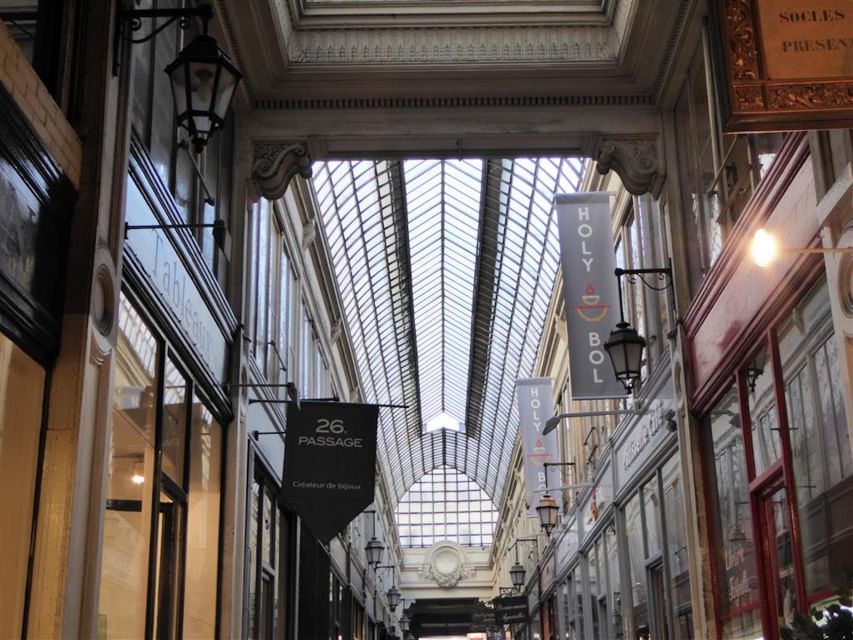
Paris has big monuments. This is different. This 2-hour private tour focuses on the passages tucked into central streets, places most people miss because they do not sit like obvious sights. You go from modern Paris into the early 1800s mindset, when these covered walkways solved real problems, and they were not built to look trendy for tourists.
Two things I really like about it: the German-speaking private guide who explains the passages in clear, connected stories, and the fact that the tour is short enough to feel focused, not dragged out. One drawback to consider: it is a passage walk, so you should be comfortable with compact spaces and moving between entrances on foot in the city center.
Key Highlights You Can Actually Plan Around
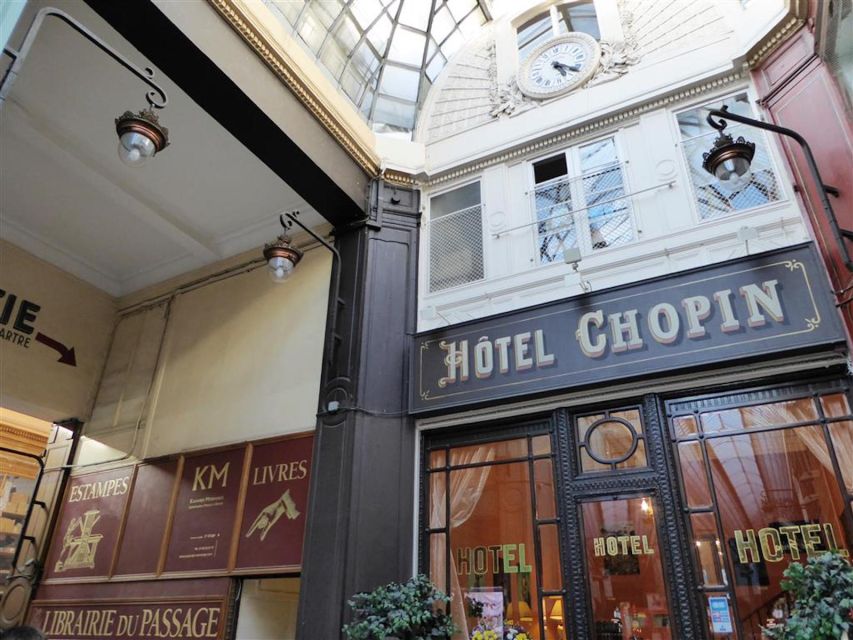
- Hidden passages in the heart of Paris, found by guide expertise, not by luck
- 19th-century setting, explained as a practical answer to the streets of the time
- Passage Verdeau and Passage Jouffroy, two different stops that show how these spaces work
- Passage des Panoramas plus Grands Boulevards, a smart link from passages to bigger streets
- Palais-Royal finish, so you end near a lively area you can explore afterward
- Top-rated German guiding, with people praising the amount of information and the friendly tone, including comments about guide Solene
The Paris Passages: Small Footsteps, Big “How Did This Happen?” Energy
The first thing to understand is that Paris passages were never just decoration. They were a response. In the early 1800s, Paris had the reputation for dirty streets, and that reality shaped daily life. People wanted routes that were easier to navigate. Covered corridors offered shelter, a calmer walking experience, and a kind of protected street energy.
That is why these passages feel like time travel even though you are standing in the middle of today’s city. You are not just looking at pretty architecture. You are seeing an old solution to a real problem, and then watching how that solution evolved over time. Think of them as forerunners to later retail spaces, like the grand department store idea that came later.
On this tour, the guide keeps that story practical. You learn why the passages exist, why they were built where they were, and why they became so appealing for a short period instead of staying forever in the same role. If you love Paris for the “reasons behind the scene,” you will likely enjoy this approach a lot.
A few more Paris options to weigh up
- Eiffel Tower Summit Option with Seine River Cruise and City Tour
★ 3.5 · 2,176 reviews - Paris in a Day: Louvre or Orsay, Eiffel Tower, City Walk & Cruise
★ 5.0 · 1,956 reviews - Paris: City Highlights Bike Tour
★ 4.7 · 1,835 reviews
Where You Start: Le Peletier, Metro Line 7, and the Easy Meet-Up
Your meeting point is Metro Le Peletier on Line 7. Look for your guide holding a HelpTourists bag. That matters more than you might think. With small private groups and tight timing, a clear meeting spot helps you avoid the awkward hunt on a busy street.
Because the tour is 2 hours, you should treat it like a focused walking circuit. You will want shoes that handle city sidewalks and quick turns. Also, plan to arrive a few minutes early so you can start calmly, not rushing through your photos or questions.
The tour runs Monday to Saturday. So if you are traveling through Sunday, you will need a different plan for this specific experience.
Passage Verdeau: Your First Lesson in How These Spaces Work
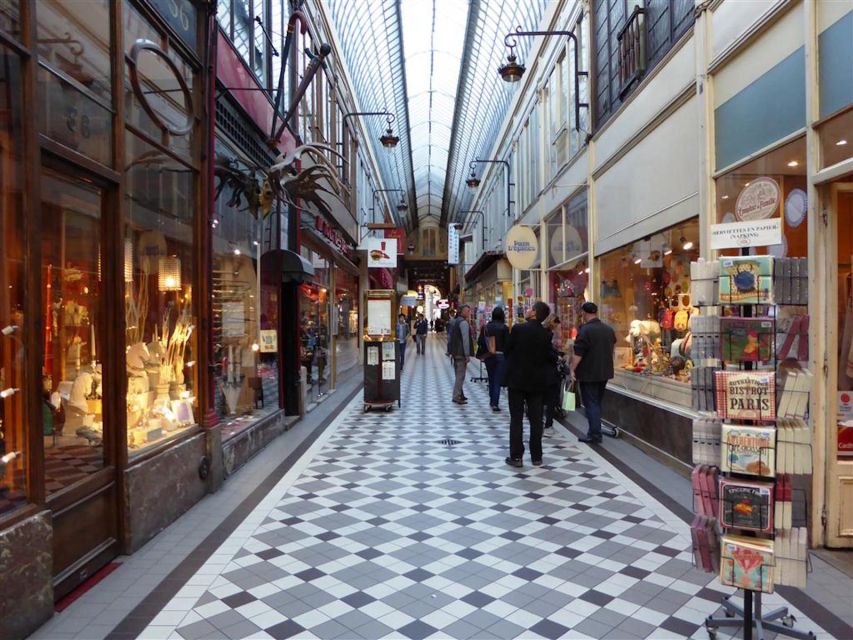
Passage Verdeau is where the tour starts shaping your perspective. This is your entry into the idea that passages are designed to move you through Paris without exposing you fully to the street conditions around you.
When you arrive at a passage entrance, take a moment to look at the transition. From open boulevard energy to a corridor that feels more enclosed. That change is the point. These passages were built to guide foot traffic in a protected way, and the guide will usually explain how that protection affected what people did there, and what businesses and visitors expected from such a space.
What I like about starting here is that it gives you a baseline. By the time you reach the next passage, you can compare how each one feels and why. You start noticing details faster because you already understand what you are supposed to look for.
A small consideration: because passages are compact, you may not get huge wide-angle shots like you would at a major plaza. Your best photos tend to be framed shots, where the corridor itself becomes the subject.
Passage Jouffroy: When Architecture Becomes a Story, Not Just a View
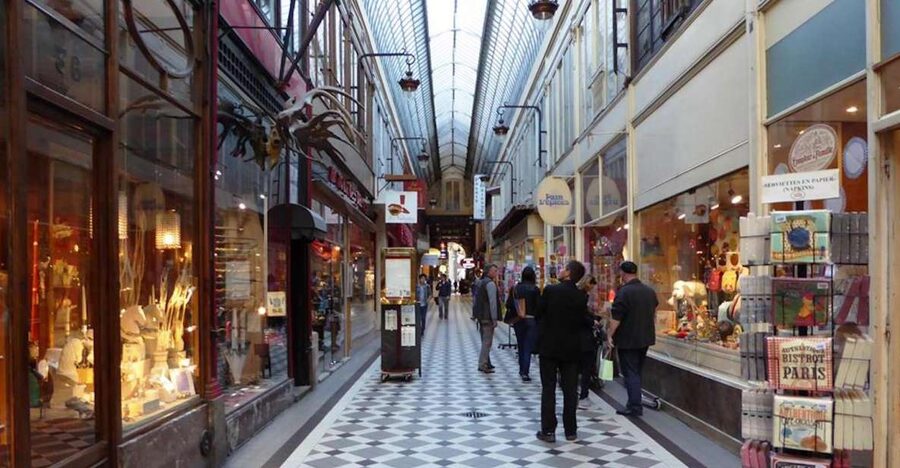
Next comes Passage Jouffroy. This stop is where many people start to feel the “19th century” mood in a stronger way. Passage Jouffroy is part of the reason these tours work, because the space can feel theatrical without trying too hard.
A good guide does more than describe what you see. They connect the dots. Here, you learn how passages fit into the culture of the time, and why people were drawn to the idea of a covered route that still felt like part of the city. The guide approach on this tour is built for that: you are not being bombarded with random facts. You are getting explanations tied to what you can actually observe in front of you.
I also appreciate that the tour stays in German. If you are comfortable with German, it is easier to absorb the nuances, like cause and effect in the city’s evolution, instead of relying on a translation that can lose details.
One practical tip for this stop: slow down. In passages, your eyes can jump from decorative elements to the floor and back again. If you rush, you miss the “why this place feels like a time capsule” feeling.
Still in Paris, but a different sort of outing:
- Paris: Louvre Museum Timed-Entrance Ticket
★ 4.6 · 71,977 reviews - Disneyland® Paris 1-Day Ticket
★ 4.6 · 49,412 reviews - Paris: Versailles Palace and Gardens Full Access Ticket
★ 4.6 · 41,579 reviews - Paris: Evening River Cruise with Music
★ 4.4 · 22,721 reviews
Passage des Panoramas and the Grands Boulevards Connection
Then you head to Passage des Panoramas, and after that you move toward Grands Boulevards. This is a smart sequence because it creates a contrast. Passages are enclosed and controlled. Boulevards are open, louder, and more direct in their city rhythm.
That shift helps you understand the role the passages played. They were not meant to replace the city. They were a specific alternative route for specific conditions. When you connect this with what you learn about the time period, the story becomes clearer: people wanted better walking experiences than the street offered, and passages provided it.
What you gain here is context. A lot of Paris sightseeing is just “here is what exists.” This tour adds “here is why it exists,” and that is what makes it useful even if you have been to Paris before.
If you are planning your day, this middle portion is also when energy levels matter. You are moving between spaces, so keep your water situation sensible. The tour is short, but city walking adds up.
Palais-Royal Quarter: Why the Ending Matters
The itinerary finishes in the Palais-Royal quarter and ends at Palais-Royal. I like endings like this because it gives you options right away. You have a well-known area to orient yourself in, plus nearby streets where you can keep exploring without needing to return to the exact starting point.
Palais-Royal also fits the passage story in a subtle way. It is the kind of place where the city’s layers show up, from older Paris patterns to modern visitor flow. Ending here makes the tour feel like more than a standalone walk. It becomes part of a larger Paris day.
When the tour ends, you can use what you learned to spot other covered corridors or passage-style urban moments on your own. Even if you do not chase extra locations, you will likely notice details differently while you walk afterward, especially how Paris organizes pedestrian movement through different types of spaces.
German Private Guide Value: What You Get in 2 Hours
This is a private group tour with a German-speaking guide. That combination changes the experience. In a group setting, you often get fast answers and generic explanations. In a private format, the guide can keep the pacing steady for your questions and curiosity level.
The feedback around the tour highlights a few repeat themes: a guide who brings lots of information, a tour duration that feels well balanced, and a friendly tone. One guide name that stands out is Solene, with comments pointing to her friendliness and the way she explains interesting details and the connections between them.
Also, there is something genuinely valuable in learning about passages through a guided narrative, not just through signs or guidebooks. Passage interiors can look similar at first glance. You need someone to tell you what differentiates them and why they were built the way they were.
If you are the type who likes to understand a place in context, this tour is a good match. You walk away not only with photos, but with a better mental map of how Paris functioned when it was dirtier and less polished than it is today.
Price and Value: Is $94 Worth It?
The price is $94 per person for a 2-hour private tour in German. On the face of it, that sounds like a premium compared with standard group walking tours.
But here is the practical value equation I would use. You are paying for:
- Access to passages that are not usually obvious on your own.
- A guide who can explain why these spaces exist, including the story of them as a practical answer to the streets of the era.
- A private format, which usually means better pacing and less waiting around while everyone gathers.
If you are traveling with someone else who also wants a guided experience, the per-person cost becomes easier to justify because you get a tailored tour instead of an assembly-line overview.
If you are traveling solo and you love independent exploration, you might decide to skip this one and just wander. But if your goal is to see passages with meaning and to do it efficiently, the $94 price starts to make sense.
Best For: Who Should Choose This Tour
This tour suits you if:
- You want to see Paris passages and understand what makes them special beyond aesthetics.
- You like walking tours that teach you the “why,” not just the “what.”
- You are comfortable with German, since the tour is in German.
- You have limited time and want something that is not the same as every landmark circuit.
It might not be the best fit if:
- You want a very large, open-air sightseeing route. Passages are more compact and sheltered.
- You expect shopping arcade vibes as the main focus. These passages have a different historical origin here, tied to practical needs of the time.
Practical Planning Tips Before You Go
A few simple things will make your 2 hours smoother:
- Wear comfortable shoes, passages and their entrances are tighter and require quick footing.
- Bring a light layer if weather is changing, passage entrances can feel cooler than open streets.
- Come with a curious mindset. The tour works best when you are ready for explanations, not just photos.
One more smart planning move: after the tour, give yourself time near Palais-Royal to continue wandering. Ending there is helpful because you can pivot into other stops without major transit.
Should You Book This Passages Tour?
Yes, if you want something different from the usual Paris checklist and you like guided context. This tour is especially worth it for the combination of hidden passages, a German-speaking private guide, and a story that takes you back to the early 19th century, where the passages were responses to real street conditions, not just fashionable interiors.
If you mainly want major monuments or you prefer to figure city details out alone, you may feel the cost and private format is more than you need. But if you care about understanding Paris in layers, this is one of the more efficient ways to do it in a short time window.
FAQ
What language is the tour guide speaking?
The tour is conducted in German with a German-speaking guide.
How long is the Paris passages private city tour?
It lasts 2 hours.
Where do I meet the guide?
Meet at Metro station Le Peletier (Line 7). Look for your guide with a HelpTourists bag.
Is this a private tour or a group tour?
It is a private group tour.
What does the tour include?
It includes a 2-hour private city tour in German and a German-speaking guide.
What is not included?
It does not include tip, entrance fees, pick-up from your hotel, or food.
What days does the tour run?
The tour runs Monday to Saturday.
Can I cancel and get a full refund?
Yes. You can cancel up to 24 hours in advance for a full refund.
Recently added around Paris
- Paris: Louvre Museum Timed Entry Ticket & Pop Culture Tour★ 4.6 · 26 reviews
- Paris: Louvre Must-See Tour with Reserved Entry Ticket★ 4.9 · 164 reviews
- Paris: Louvre photoshoot or Seine bridges Eiffel Tower walk★ 5.0 · 49 reviews
- Louvre & Mona Lisa Morning Tour with Reserved Access★ 4.0 · 15 reviews
- Paris: Louvre Museum Skip-the-Line Tickets for Monalisa★ 3.0 · 42 reviews
- Paris: Louvre Museum Ticket with Optional Hosted★ 3.1 · 89 reviews
- Paris: Louvre Museum and Orsay Museum Guided Tour★ 5.0 · 6 reviews
- Paris: Louvre Museum Mona Lisa First Viewing Semi-Private★ 4.2 · 21 reviews
2-Hour Experiences, compared.
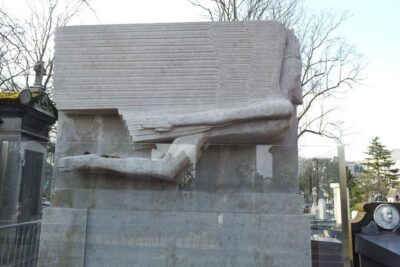
The Père Lachaise Cemetery: Guided 2-Hour Small-Group Tour
Read our review →
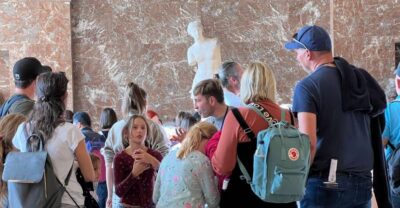
Paris Louvre: 2-Hour Private Tour for Groups or Families
Read our review →

2-hour tour of the D-Day beaches, by vintage sidecar
Read our review →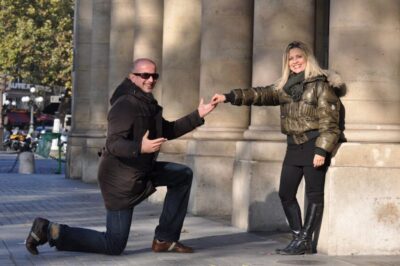
Paris 2-Hour Private Walking Tour with a Photographer
Read our review →

Normandy World War II Private 2 Hours Sidecar Tour Bayeux
Read our review →Browse the lists this tour appears in