
Reviewed · PARIS
Sports, fun and educational discovery of Paris
A running tour can sound like a gimmick, but this one is built for fun, motion, and learning at the same time. You cover a lot of famous Paris in a few hours, yet you still get real explanations at each stop instead of just jogging past stonework.
I especially like that it is private for your party, so the guide can match your pace and interests. I also love the hassle-free pickup from your hotel or apartment, which means you start running fast and stop wasting time finding a meeting point.
The one real consideration is that you are moving the whole time. The tour is for people with moderate physical fitness, and it is a run, not a slow stroll, so you should be comfortable with that rhythm.
Key points to know before you lace up
- Private, exclusively for your party, so your questions and pace are part of the plan
- Hotel or apartment pickup anywhere in Paris keeps the logistics simple
- Photo support during the run, with photos sent afterward via Dropbox
- Most stops are outside only, with limited inside visits depending on conditions at le Petit Palais
- A route shaped by your time and location, so you might see classic center-city highlights and nearby areas like Latin Quarter
Paris Running Tours: a smart way to see the city on your feet
If you like your travel with a little structure, this is a strong option. You get a guided path through some of the most recognizable parts of Paris, plus the kind of on-the-ground context that makes landmarks feel less like postcard props.
I like tours that help you understand what you are seeing, not just point at it. This one does that while you are running, and that matters because you are less tempted to zone out when everything around you is moving.
You should also know what kind of day this is. This is not a museum marathon. It is a moving, outdoor history lesson, with quick stops for photos and explanations, then back into a comfortable pace.
Other Paris bookings worth comparing before you pick:
- Paris: Louvre Museum Timed-Entrance Ticket
★ 4.6 · 71,977 reviews - Disneyland® Paris 1-Day Ticket
★ 4.6 · 49,412 reviews - Paris: Versailles Palace and Gardens Full Access Ticket
★ 4.6 · 41,579 reviews
Pickup from your doorstep, so you start sightseeing immediately
One of the easiest wins is the pickup from inside Paris. You meet the team at your hotel lobby or at the bottom of your building if you are in an apartment. That sounds small, but it changes the whole experience because you do not burn your limited time figuring out transit or walking across half the city to find the group.
The tour also runs Monday through Sunday from 5:00 AM to 8:00 PM, so you can often match it to your energy level. Morning usually means cooler air and easier running. Later in the day can be better for views, but heat can make any run feel longer.
This is a mobile ticket experience, so you are not hunting for paper. You just have it on your phone and go.
The core idea: landmark stops plus a real-running pace
The format is simple: short stops where the guide explains what you are looking at, then a run segment that connects the dots. You move between areas like a fast walking tour, but with enough jogging to feel like you actually did something active.
That also helps you see Paris differently. When you run, you naturally cover more ground, so places that would be far apart on a normal walking day feel closer together.
Fitness note: the tour asks for moderate physical fitness. If you are brand new to running, you might still manage it if your guide keeps it easy. If you hate running even at a gentle pace, this may not be your day.
Louvre Museum to Tuileries: start with power, then flow into parks
You kick off with the Louvre Museum area. Even without a full inside visit, you learn the key story beats tied to the museum and you get pointed at some nice passages and courtyards you might otherwise miss.
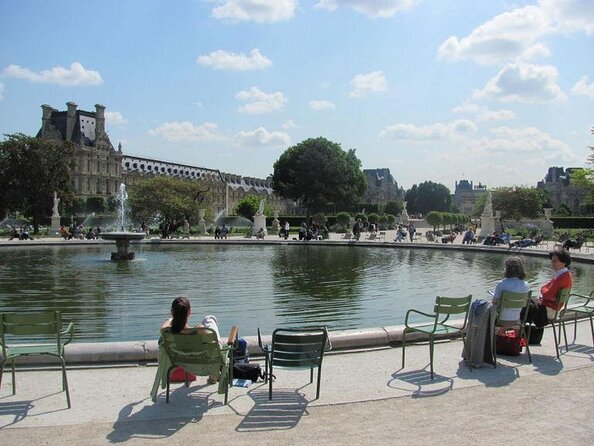
Then you move into the Jardin des Tuileries, where the atmosphere shifts from grand museum architecture into greenery. This is a great transition because it gives you a change of pace, still guided, but more open-air.
Why these two stops work well at the start: they set a baseline for the rest of the day. You are looking at Paris through layers, museum power, then garden calm.
One small caution: because this is an outdoor running format, you are mostly seeing sights from the outside and at select viewpoints. If you were hoping for a deep inside museum tour, you will want a different kind of day.
Still in Paris, but a different sort of outing:
- Paris: Evening River Cruise with Music
★ 4.4 · 22,721 reviews - Paris: Eiffel Tower Entry Ticket with Optional Summit Access
★ 4.4 · 20,035 reviews - Paris: Eiffel Tower Summit or Second Floor Access
★ 4.3 · 17,248 reviews - Paris: Louvre Guided Tour with Reserved Access & Boat Cruise
★ 4.3 · 16,353 reviews
Place de la Concorde and Palais Garnier: big squares and 19th-century drama
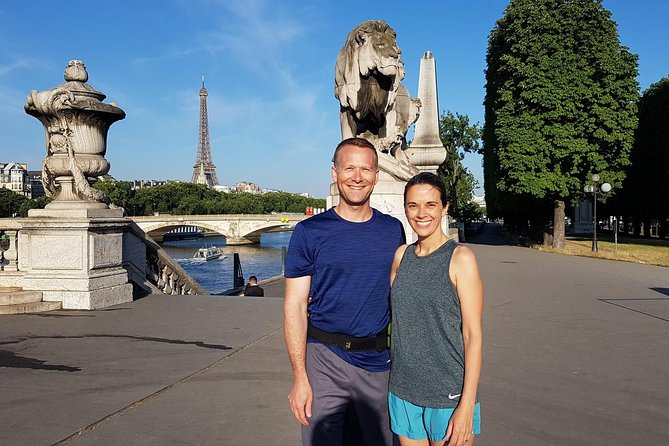
Next comes Place de la Concorde, a square with a lot of stories attached to it. You get a guided explanation of why it became one of the most important squares in Paris, plus time for pictures in a place that basically demands camera time.
After that you hit Palais Garnier, also known for the Opera. You get the view cues that matter, plus guidance on the big changes made during the 19th century. This stop helps you connect the city’s architecture with the eras that shaped it.
Here is a practical tip mindset: when you are running through Paris, you will not remember every fact unless you hear it attached to a visual. These two stops are designed for that. Square first, then building. That order makes the “why” stick.
The river run that strings everything together
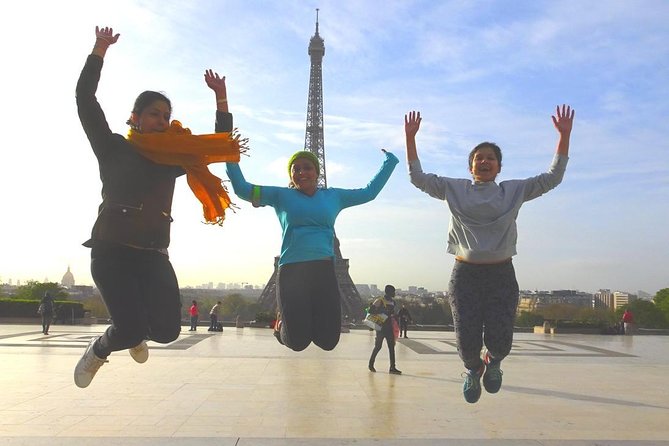
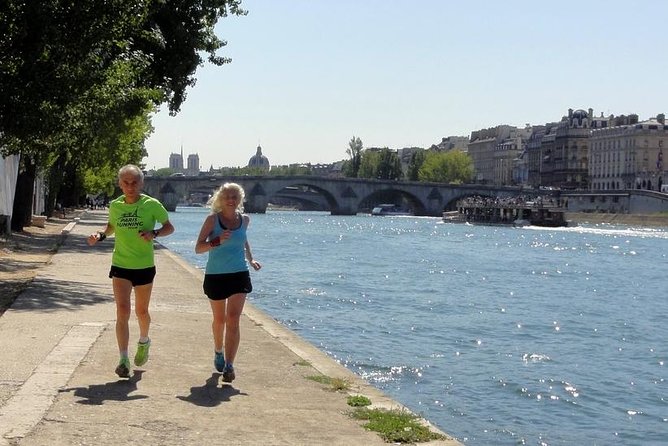
One of the highlights is the running along the river. This is where the tour starts to feel like more than sightseeing because you get continuous site views while the guide shares information as you go.
You are not just making progress. You are scanning across bridges, waterfront landmarks, and perspectives you would normally only catch if you were specifically on a Seine walk.
This is also where guides can tailor how fast and how tight the group stays. If you are with a slower partner, an easy pace can still work because the run segments are broken up with stops and guidance.
Île de la Cité: where the guide makes central Paris feel personal
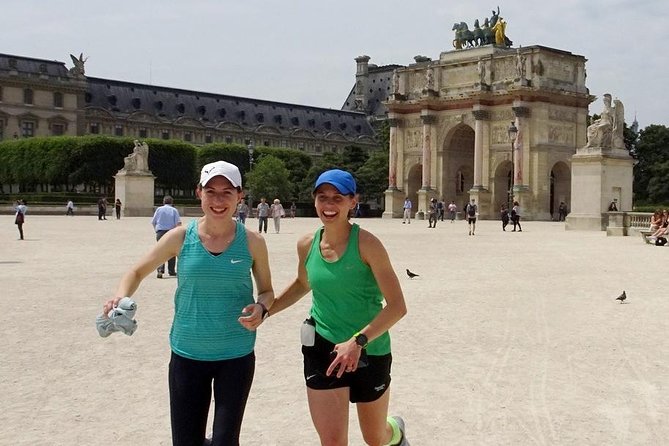
You spend time on Île de la Cité, the central island where a lot of Paris history crowds together. The tour focuses on the area around well-known landmarks and includes several stops to learn what each place represents.
From what you see, you can expect focus around spots like Conciergerie, Sainte-Chapelle, Palais de Justice, Notre-Dame, plus areas such as Marché aux fleurs, Hôtel-Dieu, Préfecture de Police, and nearby views depending on your route.
Even without a long indoor museum visit, this area hits hard because it is dense with meaning. It is the kind of place where outside architecture and street-level context matter a lot, and a running format keeps you engaged instead of stuck in one line or one room.
A realistic note: because you are moving and stopping quickly, you will not get the full deep-dive version of every site here. You will, however, leave with a working map in your head.
Musée d’Orsay and the Eiffel Tower view game
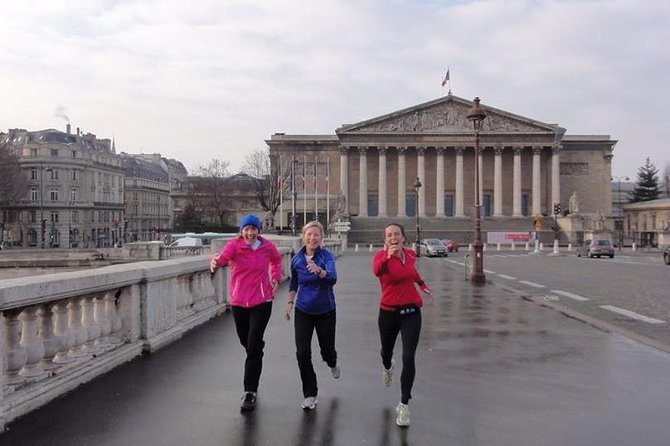
After the island, the tour goes toward Musée d’Orsay. The focus is on the building and its history, not an extended gallery visit. You get a short, purposeful stop that lets you clock what makes the place special visually.
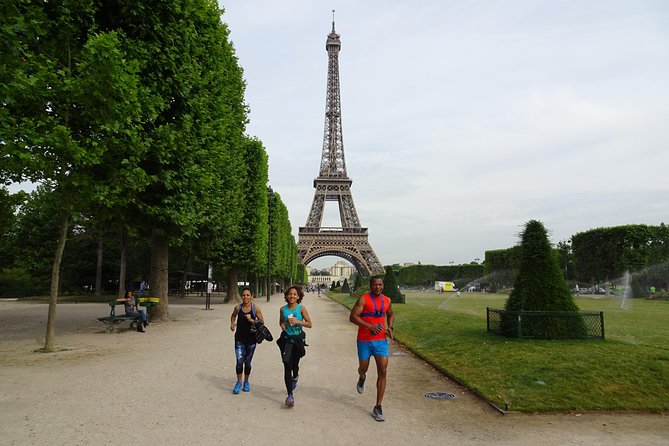
Then comes the Eiffel Tower moment. Depending on where you are on your tailored route, you may see it very closely or from farther away. Either way, the key is that you get multiple “possible angles” in the context of the day, not just a single distant sighting.
This is one of those travel tricks that actually helps. The Eiffel Tower can feel random if you only see it once. Seeing it from different points while you are already learning the city makes it feel like part of a larger system.
Champs-Élysées and Hôtel des Invalides: famous views with historical context
You run along Champs-Élysées and learn as you go. That main boulevard can be a blur if you treat it like just a shopping street. Here, you get the background stories tied to what you are looking at.
After that, you get historical guidance around Hôtel des Invalides. Even if you are only seeing parts from outside, it is the kind of site where the explanation can change your perception fast.
This is a good moment to take in the scale. Paris looks different when you move. Details that feel small from a distance become clear when you are close, and the guide helps you notice what matters.
Palais-Royal and Pont Neuf: elegant courtyards and classic bridge thinking
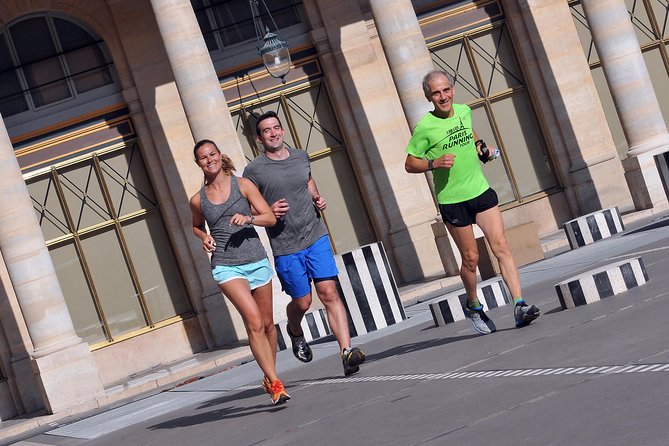
Next you reach the Domaine National du Palais-Royal. You spend time admiring the courtyard, garden, and galleries. This is one of those stops that feels slightly calmer than the major postcard squares, and it gives you a breather while staying in the center of it all.
Depending on your tailored route, you might also pass by a park area. That flexibility is useful because it can help the day match your energy and timing.
Then you finish one chunk of the route at Pont Neuf, with learning about the oldest bridge of Paris. A bridge can sound boring until you get the story attached to it. After that, you start noticing why bridge placement matters so much in a city like Paris.
Petit Palais option: a rare inside taste if it is open
There is also a possible stop at Petit Palais. If it is open, you may do a short visit of the building.
That is the only clear “inside” type moment in the plan. Everything else is designed to stay outside so you keep moving and do not lose the day to queues and museum wandering.
If inside time is your top priority, plan to pair this with a separate museum visit. This tour is the “orientation and context” day that makes later museum time way more meaningful.
What you learn, and why the run helps it stick
The guide carries maps and historical pictures to explain what you see, and those documents are given to you at the end. This matters because it turns the tour from a set of spoken facts into something you can keep using.
You also get a camera with the group. The camera is used to take the photos you want, then photos are sent afterward using Dropbox. That is handy because it keeps you from constantly stopping to ask strangers or balancing your phone while running.
A useful takeaway from how guides handle different groups: even non-runners can still enjoy this if the pace is managed well. For example, in at least one experience, the guide named JC ran at an easy pace, and the non-running partner still got a full dose of storytelling and sightseeing. That is a good sign you are not trapped in a hard-core athlete scenario.
Pace expectations: who this works for
This tour fits best if you fall into one of these buckets:
- You want the city highlights with action, not just standing around
- You like history notes but do not want to commit to a full museum day
- You are comfortable running at a moderate level, or you can keep a relaxed pace with breaks
It may be less ideal if you are recovering from an injury, if you cannot run for short segments, or if you want long indoor time in major museums.
The good news is the route has frequent context stops. You never feel like you are only chasing distance without learning something.
Price and value: what you get for about $104.52
At $104.52 per person for a 2 to 3 hour private guided run, the value comes from a few specific things, not just “it is in Paris.”
First, you get private time. That means your guide can adjust the route flow and pace for your group. That is usually more expensive in other formats.
Second, you get pickup from your place in Paris. When you do your own sightseeing, the transportation cost and time add up quickly. Here, it is built into the experience.
Third, you get photo handling plus a digital delivery system. Those are small extras, but they remove friction. You end the tour with images that feel like real travel memories, not blurry sprint selfies.
Finally, you are not paying for endless admissions because the stops are largely outside. The experience is structured around seeing key areas and learning their stories, then moving on.
Weather and timing: how to plan for a running day
This is an experience that depends on good weather. If the tour is canceled due to poor weather, you will be offered a different date or a full refund.
So you should plan like a runner. Bring layers you can tolerate, and do not assume Paris weather will behave. If your schedule is flexible, you can often shift dates without losing the trip.
Also, while the tour hours are broad, it helps to think about heat and sun. If you pick a warm afternoon slot, you will want to take water seriously.
Water is included. The team brings bottled water if it is hot, or water will be offered along the way.
Should you book this Paris running discovery?
Book it if you want Paris with momentum. This is a strong choice for active travelers who want a guided “story map” across famous neighborhoods, especially if you like your sightseeing with a bit of exercise and clear explanations at each stop.
Skip it if you want a long inside museum visit day, or if running even at an easy pace is a deal-breaker. You will get outside views and history notes, but not a traditional ticketed museum experience throughout.
My practical recommendation: if this is your first time in Paris, this tour can be a smart way to get oriented fast. It gives you the mental connections between landmarks, so later days feel more fluent.
FAQ
What is the duration of the Paris running tour?
The tour lasts about 2 to 3 hours.
Is this tour private or shared with strangers?
It is a private tour/activity, so only your group participates.
Do you offer pickup from hotels or apartments?
Yes. The team meets you at your place in Paris, at your hotel lobby or at the bottom of your building for an apartment.
What areas do you see during the run?
You pass key sights including the Louvre area, Jardin des Tuileries, Place de la Concorde, Palais Garnier, Île de la Cité, Musée d’Orsay, the Eiffel Tower area, Champs-Élysées, Hôtel des Invalides area, Palais-Royal, Pont Neuf, and possibly Petit Palais.
Do we enter museums during the tour?
You generally will not enter inside. The tour includes a short inside visit of le Petit Palais only under conditions when it is open.
What is included in the price?
Bottled water (if it is hot), a camera to take the photos you want (sent afterward via Dropbox), and maps and historical pictures carried by the guide that you receive at the end.
What should my fitness level be?
You should have a moderate physical fitness level.
What language is the tour offered in?
The tour is offered in English.
What happens if weather is bad?
The experience requires good weather. If it is canceled due to poor weather, you will be offered a different date or a full refund.
Is there a ticket and how do I access it?
You receive a mobile ticket, and confirmation is provided at booking unless it is booked within 12 hours of travel.
Recently added around Paris
- Paris: Louvre Museum Timed Entry Ticket & Pop Culture Tour★ 4.6 · 26 reviews
- Paris: Louvre Must-See Tour with Reserved Entry Ticket★ 4.9 · 164 reviews
- Paris: Louvre photoshoot or Seine bridges Eiffel Tower walk★ 5.0 · 49 reviews
- Louvre & Mona Lisa Morning Tour with Reserved Access★ 4.0 · 15 reviews
- Paris: Louvre Museum Skip-the-Line Tickets for Monalisa★ 3.0 · 42 reviews
- Paris: Louvre Museum Ticket with Optional Hosted★ 3.1 · 89 reviews
- Paris: Louvre Museum and Orsay Museum Guided Tour★ 5.0 · 6 reviews
- Paris: Louvre Museum Mona Lisa First Viewing Semi-Private★ 4.2 · 21 reviews