
Reviewed · CRUISES & BOAT TOURS
Private cruise with Paris water way
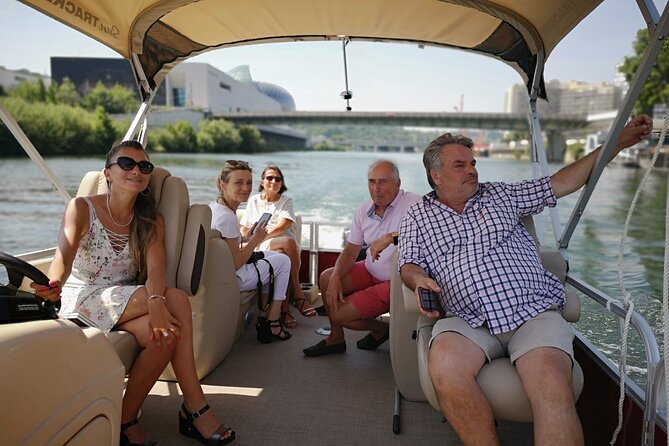
Paris from the water is special because the river forces everything into one flowing story. This private cruise also keeps it low-stress. You get up close views of the city’s biggest landmarks without fighting for the best spot on a crowded walkway, and your route moves at a comfy pace with private attention.
Two things I especially like: the 90-minute timing, which feels long enough to notice details, but not so long you get museum-fatigue. And the onboard guiding, like with Diego, who managed to explain the sights clearly enough for adults and still hold kids’ attention without turning it into a lecture.
One consideration: this trip depends on good weather, so if the skies are rough, you may need to switch dates. Still, it is the kind of cruise that is worth doing when conditions are good, because the Seine views work best when the air is clear.
Key things to know before you go
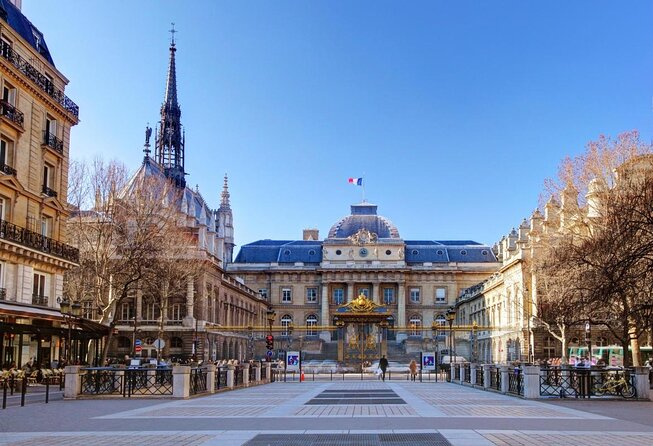
- Private group time: Only your group rides, so you are not squeezed in with strangers.
- English narration: The experience is offered in English.
- A classic left-right river route: You pass the two natural Seine islands and several famous bridges.
- Landmarks in sequence: Louvre, Musée d’Orsay, Eiffel Tower, and more, all from the river.
- Built for real sightseeing: It is a guided cruise where explanations are part of the value.
- Weather matters: Good conditions make the difference on open-water sightseeing.
Meeting on the Quai François Mitterrand, then cruising into the core sights
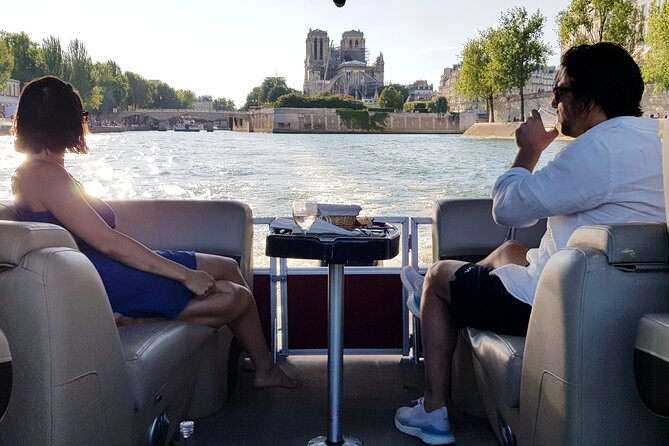
Your cruise starts at 14 Quai François Mitterrand, and you will end back at the same point. That back-to-the-start setup is convenient because you are not forced to re-plan your afternoon. In practical terms, it makes this a smart choice if you want a “one slice of Paris” experience without committing the whole day to transit and timed tickets.
Once you are on board, the flow matters. A guided Seine cruise is not just about seeing big names, it is about seeing how Paris is arranged. The river runs like a backbone, and the sights line up along both banks in an easy-to-follow sequence. Even if you only know a few landmarks, the cruise helps you connect them into neighborhoods, power centers, and viewpoints.
And yes, you will be close enough to read the vibe of each spot. Some cities shove famous buildings into the background. Paris does the opposite. From the water, you can actually feel how the city grew and rebuilt itself along the Seine.
More boat tours in Paris:
- Paris: Evening River Cruise with Music
★ 4.4 · 22,721 reviews - Paris: Louvre Guided Tour with Reserved Access & Boat Cruise
★ 4.3 · 16,353 reviews - Paris: Big Bus Hop-On Hop-Off Tour with Optional Cruise
★ 4.4 · 13,279 reviews
Île Saint-Louis: a quieter island stop before the city gets dramatic
The first highlight is a pass in front of Île Saint-Louis. This island matters because it is one of the two natural islands of the Seine that still exists in Paris, with Île de la Cité being the other. Île Saint-Louis is smaller, and it sits just upstream from Île de la Cité, so you get an immediate sense of geography.
What I like about this stop is that it is a gentle warm-up. Before you hit the heavy-hitters like the main power sites and the most famous bridges, you start with a calmer Paris layer. The island is also tied to the name King Louis IX, nicknamed Saint Louis, and you get a sense of why legends, names, and religious history still shape the way Parisians talk about places.
There is also an “old Paris to modern ownership” story here. The Lambert hotel, described as one of the island’s most beautiful private mansions, was bought by Abdallah Ben Abdallah-Al-Thani from the Qatari princely family, and it suffered a major fire in July 2013. That kind of detail is exactly why a guided river ride beats just scrolling photos. You are not only looking, you understand what you are seeing.
Île de la Cité: Paris’s ancient cradle in the heart of everything
Next comes the pass in front of Île de la Cité, and this is where Paris turns from charming to iconic fast. Île de la Cité sits in the heart of Paris on the Seine and is often described as the ancient cradle of the city, formerly Lutèce. You get the “core of the core” feeling because this is where the city’s fortified limits concentrated, especially in the medieval period.
Even the way people talk about the island hints at its central role, with descriptions like the head, the heart, and the marrow of Paris. You can treat that as a dramatic phrase, or you can treat it as a clue. It is basically pointing you to why so many major sites are clustered here: power, law, and spiritual institutions formed around this island.
If you like understanding cities in layers, this section gives you that. You see the geometry of the river, and you see how one small island became the anchor point for centuries of development. It is also a great moment for photos because the river framing gives you clean lines that street-level views often miss.
Palais de Justice and the Conciergerie area: power on the riverbank
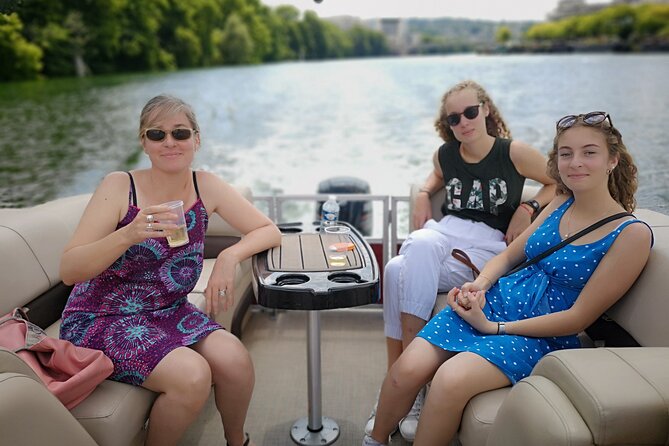
As the cruise continues, you pass in front of the concierge at the courthouse. That area ties directly to Palais de Justice, which is described as the former Curia Regis. In plain language, it is tied to where major decisions were made. From this power hub came the Parliament of Paris and multiple sovereign jurisdictions, and the current institutions still reflect that long chain of governance.
It is also connected to where royal authority sat. Palais de Justice has been located since its inception in the Palais de la Cité, once the residence and seat of power of French kings from the 10th to the 14th century. You may not see every room up close from the water, but you do get a strong sense of why this place was central.
The Conciergerie and Sainte Chapelle are specifically mentioned in connection with important surviving elements in the broader area. From the river, you are getting the setting around these sites, the sense of scale, and the context of why the island is still treated like Paris’s administrative and symbolic center.
A practical tip: when a tour gives you the “why this matters” part, you tend to remember more than you expect. Use this moment to clock where the big institutions sit relative to the bridges you will pass next. It makes the rest of the cruise feel less like sightseeing and more like mapping Paris.
A few more Paris options to weigh up
- Paris: Private Photoshoot at the Eiffel Tower
★ 4.7 · 2,636 reviews - Top Private Cruises in Paris with French Champagne and surprises
★ 5.0 · 1,553 reviews - Private Paris Airport Arrival Transfer – CDG & ORLY Airports
★ 4.5 · 1,119 reviews - Paris Private Arrival Transfer from Charles de Gaulle (CDG) or Orly (ORY)
★ 4.0 · 1,084 reviews
Pont Neuf: the oldest bridge still standing, and why its design mattered
One of the most satisfying passes is under Pont Neuf. This bridge is described as the oldest existing bridge in Paris, crossing the Seine at the western tip of Île de la Cité. It was built at the end of the 16th century and completed at the start of the 17th century, and it is also noted as the first stone bridge in Paris to cross the Seine entirely.
What I really like here is the story behind the name. Pont Neuf, despite sounding like a nickname for something trendy, got its name because at the time it was new, it was built without houses. It also had sidewalks designed to protect pedestrians from mud and horses. That detail is more than trivia. It is a window into everyday life and street conditions in earlier centuries.
There is also a preservation angle that makes Pont Neuf feel like more than just a photo backdrop. It has been classified as a historical monument since 1889, and in 1991 it was listed as a UNESCO World Heritage Site, along with all the quays of the Seine in Paris. In other words, the river setting and the bridge design are part of what the world is meant to protect.
From the water, you can see why people love this area. The bridge becomes a frame, and the city keeps moving behind it. It is one of those spots where your brain clicks, Paris is not a set of separate landmarks, it is a connected system.
Pont des Arts: from love locks controversy to glass panels
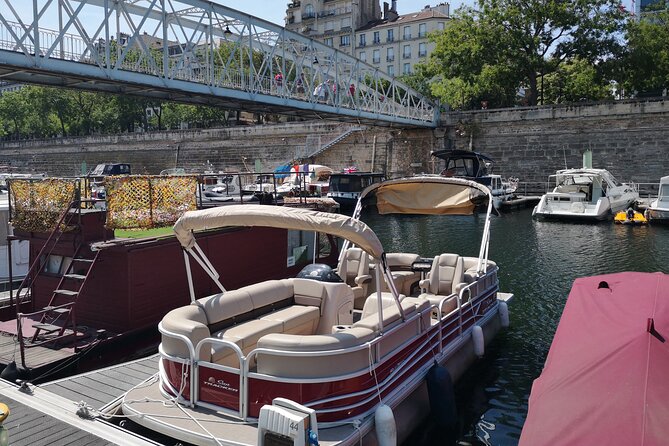
Next up is a pass under Pont des Arts. This is where the cruise brings in a modern cultural story, not just older monuments.
From 2008 to 2015, the wire mesh parapets of Pont des Arts became a popular support for love padlocks hung by couples. The practice expanded to other footbridges too, including the Léopold-Sédar-Senghor footbridge, the Archbishopric Bridge, and the Simone-de-Beauvoir footbridge.
But the story has a twist. There was controversy over heritage damage from the weight of many locks and also over appearance, with some saying it was unsightly. Paris moved to end the practice in September 2014. The fences were removed on June 1, 2015, first replaced by a temporary street-art exhibition and then by panels made of glass from autumn 2015.
This is a great moment to think about how cities handle trends. People love rituals. Cities also have to deal with safety and long-term maintenance. A guided cruise helps you see that the river bridges are not just structures, they are public space with real policy decisions behind them.
Louvre and Musée d’Orsay: two museum worlds seen from the river
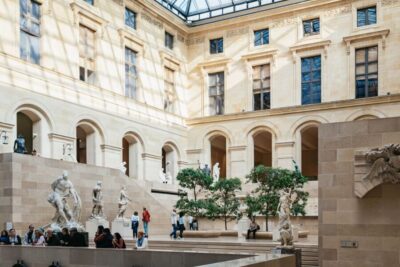
After the bridge area, you pass in front of the Louvre Museum. The Louvre’s museum role is tied to the Crown collection presentation idea and then a formal inauguration in 1793 under the name Muséum central des arts de la République. Today, it is described as the largest museum in art and antiques in the world, with an exhibition area listed as 72,735 m².
You also get a quick sense of the museum’s range: Western art from the Middle Ages to 1848, plus ancient civilizations that influenced it, including Eastern, Egyptian, Greek, Etruscan, and Roman art, along with early Christian and Islamic arts.
Then you pass in front of Musée d’Orsay. Orsay is in the 7th arrondissement along the left bank and it is housed in the former Orsay station, built from 1898 to 1900 and converted into a museum. The key focus here is Western art from 1848 to 1914, with painting, sculpture, decorative arts, graphic art, photography, and more.
Orsay has a very specific strength: it is described as having the largest collection of Impressionist and Post-Impressionist paintings in the world, with nearly 1,100 canvases out of more than 3,650 works in total.
If you are trying to decide whether to do museums on your trip, this river pass helps you pick a direction. Louvre is big, encyclopedic, and wide-ranging. Orsay is more time-period focused and known for Impressionism. Seeing both from the river makes the choice feel less abstract, and it helps you plan your museum day later.
National Assembly and Alexandre III: politics, symbolism, and a grand bridge finish
Later, you pass in front of the National Assembly. This section is tied to the democratic principle and the changing fate of parliamentary institutions over two centuries. The name National Assembly was chosen in 1789 with other naming changes in the years between and a return in 1946, plus a brief 1848 exception.
You might not need to memorize the dates, but it gives context for why this building belongs in the “power corridor” of Paris. This cruise is already full of government and law imagery. The National Assembly adds the modern layer: the city’s governance is still physically present right along the river.
Then comes the pass under Alexandre III bridge, one of the most impressive finishes before the big finale. It was inaugurated for the Universal Exhibition in Paris in 1900, symbolizing Franco-Russian friendship set by an alliance concluded in 1891 between Emperor Alexander III and President Sadi Carnot. The bridge was built to connect the axis of the Esplanade des Invalides to the Petit and Grand Palais, both also built for the Universal Exhibition.
There is also a date inscription described for the opening, tying it directly to Émile Loubet, and that kind of marker helps you appreciate the bridge as a planned masterpiece with ceremony behind it.
This bridge is a perfect “slow down” moment. Even if you only have photos in mind, it is a place where you can take a breath and notice the grand scale before the last landmark.
Eiffel Tower approach: seeing Paris’s symbol in motion
The cruise ends with a pass in front of the Eiffel Tower. The tower is described as a wrought iron structure 324 meters high, built in two years by Gustave Eiffel and collaborators for the Universal Exhibition of Paris in 1889. It was initially named the tower of 300 meters and then grew into the iconic symbol of the city, with hundreds of millions of visitors since it opened.
From the water, that famous silhouette has a different effect. Instead of feeling like a single spot you travel to, it becomes part of the river story. You see the way it sits in the wider city composition, and you get a sense of why the tower works as a landmark even from miles away.
If you have not done the Eiffel Tower yet, this is a great way to build excitement. If you already know you will go up, this pass still helps. It gives you the “where does it sit in relation to everything else” view that makes later planning easier.
Price of $94.63 per person: what makes it good value
At $94.63 per person, this is not the cheapest way to ride the Seine, but it is also not trying to be the cheapest. The value comes from three things you actually feel during the trip: the private group setup, the guided explanations in English, and the fact that the route hits many top sights in one connected circuit.
Also, the duration matters. About 1 hour 30 minutes is a sweet spot in a city where time adds up quickly. You get enough time to absorb details, but you are not spending your whole day riding and waiting.
The “private” element is not just a marketing word. It reduces the stress of coordinating with strangers. And when you get clear guiding, like Diego’s style in a 90-minute family-friendly experience, you end up understanding what you see. That is where the cruise earns its money.
Who should book this private Seine cruise (and who might skip it)
This works best if you want a guided way to see Paris’s biggest landmarks without walking nonstop. It is a smart choice for families because the pace stays gentle and the explanations can be pitched in a way that holds kids’ attention, as in the example where Diego guided a group with three children.
It is also a good fit if you are short on time. The Seine route is a fast, efficient overview that helps you decide what to explore later on foot. And if you are the type who likes to connect locations to stories, the cruise gives you names, dates, and meanings tied to bridges, islands, and institutions.
You might consider skipping if you hate being on a boat, even a short time, or if you are traveling during a period where the weather often turns rough. Since good weather is required, you need at least some flexibility in your dates.
Should you book this Paris Water Way cruise?
I think you should book it if you want a relaxed, guided Seine experience that hits the heart of Paris in about 90 minutes. The itinerary is strong for first-timers because it threads together Île Saint-Louis, Île de la Cité, major bridges, museum-area viewpoints, and the approach to the Eiffel Tower.
Book it with confidence if you like explanations and want your photos to come with context. And if you are traveling with kids, this kind of guided time on the river is often easier than trying to do the same sights on foot.
FAQ
How long is the private Seine cruise?
The cruise runs for about 1 hour 30 minutes.
Is this experience private?
Yes. It is a private tour/activity, and only your group participates.
What language is offered?
The experience is offered in English.
Where do we meet for the cruise?
You meet at 14 Quai François Mitterrand, 75001 Paris, France, and the tour ends back at the meeting point.
Is there a mobile ticket?
Yes. The tour includes a mobile ticket.
Do we need good weather?
Yes, the experience requires good weather. If it is canceled due to poor weather, you will be offered a different date or a full refund.
Recently added around Paris
- A 3 Days Tour of Belgium and Netherlands from Paris★ 5.0 · 4 reviews
- 3 Days Trip to Normandy, Loire and Mont Saint Michel from Paris★ 4.5 · 86 reviews
- Eiffel Tower Second or Summit Floor Access by Elevator with Views★ 3.5 · 161 reviews
- Paris City Tour 3h00 Citroën DS Vintage with Open Roof★ 5.0 · 4 reviews
- Premium private tour of Paris in an Electric TukTuk (4 hours)★ 5.0 · 45 reviews
- Louvre Private Tour – The Essentials and More with Expert Guide★ 5.0 · 227 reviews
- 2H Discovery Tour of Paris in 2CV CITROEN★ 5.0 · 19 reviews
- 2CV tour by night★ 5.0 · 55 reviews
Cruises & Boat Tours, compared.
Louvre Guided Tour with Reserved Access & Boat Cruise
Read our review →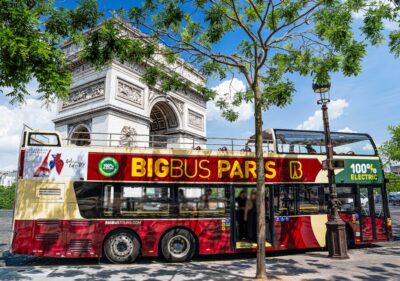
Big Bus Hop-On Hop-Off Tour with Optional Cruise
Read our review →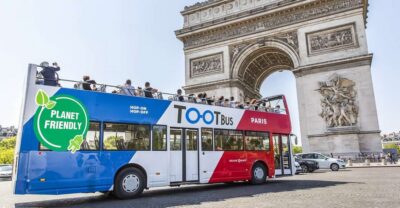
Tootbus Hop-on Hop-off with optional river cruise
Read our review →
Seine Cruise & Crepe Tasting near the Eiffel Tower
Read our review →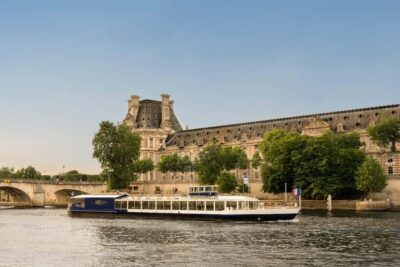
Louvre Museum Entry Ticket With Host and River Cruise
Read our review →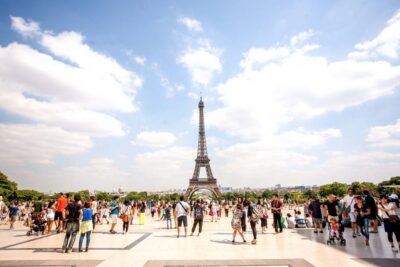
Eiffel Tower Access by Elevator & Seine River Cruise
Read our review →Browse the lists this tour appears in