
Reviewed · NORMANDY & D-DAY TOURS
WW II Private Guided Tour American Landing Beaches in Normandy
If you want a Normandy day that feels like a single, connected story, this one is built for you. It traces the American landing story across key places tied to real plans, real setbacks, and real bravery, from Sainte-Mère-Église to Omaha and the American cemetery. I love that it is private, so Willem can pace the day for your questions and your group. I also like that the route focuses on the major landing sites plus a few sharper, lesser-known moments. One consideration: with an 8 to 10 hour schedule and no lunch included, you’ll want to plan for energy and snacks.
The best part is how the stops fit together logically, like you are watching the battle unfold in order instead of hopping randomly between monuments. Willem uses original-photo context and clear explanations that help teenagers and adults stay with it, and the day includes strong viewpoints like WN 60. The only real drawback is time: you are moving through several emotionally intense sites, so if you want a slower pace or lots of museum time, you may feel the schedule tight.
Key Highlights You Will Actually Feel During the Day
- Private guidance with Willem, and the kind of explanation that lands with both adults and teens
- Free entry stops paired with smart timing, so you spend more time looking and less time waiting
- WN 60 for the best Omaha view, plus trenches and climbable machinegun and mortar positions
- Pointe du Hoc with Ranger context, following tracks linked to Col. James Rudder’s mission
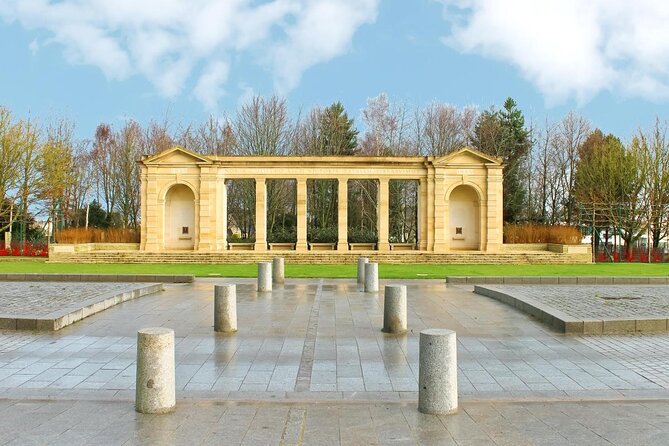
- Colleville-sur-Mer American Cemetery, including the wall for the missing, for a real moment of remembrance
Why This Normandy Landing-Beaches Route Makes Sense
Normandy can feel like a blur of beaches, cliffs, bunkers, and memorials. This tour avoids that by building a route that keeps returning to one big question: what was the plan, what went wrong, and how did units adapt in real time? Instead of just looking at coastline, you get the battle logic that connects Utah and Omaha through the surrounding towns and road exits.
Because it is private, you also get something you rarely get on bus tours: flexibility. If you care about a specific unit or a family connection, you can ask, and Willem will work with the day to fit your interests as long as it fits the overall timeline.
More Mont Saint-Michel trips:
- Day Trip to Mont-Saint-Michel from Paris
★ 4.5 · 4,876 reviews - Mont Saint Michel Day Trip from Paris with English Speaking Guide
★ 4.5 · 2,750 reviews - From Paris: Mont Saint Michel Day Trip with a Guide
★ 4.6 · 1,970 reviews
Price, Group Size, and Value for an 8 to 10 Hour Day
This is priced at $915.64 per group (up to 5 people). That sounds high at first glance, but it is closer to the cost of a premium, door-to-door private day than a per-person museum ticket. When you split it across up to five people, it often becomes a very workable value for a full itinerary that includes private transportation and bottled water.
Also, the “value” here is not only the car. The day’s payoff is the storytelling and the way the stops connect. If you want your Normandy time to feel ordered and meaningful, a private guide usually wins over trying to DIY your way across multiple sites where context is the difference between seeing and understanding.
What you should budget for: no lunch is included, and museum time is not part of the standard plan (though an exception can be arranged after consultation). So treat this as a full-day plan that needs your own food strategy.
How the Day Runs: Pickup, Mobile Ticket, and Timing
The tour lasts about 8 to 10 hours, with a mix of short stops and longer segments. You start and end at the same meeting point in Sainte-Mère-Église, with pickup offered at a rendezvous point that gets confirmed with your booking details. It is offered in English, and you receive a mobile ticket.
In practical terms, that means you can plan a single, contained day rather than juggling multiple logistics. The tour is designed to hit the key sites without making you feel like you are standing around too long at each location. The schedule still includes some “must see” time, like the American cemetery and the WN 60 viewpoints, so expect a full day on your feet.
Stop 1: Sainte-Mère-Église, the Church Steeple Story and Teddy Roosevelt Jr.
Sainte-Mère-Église is one of those places where one building can summarize a whole day of chaos. You start here because it was tied to the 82nd US Airborne Division, and it became an early liberated village as the division helped protect the right flank from the ocean side while other American divisions pushed inland toward deeper objectives.
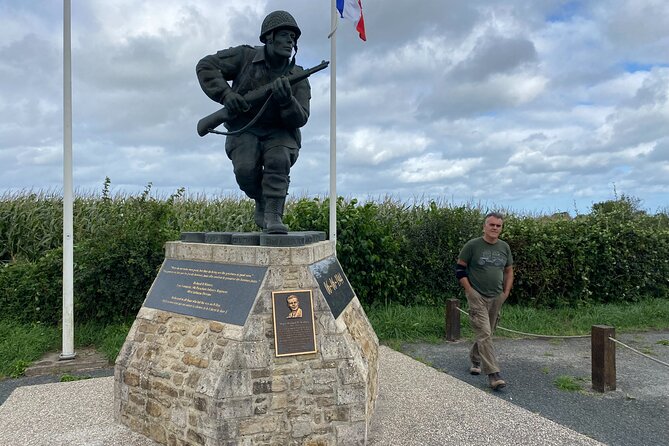
Inside the church area, you’ll focus on the paratrooper story connected to The Longest Day. The stop also includes a statue of Brigadier General Teddy Roosevelt Jr. Being able to place these names and stories into the physical location is what makes the first stop click. It sets the tone so later beach stops feel less abstract.
Practical note: this first portion is about understanding, not rushing. It is an ideal start if you want your guide to explain what airborne units were trying to do before you even reach the beaches.
More Normandy and D-Day trips:
- Mont Saint Michel: Walking Tour & Optional Abbey Ticket
★ 4.3 · 562 reviews - Mont Saint-Michel Day Trip from Bayeux (Shared tour)
★ 5.0 · 540 reviews - Mont St Michel Full Day Tour with a National Guide from Bayeux
★ 5.0 · 377 reviews - Normandy 2Days Trip Landing Beaches and Mont St Michel from Paris
★ 4.0 · 219 reviews
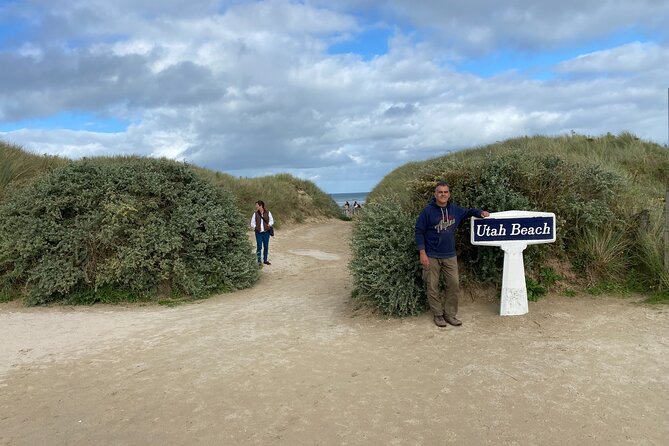
Stop 2: Utah Beach, Why It Mattered Even If It Was Smaller
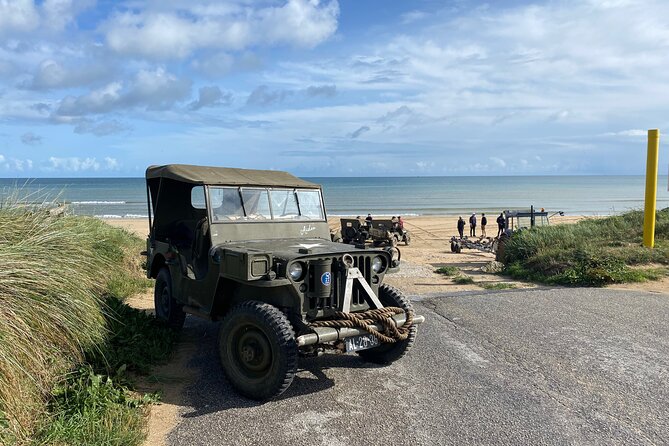
Utah Beach gets less fame than Omaha, but this is exactly the kind of stop that rewards attention. This is described as the smaller American landing beach, yet crucial because it supported the Allied need to seize the deepwater harbor at Cherbourg, which meant supplies could keep flowing.
You also get a strong, specific storyline here. This beach is tied to General Teddy Roosevelt, described as the first seaborne general to land on Normandy soil. That detail is memorable because it is personal and concrete, not just a historical slogan.
The guide’s job here is to explain what Allied soldiers faced on June 6, 1944, and how that translated into success with fewer casualties compared with other beaches. If your brain likes cause and effect, this stop gives you a clean “why it worked” framework before you hit tougher ground later.
Stop 3: Sainte-Marie-du-Mont, 101st Airborne, Resistance, and Church-Top Combat
After Utah, you move to Sainte-Marie-du-Mont, tied to the 101st Airborne Division as the first liberated village for that unit. The purpose was not only to liberate the area, it was also to secure exit roads leading off Utah Beach, which matters because roads are where survival and movement happen.
You’ll also see a French resistance monument, and the stop includes time around the church with an especially vivid account involving a German sniper supposedly hidden in the steeple. Whether you know the story already or not, it tends to stick because it connects the architecture of the town to the tactical problem soldiers faced.
Timing here is shorter than some later stops, which is smart. You get enough context to understand why the roads and villages mattered, then you move on instead of getting stuck in one location too long.
The DMC Tank Crossroads: When Small Places Explain Big Trouble
This is the kind of roadside stop that turns into a “wait, that’s the reason?” moment. The day includes a crossroads tied to the path the 101st Airborne paratroopers would take before reaching Carentan.
The DMC refers to a small Allied tank taken out by German paratroopers who were entrenched around the building that now houses an interesting museum. You also learn the grim detail that the tank commander was killed trying to escape, and the body was reportedly left hanging over the turret for days before recovery.
This stop is not about shock for shock’s sake. It helps you understand how battles pivot on small chokepoints and how a single fixed position can turn into a long-running problem for moving forces.
Stop 4: Carentan, the Critical Link Between Utah and Omaha
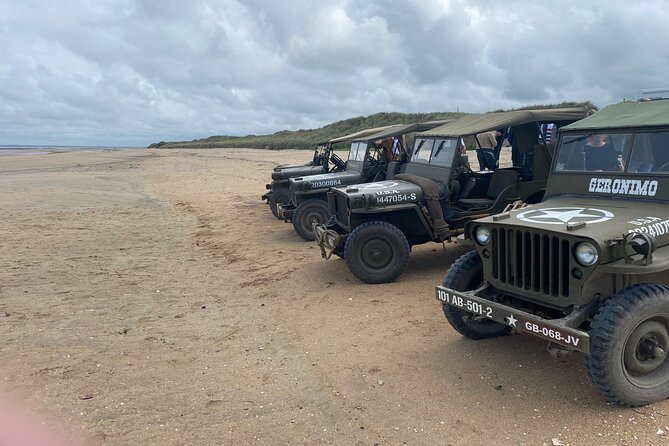
Carentan sits in the middle, and that geography shows why it became so contested. It is described as being located between Utah Beach and Omaha Beach, and its importance was to link the two landing areas.
The battle for Carentan lasted from June 10 to June 15, and it is framed as intense, with 101st Airborne paratroopers fighting for days before being relieved by elements of the 2nd Armoured Division and the 29th Infantry Division, coming from bloody Omaha. Even without drowning you in dates, that timeline helps you grasp that Normandy was not a one-day event.
This stop gives your day emotional weight too. By the time you arrive, you have already seen beach approaches, so you understand why fighting in a town could be as brutal as fighting on sand.
Stop 5: Pointe du Hoc, 100-Foot Cliffs and Col. James Rudder’s Rangers
Pointe du Hoc is a dramatic place, and the story matches the terrain. The Germans built long-range gun batteries here on 100-foot high cliffs, and the Americans had to hit the position with precision.
You follow the tracks of the American Rangers under Col. James Rudder, assigned to destroy the guns. That detail matters because it frames the stop as a mission, not just a view. You are looking at a cliff location while your guide explains what had to be achieved and why it was so dangerous.
One consideration: if you hate steep climbs or uneven paths, you should keep your expectations grounded. The information given centers on tracks and terrain, so wear shoes with good grip and plan to move carefully.
Stop 6: Omaha Beach, the Saving Private Ryan Moment and What Went Wrong
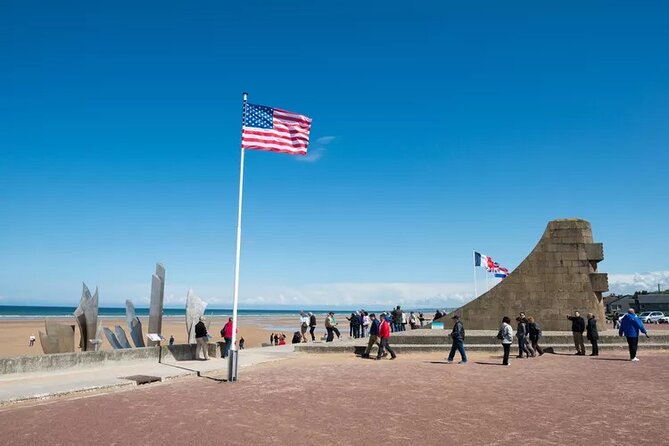
Omaha Beach is described as the worst place to be on June 6, 1944, and that matches what most people already feel about it. Here you visit the part of the beach depicted in the opening scene of Saving Private Ryan. The film reference is useful because it gives you an immediate mental map, then your guide can compare what the movie emphasizes with what the units actually dealt with.
The tour focuses on the units involved and the differences between Omaha and Utah. You also hear about what went wrong, and importantly, how initiatives, determination, and leadership supported success despite the chaos.
When you leave this stop, you usually feel respect in a very specific way. You are not just thinking about bravery as a concept, you are seeing the physical conditions and the tactical problems that forced decisions.
American Cemetery at Colleville-sur-Mer: The Moment That Lands
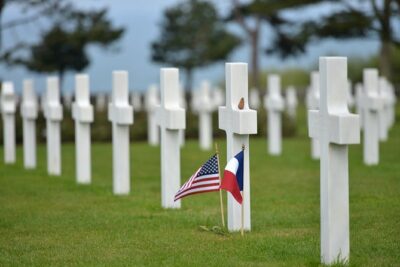
Normally this is the last big visit on the route, and it is an opportunity to pay respects. The Cimetiere Americain de Colleville-sur-Mer covers more than 170 acres, overlooking Omaha Beach.
You’ll learn that more than 9,300 men and women are buried here, and more than 1,500 names are engraved on the wall of the missing. This is the part of the day where your emotional state shifts from learning to remembering.
Even if you are not a cemetery person, do not rush it. This stop hits hardest when you slow down long enough to read names and let the scale sink in.
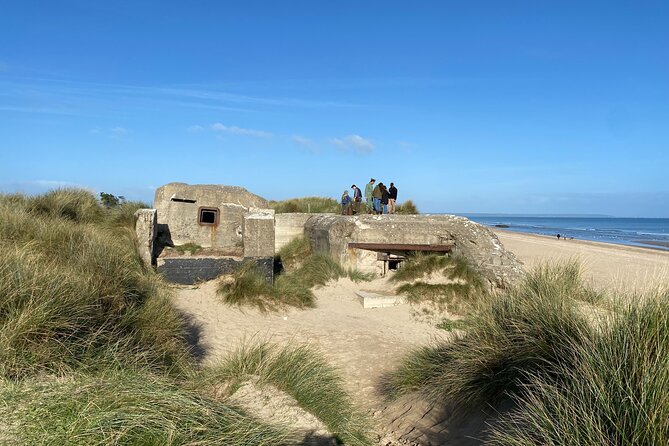
WN 60 Strongpoint: Trenches, Machinegun and Mortar Positions, and the Best View
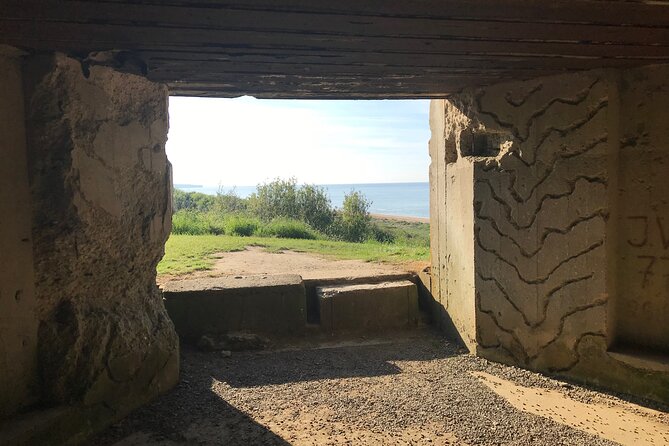
WN 60, described as the best view over Omaha Beach, adds a different kind of understanding. It’s a German strongpoint, and the guide explains how it became the first bunker complex taken by the Allies.
You get to see original trenches and you can climb the machinegun and mortar positions. This is where the day stops being only about the American side. You start grasping the enemy’s structure, and that changes your interpretation of how difficult the assault really was.
This is also a standout for your photos, but do not treat it only like a lookout. The power is in connecting what you see to what you heard at Omaha Beach and the cemetery.
Why Willem’s Style Works So Well for a Full-Day WWII Day
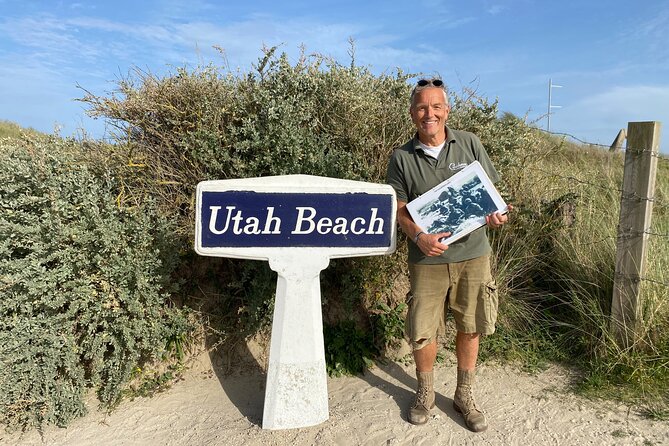
The reviews point to the same pattern: Willem is professional, funny, and able to explain history with strong detail. The key is not just facts. He uses original photo support so you can see sites as they looked then, then compare them to what you see now.
That visual reinforcement is what keeps the day from turning into a lecture. It also helps younger travelers stay engaged. If you bring teenagers, this kind of guided day tends to work better than self-guided audio tours because the guide can react to questions in real time.
Willem’s flexibility is another advantage. You can ask about family connections or a particular angle of the battle, and he will try to shape the day so it answers your curiosity.
Who Should Book This Tour (and Who Might Want Something Else)
This tour is a strong fit if you:
- Want a single private day that covers Utah, Omaha, Pointe du Hoc, and the American cemetery without juggling multiple operators
- Care about unit stories and tactical context, not only big-name memorials
- Have a mixed group, including kids or teens, and want them engaged without turning it into a “tour for adults only”
You might consider a different option if you:
- Want lots of museum time during the day, since standard museums are not included (exceptions can be requested)
- Need a built-in lunch break plan, since lunch is not included and the day is long
Should You Book This WWII American Landing Beaches Private Tour?
Yes, if your goal is to make Normandy make sense. The route connects airborne operations, beach landings, the fight for Carentan, Ranger action at Pointe du Hoc, and then remembrance at Colleville-sur-Mer. That sequence matters, and a private guide helps you hold the story together.
I especially like that the day includes strong viewpoint time at WN 60 and a cemetery stop that gives you a real pause. If you plan snacks and comfortable walking shoes, you’ll get a full-day experience that feels both practical and deeply human. With a group of up to five, it is also a value-friendly way to buy context rather than just transportation.
FAQ
How many people are in a group?
This is a private tour/activity, with up to 5 people per group.
How long is the tour?
The duration is approximately 8 to 10 hours.
Does the tour include pickup?
Pickup is offered. The pickup or rendezvous point is discussed and communicated in your tour confirmation.
What language is the tour offered in?
The tour is offered in English.
Is lunch included?
No. Lunch is not included.
Are museum visits included?
Museum visits are not part of the tours, but an exception can be made after consultation.
Are admissions included for the main sites?
Admission tickets are listed as free for the stops included on the route.
What is included in the price besides transportation?
Included items are bottled water and private transportation.
What is the meeting point?
The tour starts at Bar-Pmu3, Rue Koenig, 50480 Sainte-Mère-Église, France, and ends back at the meeting point.
Is free cancellation available?
Yes, you can cancel for free up to 24 hours in advance for a full refund.
Recently added around Mont St Michel
- 3 Days Trip to Normandy, Loire and Mont Saint Michel from Paris★ 4.5 · 86 reviews
- 2-day Private Mont Saint-Michel, 3 Loire Castles, D-Day Express★ 4.5 · 11 reviews
- 2-day Mont Saint-Michel Normandy Brittany Private Trip from Paris★ 5.0 · 3 reviews
- Normandy 2Days Trip Landing Beaches and Mont St Michel from Paris★ 4.0 · 219 reviews
- Mont Saint Michel and Loire Valley Castles 2 Days Guided Trip★ 4.0 · 25 reviews
- 2-day Mont Saint-Michel, Full D-Day, Normandy Private from Paris★ 4.5 · 7 reviews
- Skip-the-Line Ticket Mont-Saint-Michel Abbey Audio-Visual Tour★ 4.0 · 9 reviews
- WW2 Jeep Tour Utah Beach Half Day★ 5.0 · 21 reviews
Normandy & D-Day Tours, compared.

Normandy D-Day Sites & Cemetery Day Trip from Paris with Lunch
Read our review →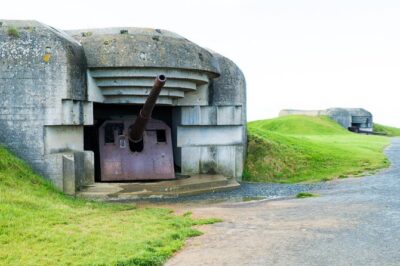
Normandy D-Day Small-Group Day Trip with Omaha Beach, Cemetery & Cider Tasting
Read our review →
Normandy D-Day Beaches and American Cemetery Day Trip from Paris
Read our review →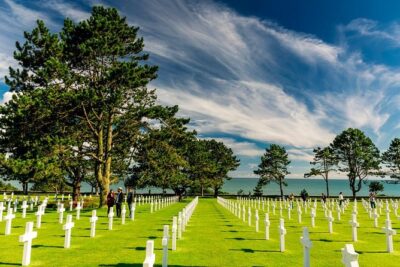
Normandy American D-Day Beaches Full Day Tour from Bayeux
Read our review →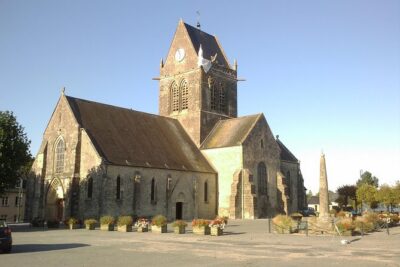
Normandy American D-Day Experience – Group tour from Bayeux
Read our review →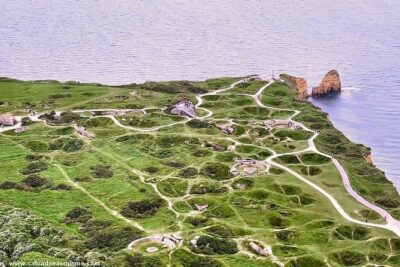
Normandy Beaches Half-Day Afternoon Trip from Bayeux (A2)
Read our review →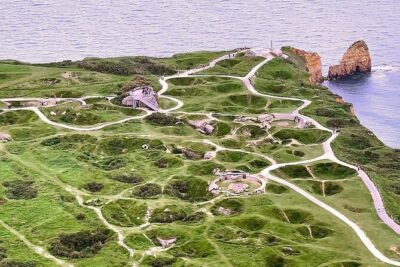
Omaha Beach D-Day Experience – Afternoon group tour from Bayeux
Read our review →Browse the lists this tour appears in