
Reviewed · MARKETS
Discover Paris’ Marché d’Aligre: 2-Hour Market Tour
Marché d’Aligre is interesting because it feels like real Paris life, not a theme park. You’ll walk through the Marché Couvert Beauvau and the outdoor stalls, sampling your way along the aisle. I love two things most: the guided tastings that help you pick what to try (and what to skip), and the way the tour shows the market culture up close, right next to the shops and streets locals actually use. One drawback to keep in mind is that the flea market portion can be hit-or-miss depending on what you’re hunting for, so go in with realistic expectations.
This is a small-group format, capped at 8 people, with a live guide in English or French. If you end up with guides like Christine or Caroline, you’ll likely get extra neighborhood pointers too, the kind that help after the tour when you’re still hungry for more Paris.
Key points if you only read a little
- Marché Couvert Beauvau gives you the covered market feel, part of Paris’ older tradition of covered passages
- Indoor plus outdoor market stalls means you’ll see both the sheltered lanes and street-level hustle
- Food tastings are included, plus mint tea in a corner café, which keeps the tour from turning into just window shopping
- Flea market time is the wild card, good for odd finds if you like browsing
- Small group size (up to 8) helps you actually talk with vendors and follow your guide’s recommendations
- Guides Christine and Caroline come through in reviews as friendly, helpful, and big on practical tips
Marché d’Aligre, Beauvau, and the Covered-Passage Atmosphere
If you only know Paris from big sights, Marché d’Aligre is a nice correction. This market sits on the edge of busy neighborhood commerce, including North African shops nearby, so the whole area has a lived-in feel. People come for groceries. People come to chat. And the smells are not the bottled kind, they’re the real thing.
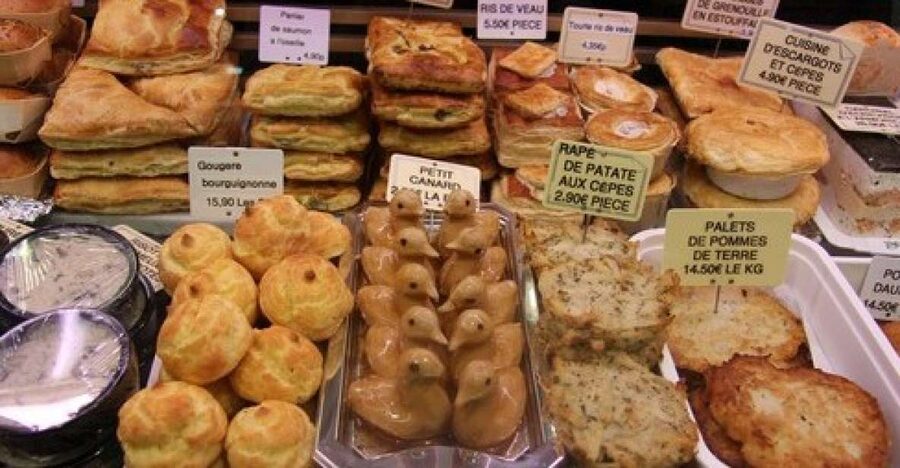
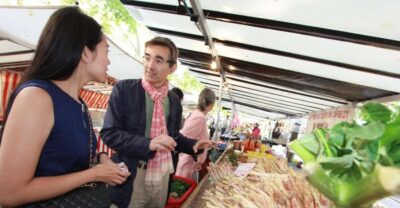
The standout here is that you are not stuck in one single type of market. You start with the covered Marché Couvert Beauvau, then you connect into the outdoor street market. That switch matters because it changes how you experience the food. Indoors, it’s easier to slow down and look closely at jars, spices, coffee, tapenades, and everyday staples. Outdoors, you get that extra street energy, more motion, and more variety on the fly.
Also, this isn’t just any old roof-and-stalls setup. The tour highlights the market’s history as one of the remaining covered passages, known as les passages couverts, tucked behind Paris’ major boulevards. In other words, you’re getting a taste of Paris as it used to function, when covered walkways were a practical way to move around and shop.
More market tours in Paris:
- Versailles Palace Bike Tour with Market & Marie-Antoinette hamlet
★ 5.0 · 2,680 reviews - Versailles Bike Tour with Market, Gardens & Guided Palace Tour
★ 5.0 · 1,121 reviews - Paris Cooking Class and Lunch with Wine plus Market Visit Option
★ 5.0 · 1,024 reviews
Finding the meeting point near Ledru-Rollin
The meeting point is 100, rue du Faubourg Saint-Antoine, 75012 Paris. The nearest metro station is Ledru-Rollin, exit 2.
Transportation is not included, so you’ll want to make your own way there. The upside is that once you’re in the area, you’re already surrounded by the kind of streets the tour is trying to show you. You’ll be walking a lot, so aim to arrive with comfortable shoes and enough time to settle before the group starts.
Step 1: Marché Couvert Beauvau, where you slow down and look
The tour begins in the indoor market, the Marché Couvert Beauvau. This is where you get the covered passage vibe: rows of stalls, a bit more shelter from weather, and an easy rhythm for browsing.
What I like about starting here is simple. Vendors often work differently when customers are moving under a roof. You tend to get clearer explanations, and you have time to notice details you might miss outdoors. Expect to see a lot of the “market pantry” items that make French home cooking possible: tapenades, spices, coffees, and flowers, plus lots of specialty food stands.
This portion also helps you understand what the market is really for. It’s not just about buying a souvenir. It’s about finding ingredients with a story, or at least with a clear, practical purpose. A guide can steer you toward the right vendor for what you actually want to taste, instead of you guessing on your own.
Step 2: Outdoor street market, where the neighborhood energy kicks in
After the indoor section, you move into the outdoor street market. This is where the tour becomes more playful and a bit louder. You’re still shopping in a market setting, but the street layout adds a different pace, more visual variety, and more chance to spot items that you do not usually see in a polished tourist food market.
This segment matters because it shows you the Paris you don’t often plan for. The market spills into the daily life around it, and you can feel how people pick up real groceries. If you like eating first and understanding second, you’ll enjoy this part because it keeps your senses engaged: you’ll be moving, sampling, and checking out what people are actually buying.
A few more Paris options to weigh up
- Paris Evening Cooking Class French Dinner and Market Visit Option
★ 5.0 · 430 reviews - Paris: Vallée Village Outlet Shopping Day
★ 4.3 · 362 reviews - Paris: Full-Day Cooking Class, Market Tour and Lunch
★ 4.9 · 113 reviews - Paris: Flea Market Insider’s Tour in Extra-Small Group
★ 4.6 · 73 reviews
Step 3: Tastings that turn browsing into a meal
Food is the point of this tour, not an add-on. Tastings of specialty foods are included, and there’s also mint tea in a corner café.
Here’s why that matters. In many food tours, you get a few tastes and then you’re back to walking past stalls. With this one, the tastings are woven into the market itself, so the food becomes a tool for learning. A mint tea stop also gives your brain a break. It’s a quick reset before you head back out to keep exploring.
From the experiences shared by previous guests, the tastings can include things like fresh coffee, bakery items, and items you might not think to order in a restaurant. One review described tasting a warm croissant and also trying a baguette with truffle cheese, which is the kind of detail that makes you understand why markets are worth your time. Markets are where “small” ingredients become memorable.
I’d also pay attention to the moments where your guide nudges you toward what to try. In the reviews, guides like Caroline and Christine are described as turning the tour into something you feel in your day, not just a checklist. That guidance is especially useful in a market like Marché d’Aligre, where the selection is large and the best choices depend on what you want to eat later, not just what looks good at first glance.
The flea market connection, and how to browse it smart
The tour includes time at a connecting flea market. This is the playful side, the part where you can find oddities and functional secondhand items.
But I’d be honest with your expectations. One review notes that the flea market was not exceptional, which tells me this segment may not satisfy shoppers looking for a dedicated, top-tier antiques hunt. Still, it can be fun if you enjoy browsing. Think of it like a bonus layer, not the main course.
A good way to enjoy the flea market part is to treat it as scavenger-hunt browsing. If you find something useful or charming, great. If you don’t, you still gain value from everything you saw before it, especially the market stalls and the food tasting part.
Why les passages couverts matter here
The tour spotlights a particular kind of Paris street architecture: les passages couverts. These were covered passageways, historically tucked behind the big boulevards, designed to make shopping and strolling more comfortable. The tour points out that Marché Couvert Beauvau is among the last 20 remaining from the original tradition.
Even if you do not care about architectural trivia, this context changes how you walk. You stop thinking of the market as just a place with stalls and start recognizing it as part of Paris’ older circulation system. It’s a reminder that markets were not always open-air chaos. Paris had ways to move, shop, and socialize in covered spaces, and you can still feel that logic here.
It also makes the tour feel more grounded. You’re not just sampling flavors, you’re learning why the space is shaped the way it is. That kind of “how Paris works” knowledge tends to stay with you longer than a list of items you ate.
What the guide actually does in a small group
This tour runs with a small group, limited to 8 participants. That size is not just for comfort. It changes how the market feels and how your guide can interact with vendors.
With fewer people, you’re more likely to get direct answers. You can also ask better questions, like what a vendor recommends for something you’re curious about. In the reviews, guests describe feeling like they walked with a friend who knows the neighborhood. That’s exactly the advantage you want: someone helping you interpret what you’re seeing and then pointing you toward a few choices you might miss on your own.
Also, guides like Christine and Caroline are singled out for being helpful beyond the market itself, with additional follow-up tips. I love that style, because it turns the tour into a starting point for your day, not an isolated activity.
Price and value for a 2-hour market experience
The price is $129 per person for a 2-hour tour.
Is it worth it? Here’s how I’d judge the value. You’re paying for three things that are hard to recreate alone: (1) a guide who can steer you through a busy market and help you decide what to taste, (2) included food tastings plus mint tea, and (3) a small-group format that keeps the experience intimate enough for real interaction.
If you were to do this on your own, you could still wander Marché d’Aligre and shop. But you’d lose the benefit of tasting guidance. You might also miss the deeper context the guide provides about the covered passage tradition and what to notice as you move between the indoor and outdoor areas.
Also, 2 hours is a smart length for a market tour. Markets are active, and you can learn a lot without getting “market fatigue.” You leave with memories and food experiences, not just receipts.
That said, because the flea market can be uneven, I’d treat that part as a bonus browse, not the primary reason to book. The real value is the guided market walk and tastings.
Who should book this tour
This is a great fit if you want Paris that feels current, not staged. It suits you if you like markets, you enjoy tasting food while you walk, and you prefer a small group over a big bus tour.
It’s also a good choice if you like eating in a practical way. Instead of only eating at sit-down restaurants, you get a sense of what ingredients and snacks locals buy and how they choose them. The mint tea stop is a nice touch if you enjoy small pauses, too.
If you’re only interested in the biggest landmarks, this may feel too “local.” But if you want to understand the city through daily life, Marché d’Aligre is a strong way to do it in just two hours.
Should you book the Marché d’Aligre market tour?
Book it if you want a focused taste of neighborhood Paris, with included tastings and a guide who helps you see what you’re eating and where it fits in French market culture. The small group size and the covered market start make it feel smoother and more intimate than a long self-guided wander.
Skip or think twice if your main goal is antiques shopping or you’re counting on the flea market to be the highlight. That segment may not deliver for everyone. Also, since transportation is not included, make sure you’re comfortable getting yourself to Ledru-Rollin (exit 2) and the meeting point on rue du Faubourg Saint-Antoine.
FAQ
How long is the Marché d’Aligre market tour?
It lasts 2 hours.
Where does the tour meet?
The meeting point is 100, rue du Faubourg Saint-Antoine, 75012 Paris.
What is the nearest metro station?
The nearest metro station is Ledru-Rollin, exit 2.
What’s included in the tour price?
Tastings of specialty foods are included, plus mint tea in a corner café.
Is transportation included?
No, transportation is not included.
How large is the group?
The group is small, limited to 8 participants maximum.
What languages are the tours offered in?
The live tour guide speaks English and French.
Recently added around Paris
- Paris: Louvre Museum Timed Entry Ticket & Pop Culture Tour★ 4.6 · 26 reviews
- Paris: Louvre Must-See Tour with Reserved Entry Ticket★ 4.9 · 164 reviews
- Paris: Louvre photoshoot or Seine bridges Eiffel Tower walk★ 5.0 · 49 reviews
- Louvre & Mona Lisa Morning Tour with Reserved Access★ 4.0 · 15 reviews
- Paris: Louvre Museum Skip-the-Line Tickets for Monalisa★ 3.0 · 42 reviews
- Paris: Louvre Museum Ticket with Optional Hosted★ 3.1 · 89 reviews
- Paris: Louvre Museum and Orsay Museum Guided Tour★ 5.0 · 6 reviews
- Paris: Louvre Museum Mona Lisa First Viewing Semi-Private★ 4.2 · 21 reviews
Markets, compared.

Versailles Palace Bike Tour with Market & Marie-Antoinette hamlet
Read our review →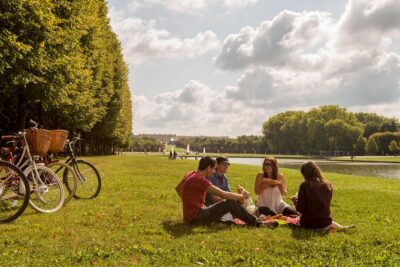
Versailles Bike Tour with Market, Gardens & Guided Palace Tour
Read our review →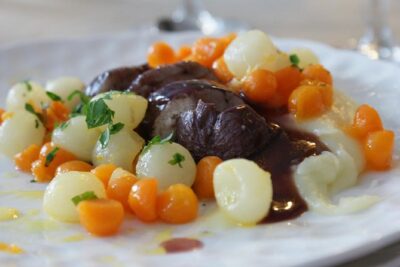
Paris Cooking Class and Lunch with Wine plus Market Visit Option
Read our review →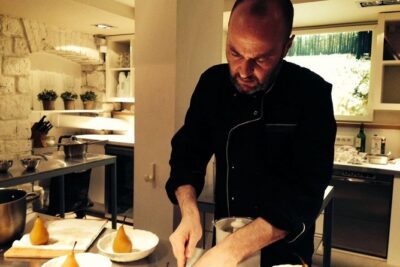
Paris Evening Cooking Class French Dinner and Market Visit Option
Read our review →
Market Visit and Cooking Class with a Parisian Chef
Read our review →
Evening Cooking Class with Optional Market Visit
Read our review →Browse the lists this tour appears in